
Quick Summary: AKG headset headphones deliver exceptional audio for critical listening and everyday enjoyment. This guide helps beginners understand AKG’s legacy, choose the right model for their needs, and get the most out of their essential sound experience.
AKG Headset Headphones: Unlock Essential Sound for Every Listener
Welcome to Headphone Horizon! As Edward Cavitt, I’m thrilled to guide you through the wonderful world of AKG headset headphones. If you’re looking for audio that truly brings your music, games, or work calls to life, you’ve come to the right place. AKG has a rich history of crafting incredible sound, and their headset headphones are no exception. Whether you’re a seasoned audiophile or just starting to explore better sound, this guide is designed to be your friendly companion. We’ll demystify what makes AKG special, help you find your perfect match, and ensure you’re getting the most out of your listening experience. Let’s dive into the essential sound that AKG headset headphones provide!
The AKG Legacy: A Foundation of Audio Excellence

Before we jump into picking out your perfect pair, it’s worth appreciating the history behind AKG. Founded in Vienna, Austria, in 1947, AKG Acoustics has been a cornerstone of professional audio for decades. Their commitment to innovation and incredible sound quality has made them a favorite among musicians, sound engineers, and audiophiles worldwide. From recording studios to concert stages, AKG microphones and headphones have played a crucial role in shaping the sounds we love.
This dedication to sonic purity translates directly into their consumer-oriented headset headphones. They aim to provide a listening experience that is:
- Accurate: Reproducing sound as the artist or creator intended.
- Detailed: Revealing nuances in music you might have missed before.
- Balanced: Offering a pleasing sound profile across all frequencies (lows, mids, and highs).
- Comfortable: Designed for extended listening sessions.
Understanding this heritage helps you appreciate why AKG headset headphones are considered a benchmark for many. They’re not just about playing sound; they’re about experiencing it with clarity and depth.
Why Choose AKG Headset Headphones?

So, what sets AKG headset headphones apart? It often comes down to their specific approach to sound reproduction and user experience. AKG generally focuses on delivering a relatively neutral and accurate sound signature. This means they aim to present audio without overly boosting bass (like many consumer headphones) or artificially brightening the treble. For many, this results in a more natural and fatigue-free listening experience, especially over long periods.
Beyond sound, AKG is known for:
- Build Quality: Many AKG models are built to last, using robust materials and thoughtful construction.
- Comfort: Over-ear designs often feature plush earcups and adjustable headbands, making them ideal for hours of use.
- Versatility: Whether for critical music listening, gaming, or professional voice communication, AKG offers models tailored to specific needs.
Types of AKG Headset Headphones

AKG offers a range of headset headphones, broadly falling into a few categories based on their design and intended use. Understanding these will help you narrow down your choices.
1. Open-Back vs. Closed-Back Designs
This is a fundamental distinction in headphone design and significantly impacts your listening experience.
Open-Back Headphones
Open-back headphones have grilles or perforations on the earcups, allowing air and sound to pass through. This design offers several benefits:
- Natural Soundstage: They create a wider, more spacious sound that mimics listening to speakers in a room. This is excellent for enjoying music and experiencing immersive spatial audio in games.
- Reduced Ear Fatigue: The open design prevents pressure buildup and can feel more comfortable during long listening sessions.
- Less Bass Isolation: They don’t isolate sound well, meaning you’ll hear ambient noise, and others will hear what you’re listening to.
Best for: Critical music listening at home, audiophiles, and those who prioritize a natural, spacious sound and don’t need noise isolation.
Closed-Back Headphones
Closed-back headphones have solid earcups that fully enclose your ears. This design offers:
- Better Noise Isolation: They prevent outside noise from disturbing your listening and stop your audio from leaking out.
- Enhanced Bass Response: The sealed enclosure can provide a more impactful and prominent bass.
- More Focused Sound: The soundstage might feel less expansive than open-backs, but it can feel more intimate and direct.
Best for: Commuting, office environments, gaming where you need to block out distractions, and for those who prefer a more punchy bass.
2. Over-Ear (Circumaural) vs. On-Ear (Supra-aural) Designs
This refers to how the earcups fit around or on your ears.
Over-Ear (Circumaural)
These earcups completely surround your ears. They are generally considered the most comfortable for extended wear, as they distribute pressure evenly around the ear rather than directly on it. Most full-sized AKG studio and audiophile headphones are this type.
On-Ear (Supra-aural)
These earcups rest directly on your ears. They tend to be more compact and portable but can sometimes cause pressure or discomfort on the ears during long listening sessions. AKG might offer some more compact or portable models with this design.
3. Gaming Headsets
AKG also offers dedicated gaming headsets. These combine high-quality audio drivers with integrated boom microphones, designed to enhance both your gaming audio and in-game communication. They often balance detailed sound for immersion with clear voice transmission.
Key Features to Consider When Buying AKG Headphones
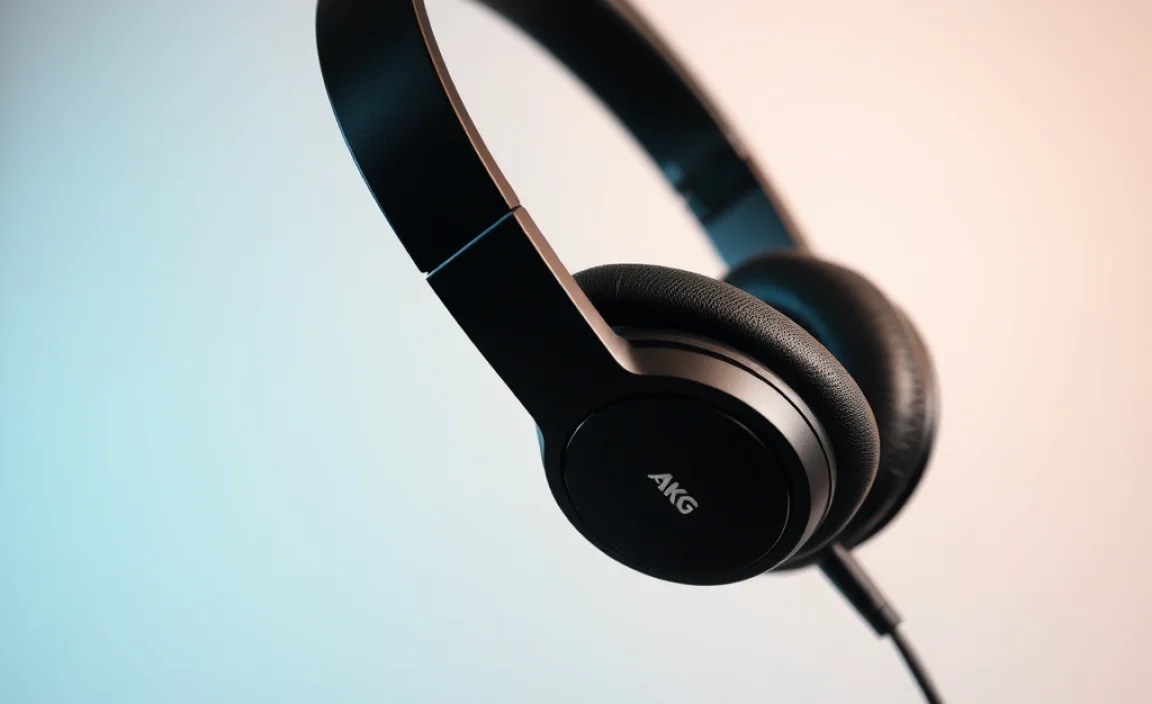
When you’re browsing AKG headset headphones, keep these features in mind:
- Driver Size: Larger drivers (e.g., 50mm) can often produce a wider frequency response and more powerful sound, though design excellence is more critical than size alone.
- Frequency Response: This indicates the range of sound frequencies a headphone can reproduce. A broader range (like 20Hz – 20kHz) is standard, but the quality of reproduction within that range is what matters.
- Impedance (Ohms): This measures how much electrical resistance the headphones have. Lower impedance (e.g., 32 ohms) is easier to drive and works well with most devices like smartphones and laptops. Higher impedance (e.g., 250 ohms or more) often requires a dedicated headphone amplifier for optimal performance and volume.
- Sensitivity (dB): This tells you how loud the headphones will get for a given power input. Higher sensitivity means they’ll be louder with less power.
- Connectivity: Wired (3.5mm jack, 1/4-inch adapter) or wireless (Bluetooth). Wired connections often offer the purest audio signal.
- Cable Type: Detachable cables are a big plus, making them easier to replace if damaged. Straight vs. coiled cables can affect usability.
- Comfort and Fit: Earcups made of soft materials (velour, synthetic leather), adjustable headband, and lightweight design are crucial for long listening sessions.
Popular AKG Headset Models (for Different Needs)
While models change and new ones are released, here are a few classic AKG styles and what they’re known for. This should give you a benchmark for what to look for.
| AKG Model Example | Type | Best For | Key Features | Consider If… |
|---|---|---|---|---|
| AKG K240 Studio | Semi-Open Over-Ear | Music Production, Critical Listening, Studio Monitoring | Semi-open design, balanced sound, comfortable for long sessions, semi-detachable cable. Generally low impedance (55 ohms) for broader compatibility. | You want a professional, accurate sound without breaking the bank, and are okay with some sound leakage. |
| AKG K701/K702/K712 PRO | Open-Back Over-Ear | Audiophile Listening, Mixing, Mastering | Exceptional detail, wide soundstage, natural tonality, high impedance (K701/K702: 62 ohms; K712 PRO: 62 ohms, but often benefits from amp). | You prioritize an expansive, airy sound and have a quiet listening environment. You want to hear every nuance. |
| AKG K361/K371 | Closed-Back Over-Ear | Everyday Listening, Podcasting, Compact Studio Use | AKG’s signature sound in a closed-back design. Excellent for isolating sound and portable use. K371 aims for the Harman target curve. Detachable cables. | You need good noise isolation for commuting or an office, enjoy a well-balanced sound with good bass, and want a versatile headphone. |
| AKG AR500 (Example of a Gaming Headset) | Closed-Back Over-Ear (Gaming Focus) | Gaming, General Use | Often includes a boom mic, durable build, and sound tuned for gaming immersion (e.g., clear highs for footsteps, solid bass for explosions). | You’re a gamer who wants a headset that excels in both game audio and voice chat. |
Note: AKG has many models. This table highlights popular examples and trends. Always check the latest specifications for current models.
Getting the Most Out of Your AKG Headset Headphones: Setup and Care
Once you’ve got your AKG headset headphones, a little attention to setup and care can go a long way. This ensures you enjoy their “essential sound” for years to come.
Step-by-Step Setup
- Unboxing: Carefully remove your headphones and any accessories (cables, adapters, carrying pouch) from the packaging.
- Inspect: Give them a quick visual check for any signs of damage from shipping.
- Connect:
- Wired: For most wired headphones, plug the 3.5mm jack into your device’s headphone port (smartphone, laptop, audio interface). If your device uses a different connector (like USB-C or Lightning), you might need an adapter. Many studio headphones come with a 1/4-inch adapter; screw this onto the 3.5mm jack if connecting to a larger audio port.
- Wireless: If your AKG headphones are wireless, ensure they are charged. Turn them on and follow the manual’s instructions for Bluetooth pairing (usually involves pressing and holding a power or Bluetooth button until an indicator light flashes, then selecting the headphones from your device’s Bluetooth menu).
- Test the Fit: Place the headphones on your head. Adjust the headband so the earcups sit comfortably around or on your ears. Ensure a snug but not overly tight fit.
- Play Some Audio: Start with a familiar song or audio track. Adjust the volume on your device to a comfortable listening level.
- Monitor Volume Levels: It’s crucial to protect your hearing. The U.S. National Institute for Occupational Safety and Health (NIOSH) recommends listening at no more than 60% of maximum volume for no more than 60 minutes at a time to avoid noise-induced hearing loss. Check out their NIOSH Noise and Hearing Conservation topic page for more in-depth information.
Basic Maintenance for Longevity
Proper care keeps your AKG headset headphones sounding great and feeling comfortable.
Cleaning Your Headphones
Regular cleaning is simple and effective.
- Earcups:
- For fabric/velour earcups: Use a slightly damp (not wet!) cloth to gently wipe them. For deeper cleaning, you might use a mild soap solution, but always test on a small, inconspicuous area first and ensure they are completely dry before use. You can also use a soft brush or lint roller to remove dust and debris.
- For leather/synthetic leather earcups: Use a slightly damp cloth. For tougher grime, a mild, alcohol-free cleaner designed for vinyl or leather can be used, followed by a damp cloth to remove residue. Avoid harsh chemicals.
- Headband: Wipe with a slightly damp cloth.
- Headphone Body and Grilles: Gently wipe with a dry or slightly damp microfiber cloth. Avoid getting moisture into any openings.
- Cables: Wipe down cables with a dry cloth.
Important: Never immerse your headphones in water or any other liquid. Always unplug removable cables before cleaning.
Storage Tips
- Use the Pouch: If your headphones came with a carrying pouch or case, use it! This protects them from dust, scratches, and accidental bumps, especially when you’re on the go.
- Safe Place: When not in use, store your headphones in a cool, dry place away from direct sunlight, extreme temperatures, and potential damage (like being stepped on).
- Cable Management: Avoid tightly coiling or kinking the cables. Loose, gentle winding is best to prevent internal wire damage. If you have detachable cables, store them separately and manage them gently.
Troubleshooting Common Issues
Most problems are easily resolved with a few checks.
- No Sound:
- Check that cables are fully plugged in.
- Ensure the volume is turned up on both your device and the headphones (if they have inline controls).
- Try a different audio source or device to rule out an issue with the source itself.
- For wireless headphones, confirm they are paired and connected, and check battery life.
- Sound Cutting Out:
- This can happen with loose connections for wired headphones. Ensure plugs are secure.
- For wireless, this might be due to interference or being too far from your device. Try moving closer or minimizing obstructions.
- Distorted Sound:
- Check that the volume isn’t set too high, which can cause distortion.
- Ensure the cable isn’t damaged.
- Clean the earcups and drivers (gently!) in case debris is affecting sound.
- One Side Not Working:
- Most often a cable issue. Try wiggling the connector at both ends. If you have a detachable cable, try a spare if possible.
- If it persists, it could be an internal wiring fault.
If you encounter persistent issues, consult the AKG support website or the product’s manual. For many common issues, detailed troubleshooting guides are available.
Frequently Asked Questions (FAQ)
Q1: Are AKG headphones good for gaming?
A1: Yes, many AKG headphones, especially their studio or specific gaming models, offer excellent audio detail that enhances the gaming experience. Their balanced sound reproduces ambient sounds, dialogue, and effects with clarity. For competitive gaming, an accurate soundstage can be a real advantage.
Q2: Do I need a headphone amplifier for AKG headphones?
A2: It depends on the model and your source device. Headphones with lower impedance (e.g., 32-60 ohms) typically work well directly from smartphones, laptops, and tablets. Higher impedance headphones (often 250 ohms or more), commonly found in professional studio models, will usually benefit from a headphone amplifier to reach adequate volume and deliver their full sonic potential. Always check the impedance rating of the headphones.
Q3: How do AKG headphones compare to other brands like Sennheiser or Audio-Technica?
A3: AKG is often praised for its neutral and detailed sound signature, particularly in their studio lines. Sennheiser is known for its comfort and a wide range of sound profiles, from warmly balanced to very analytical. Audio-Technica also offers a strong lineup, often with excellent value, presenting clear and energetic sound. Ultimately, the “best” depends on your personal listening preferences and intended use.
Q4: Can I use AKG open-back headphones outdoors?
A4: It’s generally not recommended. Open-back headphones are designed for quiet environments because they offer very little sound isolation. Outside, you’ll be easily distracted by ambient noise, and people around you will hear what you’re listening to. They’re best enjoyed in a quiet room at home
