
Quick Summary: Discover how AKG headset top models deliver genius essential sound through superior engineering. This guide helps you understand what makes them stand out, how to choose the right pair, and simple tips to maximize your listening experience. Perfect for anyone seeking clear, accurate audio without the tech overwhelm. Get ready to elevate your sound!
AKG Headset Top: Unlocking Genius Essential Sound for Every Listener
Hello, fellow music lovers and audio adventurers! Edward Cavitt here, your guide from Headphone Horizon. If you’ve ever found yourself lost in the world of headphones, wondering what truly separates a good pair from a great one, you’re in the right place. Today, we’re diving deep into the esteemed lineup of AKG headset top models. AKG isn’t just another name in audio; it’s a legacy, known for creating sound that’s not just heard, but felt. Whether you’re a seasoned audiophile or just starting your journey to better sound, understanding what makes an AKG headset “top-tier” is key. We’ll break down the genius behind their essential sound, helping you appreciate the craftsmanship and guiding you to find the perfect AKG companion for your daily soundtrack.
What Makes AKG Headset Top Models Sound “Genius” and “Essential”?

The term “genius essential sound” might sound a bit grand, but for AKG, it’s a well-earned reputation. It signifies sound reproduction that is incredibly faithful to the original recording, revealing nuances you might have missed. This isn’t about artificially enhanced bass or treble that excites for a moment; it’s about clarity, accuracy, and a balanced soundstage that lets you hear every instrument, every vocal, precisely as the artist intended. Let’s break down the core elements that contribute to this:
1. Unrivaled Driver Technology
At the heart of any great headphone is its driver – the component that actually produces the sound. AKG has consistently pushed the boundaries of driver design. They often employ large-diaphragm dynamic drivers, which are known for their ability to reproduce a wide frequency range with impressive detail and dynamic impact. For their top models, this means:
- Extended Frequency Response: Hearing everything from the deepest rumblings of a bass guitar to the delicate shimmer of a cymbal.
- Low Distortion: Sound remains clear and clean, even at higher volumes, preventing listening fatigue.
- Precise Transient Response: Accurate reproduction of sudden sounds (like drum hits), making music feel more alive and impactful.
2. Meticulous Tuning and Engineering
Having great drivers is only half the battle. AKG engineers spend countless hours meticulously tuning their headphones to achieve a specific sound signature. This often involves:
- Flat Frequency Response: While not always perfectly flat, AKG aims for a natural, uncolored sound that doesn’t hype certain frequencies over others. This is crucial for accuracy.
- Balanced Output: No single frequency range overpowers the others. Bass, mids, and treble work in harmony.
- Immersive Soundstage: The illusion of space and separation between instruments, making you feel like you’re in the recording studio or at a live concert.
3. Premium Build Quality and Materials
The physical design and materials used in a headset play a surprising role in sound quality. AKG’s top-tier models often feature:
- High-Quality Earcup Materials: Materials like velour or high-grade leather are chosen not just for comfort, but for their acoustic properties, helping to absorb unwanted reflections and improve sound isolation.
- Robust Construction: Durable metals and plastics ensure longevity and minimize vibrations that could color the sound.
- Ergonomic Design: Comfortable fit allows for longer listening sessions, crucial for appreciating the subtleties of well-engineered audio.
4. Open-Back vs. Closed-Back Design Philosophy
A significant differentiator in AKG’s top offerings is their mastery of both open-back and closed-back designs, each serving a different listening purpose:
- Open-Back: These headphones allow air and sound to pass through the earcups. This generally results in a more natural, spacious soundstage and excellent detail retrieval. They are ideal for critical listening in quiet environments as they leak sound and offer little isolation. Think K701, K702, and the legendary K1000 (though the K1000 is a class of its own!).
- Closed-Back: These create a seal around the ear, preventing sound leakage and providing better noise isolation. AKG’s closed-back top models, like the K550 or K553, aim to deliver excellent isolation without sacrificing too much of that signature AKG clarity and spaciousness. They are great for use in noisier environments or when you don’t want to disturb others.
This thoughtful approach ensures that whether you prioritize an expansive soundstage or practical isolation, AKG has a “genius” solution tuned to perfection.
Identifying AKG’s Top Headset Models: A Quick Guide

AKG’s product lines can be extensive, but certain series consistently represent their pinnacle of audio engineering. For beginners looking to understand the “top” tier, these are the models and series to keep an eye on:
The Renowned K Series (Studio & Pro-Sounding)
This is arguably where AKG’s legendary status is most firmly cemented. While some models are more budget-friendly, there are clear standouts that represent their best:
- AKG K701/K702: These are iconic open-back headphones. They are celebrated for their exceptional detail, wide soundstage, and accurate reproduction. Known for their bright, airy sound, they reveal every nuance in recordings. They are a benchmark for studio monitoring and critical listening.
- AKG K812: Positioned as one of AKG’s flagship open-back headphones, the K812 offers unparalleled clarity, a vast soundstage, and incredibly detailed imaging. They are designed for the most demanding professional and audiophile applications.
- AKG K712 PRO: An evolution of the K700 series, the K712 PRO offers a slightly warmer and more powerful bass response while retaining the characteristic AKG spaciousness and detail. They are a favorite for musicians and producers needing accurate translation across genres.
- AKG K550/K553: These closed-back options from the K series manage to strike a remarkable balance. They offer good passive noise isolation without the overly “closed-in” sound that can plague some closed-back designs. Expect clear audio and a decent sense of space for a closed-back model.
The N Series (Premium Consumer/Portable with Advanced Features)
While not always focused on pure studio accuracy in the same way as the K series, AKG’s N series often incorporates advanced features like active noise cancellation (ANC) and wireless connectivity, while still aiming to deliver a high-quality sound experience. Top-tier models here might include:
- AKG N90Q: Though discontinued, this was AKG’s ultimate “personal” headphone, featuring advanced features like customizable EQ and soundstage adjustments, all wrapped in a luxurious package. It showcased AKG’s ambition in the high-end consumer space.
- Look for models with “Q” or high numbers in the N series as indicative of their premium positioning.
While the K701/702 and K712 PRO are often cited as the quintessential AKG “genius essential sound” experience for many, these other models show the brand’s versatility and commitment to quality across different use cases.
Choosing Your AKG Headset: Key Considerations
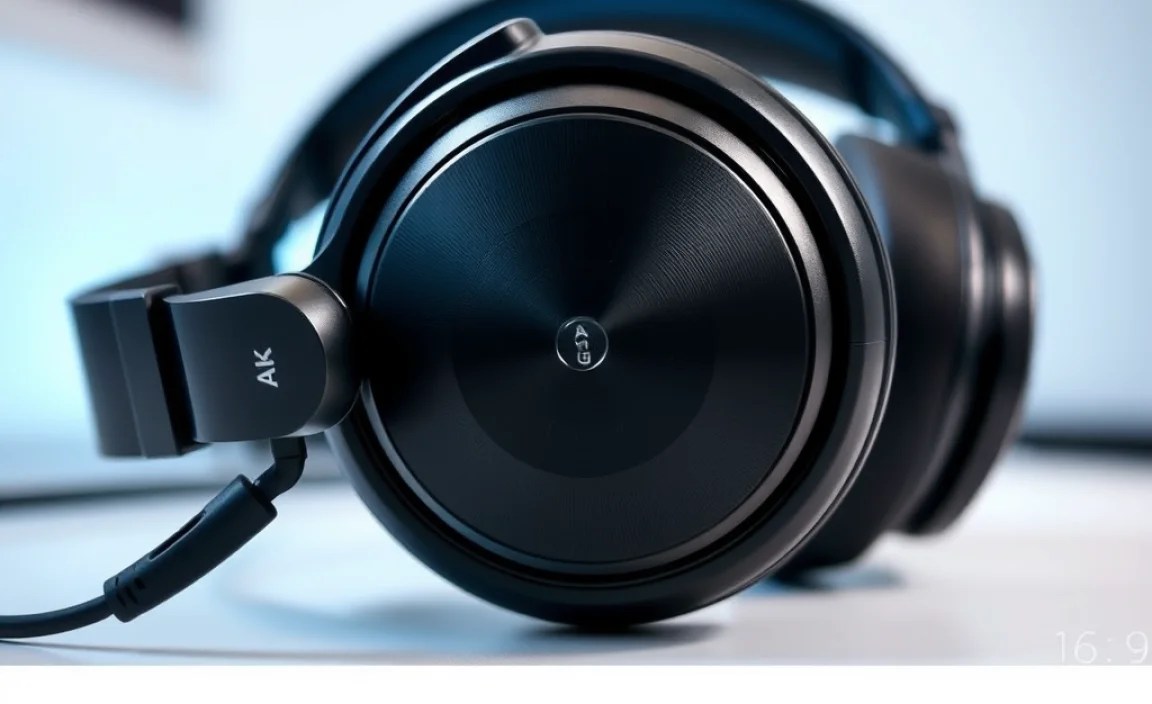
With so many excellent options, how do you pick the AKG headset that’s right for you? It comes down to your listening environment, your preferred music genres, and what you prioritize in a headphone experience. Let’s walk through some important questions to ask yourself:
1. Where Will You Be Listening Most?
This is arguably the most critical factor:
- Quiet Room (Home Studio, Office, Library): Open-back headphones like the AKG K701, K702, or K712 PRO excel here. They offer the most natural and spacious sound.
- Noisy Environment (Commute, Open Office, Cafes): Closed-back headphones are essential. Look at models like the AKG K553 or consider high-end wireless options with good ANC from AKG’s N series.
- Versatile Use: If you switch between environments, you might need two pairs, or a very good closed-back that can handle moderate noise.
2. What Kind of Music Do You Listen To?
While AKG aims for accuracy across the board, some headphones might complement certain genres better:
- Classical, Jazz, Acoustic: Open-back headphones with a wide soundstage and detailed treble are usually ideal. The K701/K702 shine here, revealing intricate textures and subtle dynamics.
- Electronic, Rock, Hip-Hop: You might appreciate a bit more punch in the bass. While AKG is known for accuracy, the K712 PRO offers a more substantial low-end than its K701/702 siblings, making it versatile for these genres without sacrificing detail.
- Vocals & Podcasts: Clarity in the mid-range is key. Most top AKG models deliver excellent vocal intelligibility.
3. Open-Back vs. Closed-Back – A Deeper Dive
This decision impacts not just sound but also how you use the headphones:
| Feature | Open-Back Headphones | Closed-Back Headphones |
|---|---|---|
| Soundstage & Imaging | Generally wider, more natural, and immersive. Excellent separation of instruments. | Can be more intimate; wider soundstage is harder to achieve but some models do well. |
| Sound Leakage | Significant. Sound leaks out, disturbing others nearby. | Minimal to none. Keeps your music private. |
| Noise Isolation | Very poor. External noise easily enters. | Good to excellent passive isolation. Some offer Active Noise Cancellation (ANC). |
| Bass Response | Can be lighter and more refined, less impactful for some genres. | Often more punchy and impactful due to the sealed enclosure. |
| Ideal Use Case | Quiet environments, critical listening, studio monitoring. | Noisy environments, travel, commuting, sharing spaces. |
4. Wired vs. Wireless
Most of AKG’s legendary “genius essential sound” models are wired, emphasizing purity of signal. However, their N series and some newer lines offer wireless options with Bluetooth, which adds convenience but can introduce slightly compressed audio quality (though high-quality codecs are improving this) and the need for charging.
5. Amplifier Needs
Some high-impedance headphones (often found in professional studio gear, including some AKG open-backs) can benefit significantly from a dedicated headphone amplifier. This ensures they receive enough clean power to perform at their best. While many AKG top models are reasonably easy to drive, check impedance (measured in Ohms, Ω) and sensitivity specifications. If the impedance is high (e.g., 250 Ohms or more), a portable or desktop amp is worth considering for the best experience.
Maximizing Your AKG Headset: Essential Tips
Once you have your AKG headset, a few simple practices can help you enjoy its genius sound for years to come and ensure you’re getting the most out of it.
1. Proper Fit is Key
For both comfort and sound quality, ensure your headphones fit correctly:
- Adjust the Headband: Make sure it sits comfortably on your head, distributing weight evenly.
- Earcup Placement: The earcups should cover your ears completely without pressing too hard. For open-backs, a good seal around the ear helps direct sound properly.
- Check for Comfort: If you experience discomfort, adjust the fit or consider different earpads if compatible.
2. Gentle Break-In Period
Many audiophiles believe that headphones, especially those with dynamic drivers, benefit from a “burn-in” or “break-in” period. This is simply playing music through them for an extended time (e.g., 20-100 hours). The idea is that consistent vibrations help the driver materials loosen up, potentially leading to a slightly more relaxed and refined sound. While the impact is debated, it doesn’t hurt to play music through them naturally as you start using them without overthinking it.
3. Protect Your Ears and Your Hearing
AKG’s sound clarity can make you want to turn up the volume to catch every detail. However, prolonged exposure to high volumes can damage your hearing. A good rule of thumb is the 60/60 rule: listen at no more than 60% of the maximum volume for no more than 60 minutes at a time. Remember, the goal of genius sound is to hear accurately, not necessarily loudly.
For more information on protecting your hearing, resources like the National Institute on Deafness and Other Communication Disorders (NIDCD) offer valuable guidance.
4. Keep Them Clean
Dirt, earwax, and oils can accumulate, affecting sound quality and hygiene. Regular, gentle cleaning:
- Earpads: If they are removable, clean them according to manufacturer instructions. Often, a damp cloth with mild soap or a dedicated headphone cleaner works well. For velour pads, a soft brush can remove dust.
- Grilles/Earcups: Wipe down the exterior with a dry or slightly damp microfiber cloth. Avoid getting moisture inside the drivers.
- Cable: Wipe down the cable occasionally.
For detailed cleaning advice specific to headphone materials, you can often find insights on reputable audio enthusiast forums or consult manufacturer support pages.
5. Store Them Safely
When not in use, store your AKG headset where they are protected from dust, extreme temperatures, and physical damage.
- Original Box or Case: Many top AKG models come with a protective case or box. Use it!
- Headphone Stand: A clean, stable stand is great for casual use, keeping them away from potential spills or knocks.
- Avoid Piling: Don’t place heavy objects on top of them.
Troubleshooting Common AKG Headset Issues
Even the best gear can sometimes act up. Here are a few common issues and simple fixes:
Issue: No Sound from One Ear Cup
Possible Causes:
- Loose cable connection.
- Damaged cable.
- Issue with the headphone jack on your device.
- Internal driver problem (less common).
Solutions:
- Reseat the headphone cable firmly into both the headset and your audio source.
- Try a different audio source (phone, computer, amp) to rule out the source issue.
- Test with a different, known-good cable if your AKG has a detachable cable.
- If the problem persists, it might be time to contact AKG support or a repair professional.
Issue: Sound is Distorted or Muffled
Possible Causes:
- Volume is too high.
- Build-up of earwax or debris in the earcup.
- Damaged driver.
- Low-quality audio source.
Solutions:
- Lower the volume on your audio source.
- Gently clean the earcup mesh and earpads (see cleaning section above).
- Ensure you are using a high-quality audio file or stream. Low-bitrate MP3s can sound poor on detailed headphones.
- If the distortion is present at all volumes with various sources, it might indicate a driver issue.
Issue: Headphone Cable is Tangled or Damaged
Possible Causes:
- Careless storage.
- Wear and tear at connection points.
Solutions:
- If your cable is detachable, try gently untangling it or replacing it.
- For fixed cables, avoid yanking or twisting them. Store them loosely coiled.
- If the cable is clearly fraying or damaged, it’s a safety concern and should be replaced.
Remember, most AKG headsets are built for durability. With a little care and these troubleshooting tips, you can keep them sounding fantastic.</
