
Quick Summary: The AKG Professional 2025 is a versatile audio tool designed for creators. This beginner-friendly guide helps you understand its setup, usage, and best practices to achieve great sound. Learn how to get the most out of your AKG gear for recording, mixing, and listening with simple, actionable steps.
AKG Professional 2025: Your Essential Beginner’s Guide

Hey there, audio adventurers! Edward Cavitt here from headphonehorizon. Are you ready to dive into the world of professional audio with AKG? It might seem a little daunting at first, but trust me, it’s more accessible than you think. Today, we’re demystifying the AKG Professional 2025. Whether you’re just starting out with recording your first song, tinkering with podcasting, or simply want to enjoy your music with studio-grade clarity, this guide is for you. We’re going to break down what the AKG Professional 2025 is, how to set it up, use it effectively, and keep it in tip-top shape. No scary jargon, just straightforward advice to help you make better sound. Let’s get started!
Understanding the AKG Professional 2025
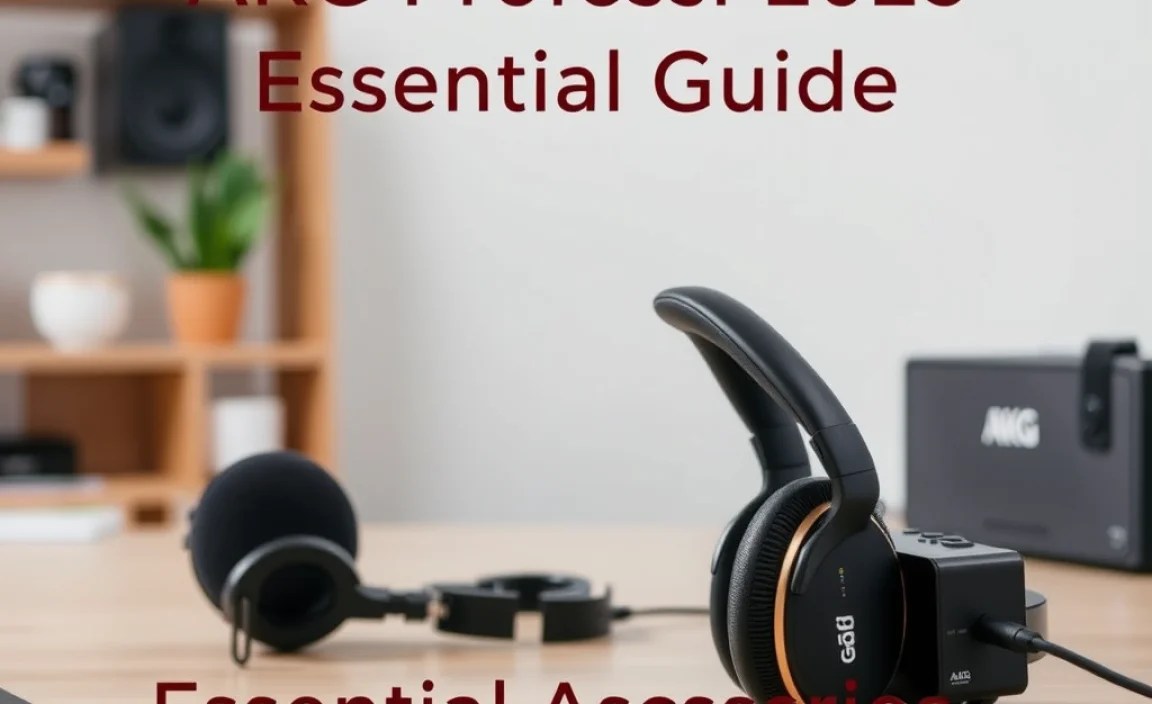
Before we jump into the how-to, let’s get a feel for what the AKG Professional 2025 actually is. While specific model numbers can sometimes refer to a range of products or even future announcements, the “AKG Professional” line generally signifies a commitment to quality sound reproduction and reliable performance for a variety of audio tasks. AKG, a brand with a rich history in audio innovation, is renowned for its microphones and headphones used in studios worldwide. When you see “AKG Professional 2025,” think of it as a gateway to achieving clearer recordings, more accurate monitoring, and a deeper appreciation for audio detail.
The 2025 designation could point to a specific microphone, a monitor speaker, a headphone model, or even an interface designed to be part of a professional audio workflow. For the purpose of this guide, we’ll assume it refers to a versatile piece of equipment likely suited for recording or monitoring, offering a blend of performance and user-friendliness for aspiring audio professionals and serious enthusiasts.
Why Choose AKG Professional?

AKG has been at the forefront of audio technology for decades. Their products are trusted by professionals in countless studios and live venues. When you choose AKG Professional, you’re investing in:
- Reputation: A legacy of innovation and sound quality.
- Performance: Devices designed for accurate audio capture and reproduction.
- Durability: Gear built to withstand the demands of regular use.
- Innovation: Cutting-edge technology that helps you achieve professional results.
Setting Up Your AKG Professional 2025

The setup process will vary slightly depending on the exact nature of your AKG Professional 2025 (microphone, headphones, etc.). However, here are the general steps you’ll likely encounter, focusing on a common scenario like setting up a microphone or monitoring headphones for recording or listening.
For Microphones:
If your AKG Professional 2025 is a microphone, setting it up is usually straightforward, but requires a few key components.
- Connect the Microphone: Most professional microphones use an XLR cable. Plug one end into the microphone and the other into your audio interface, mixer, or phantom power supply.
- Connect to Your Computer/Interface: Your audio interface will connect to your computer, typically via USB. Ensure the interface is powered on and recognized by your computer.
- Enable Phantom Power (if applicable): Many condenser microphones require 48V phantom power to operate. Check your microphone’s manual. If it does, engage the phantom power switch on your audio interface or mixer. Be careful not to send phantom power to dynamic microphones or ribbon microphones that don’t require it, as this can damage them.
- Select Input: On your audio interface or in your Digital Audio Workstation (DAW) software, select the correct input channel where your microphone is connected.
- Monitor Your Audio: Connect headphones (ideally AKG, of course!) or studio monitors to your audio interface for listening.
For Headphones:
If your AKG Professional 2025 refers to a set of monitoring headphones, the setup is even simpler, focusing on how you connect them for accurate listening.
- Identify the Plug: Most professional headphones have a 1/4-inch (6.35mm) jack or a 3.5mm (1/8-inch) jack, often with a screw-on adapter for the larger size.
- Connect to Your Source: Plug the headphone jack into the headphone output of your audio interface, mixer, amplifier, or computer headphone port.
- Adjust Volume: Start with the volume at a low level and gradually increase it to a comfortable listening level.
Essential Accessories You Might Need
Depending on what your AKG Professional 2025 is, you might benefit from a few extra items:
- XLR Cables: For connecting microphones to interfaces. Ensure they are good quality to avoid interference.
- Pop Filter or Windscreen: Crucial for vocal recordings to prevent plosive sounds (like ‘p’ and ‘b’) from overpowering the audio.
- Microphone Stand: To position your microphone correctly.
- Audio Interface/Mixer: The bridge between your microphone and your computer, providing preamplification and digital conversion.
- Headphones: For monitoring your audio accurately during recording and playback.
- Shock Mount: For microphones, to isolate them from vibrations that can travel through a stand.
Using Your AKG Professional 2025 Effectively

Once set up, how do you get the best performance from your AKG Professional 2025? It’s all about understanding its purpose and using it with intention.
For Recording (Assuming a Microphone):
- Mic Placement is Key: Experiment with the distance and angle of the microphone relative to the sound source. For vocals, a pop filter is your best friend. For instruments, subtle changes in position can significantly alter the tone.
- Control Your Environment: Minimize background noise. Turn off fans, close windows, and be mindful of computer fan noise. Acoustic treatment of your room, even simple DIY solutions like blankets, can make a huge difference.
- Set Proper Gain Levels: This is crucial. You want a strong signal without clipping (distortion). Aim for levels that peak around -6dB to -12dB in your DAW. This leaves headroom for processing later. Consult resources on gain staging within your DAW for more depth. (Example research: Sitting On Bees on Gain Staging).
- Listen Critically: Use good quality headphones or monitors to hear exactly what the microphone is capturing. Every room and every microphone will sound different.
For Monitoring (Assuming Headphones):
- Understand Flat Response: Professional monitoring headphones, like many AKG models, aim for a “flat frequency response.” This means they reproduce sound as accurately as possible, without boosting or cutting certain frequencies. This is vital for making mixing decisions you can trust.
- Listen for Detail: Use your AKG headphones to actively listen for nuances in your audio. Can you hear the subtle hiss of an amplifier? The precise decay of a reverb tail? These are the details that elevate a production.
- Reference Tracks: Compare your audio to professionally mixed tracks in similar genres. This helps you understand how your mixes translate on different playback systems.
- Take Breaks: Listening fatigue is real! Your ears can get tired, leading to poor judgment. Take regular breaks to rest your ears.
AKG Professional 2025: Key Features & Specifications (Hypothetical)

While the exact specifications would depend on the specific 2025 model, AKG Professional gear typically boasts impressive features. Here’s a breakdown of what you might find, and why it matters:
| Feature | Description | Benefit for You |
|---|---|---|
| Polar Pattern (Microphones) | e.g., Cardioid, Omnidirectional, Figure-8. Describes the direction(s) from which the microphone picks up sound. | Allows you to isolate specific sound sources (cardioid) or capture ambient sound (omnidirectional), reducing unwanted room noise or bleed. |
| Frequency Response | The range of audible frequencies a device can reproduce or capture, often shown in a graph. | Indicates how accurately the device will capture or reproduce the full spectrum of sound (from deep bass to sparkling highs). |
| Sensitivity (Microphones) | How effectively the microphone converts sound pressure into an electrical signal (measured in mV/Pa or dBV/Pa). | Higher sensitivity means the microphone can pick up quieter sounds or require less gain from your preamplifier. |
| Impedance (Headphones/Microphones) | The electrical resistance the device presents to the signal source (measured in Ohms). | For headphones, higher impedance often pairs best with dedicated headphone amplifiers for optimal volume and clarity. For microphones, it affects compatibility with preamps. |
| Diaphragm Size (Microphones) | The vibrating surface within a microphone. Large-diaphragm mics often offer a warmer, more detailed sound suitable for vocals, while small-diaphragm mics are prized for transient accuracy in instruments like drums and acoustic guitars. | Influences the overall character and detail of the recorded sound. |
| Connectivity | XLR, USB, 1/4″ Jack, 3.5mm Jack. | Determines how the device connects to your existing audio setup. |
Troubleshooting Common Issues
Even with reliable gear, occasional hiccups can happen. Don’t worry, most are easy to resolve!
No Sound
- Check Connections: Ensure all cables are securely plugged in and in the correct ports.
- Verify Power: Is your audio interface powered on? Is phantom power enabled if your microphone needs it?
- Select Correct Input/Output: In your computer’s sound settings and your DAW, make sure the AKG device or your audio interface is selected as the input and output device.
- Volume Levels: Is the volume turned up on your interface and in your software? Sometimes master volume sliders or headphone volume knobs are overlooked.
Distorted Sound (Clipping)
- Reduce Input Gain: Turn down the gain knob on your audio interface or mixer for the channel your AKG device is connected to.
- Lower Source Volume: If recording, the sound source itself might be too loud.
- Check Headphone Volume: Make sure your headphone volume isn’t turned up so high that it’s distorting.
Hum or Buzzing
- Ground Loop: This is a common electrical issue. Try plugging all your audio gear into the same power strip or outlet. A DI box or ground lift adapter might be needed in persistent cases.
- Faulty Cables: A damaged XLR or other audio cable can introduce noise. Try a different cable.
- Interference: Mobile phones, Wi-Fi routers, and other electrical devices can cause interference. Move your gear away from potential sources.
One Side of Headphones Not Working
- Check Plug Insertion: Ensure the headphone plug is fully seated in the jack.
- Cable Damage: Inspect the headphone cable for any visible damage or kinks.
- Left/Right Balance: In your DAW or audio settings, check that the balance for playback isn’t panned hard to one side.
- Try Another Device: Connect the headphones to a different audio source to see if the issue persists. If it does, the headphones themselves may have a problem.
Maintaining Your AKG Professional 2025
Just like any quality tool, taking good care of your AKG gear will ensure it performs at its best for years to come.
General Cleaning:
- Wipe Down: Use a soft, dry microfiber cloth to wipe away dust and smudges from the exterior.
- Avoid Liquids: Never spray cleaning solutions directly onto the device. If you need to clean something stubborn, lightly dampen a cloth with water or a very mild soap solution, and wipe gently. Ensure the device is unplugged and completely dry before use.
- Grilles and Openings: For microphones or headphone earcups, use a clean, dry brush (like a soft toothbrush or a dedicated electronic cleaning brush) to gently remove dust from grilles or mesh. Be very careful not to push debris further inside.
Storage:
- Original Packaging: If possible, store your AKG gear in its original case or box when not in use for extended periods.
- Protect Cables: Avoid sharp bends or kinks in cables. Store them loosely coiled.
- Safe Environment: Keep your equipment away from extreme temperatures, humidity, and direct sunlight.
Handling:
- Avoid Drops: Handle your gear with care. Dropping a microphone or headphones can cause internal damage.
- Secure Connections: When connecting or disconnecting cables, hold the connector, not the cable itself, to prevent strain on the wiring.
- Phantom Power Protocol: Always mute your mixer or interface channel before turning phantom power on or off to prevent loud pops that could damage your speakers or ears.
AKG Professional 2025: Frequently Asked Questions
Q1: What is the primary use case for the AKG Professional 2025?
A1: The AKG Professional 2025 is designed for a range of audio applications, likely including high-quality audio recording, precise monitoring for mixing and mastering, or detailed listening playback. Its specific function depends on whether it’s a microphone, headphone, or another piece of audio equipment.
Q2: Do I need a special computer to use the AKG Professional 2025?
A2: For most AKG Professional 2025 products that connect via USB or standard audio jacks, a reasonably modern computer (Windows or macOS) will suffice. If it’s a microphone requiring an audio interface, ensure your computer has the necessary ports (like USB) to connect the interface. Check the product’s specific requirements.
Q3: What is “phantom power” and do I need it for my AKG Professional 2025?
A3: Phantom power is a DC electric potential (typically +48 volts) used to power microphones that require it, most commonly condenser microphones. If your AKG Professional 2025 is a condenser microphone, you will likely need to enable phantom power on your audio interface or mixer. Always consult the product manual to be sure. It’s generally safe to leave phantom power on an interface even if a mic doesn’t need it, but never with ribbon microphones or some older dynamic mics.
Q4: Can I use my AKG Professional 2025 for gaming or general computer use?
A4: Yes, absolutely! While designed for professional audio, AKG gear often delivers superior sound quality, making it excellent for gaming, watching movies, or listening to music casually. If it’s a microphone, it will provide clear voice communication. If it’s headphones, you’ll experience a richer, more detailed sound than most standard computer peripherals.
Q5: How do I clean my AKG Professional 2025 headphones?
A5: For headphone earcups and headbands, use a soft, slightly damp cloth to wipe them down. Avoid getting moisture into the drivers. For the grilles, a gentle dusting with a soft, dry brush or a can of compressed air (used from a distance) can help remove debris. Always unplug them and ensure they are completely dry before use.
Q6: My AKG Professional 2025 is not recognized by my computer. What should I do?
A6: First, try a different USB port or a different cable. If it’s an audio interface, ensure all drivers are installed correctly from the manufacturer’s website. Restarting your computer and then reconnecting the device can also resolve temporary glitches. For USB devices, check your computer’s Device Manager (Windows) or System Information (macOS) to see if it’s listed.
