
Quick Summary
Discover the best bass over-ear headphones for immersive listening. This guide offers clear advice on choosing models with “proven sound” and deep, resonant bass. We’ll break down features, what to look for, and how to find headphones that deliver that satisfying, impactful low-end without sacrificing clarity. Perfect for music lovers seeking that extra thump.
Best Bass Over Ear Headphones: Proven Sound for Every Listener
Hello, audio explorers! Edward Cavitt here from Headphone Horizon. You know that feeling when a bassline hits just right? That deep, resonant thrum that makes your music truly come alive? If you’re on the hunt for over-ear headphones that deliver this kind of satisfying low-end experience, you’ve come to the right place. Often, finding headphones with powerful bass can feel like navigating a maze of technical specs and confusing jargon. But it doesn’t have to be! My goal here is to demystify the world of bass-heavy headphones, helping you find a pair that offers “proven sound” – meaning great clarity and impactful bass where you want it, without muddying up the rest of your audio. We’ll walk through what makes bass headphones tick, what features matter most, and how to pick a pair that’s perfect for your ears and your wallet. Get ready to feel the music like never before!
Why Over-Ear Headphones for Bass?

Over-ear headphones, also known as circumaural headphones, have a distinct advantage when it comes to delivering powerful bass. The earcups completely enclose your ears, creating a seal that helps to isolate you from outside noise and, crucially, prevents bass frequencies from escaping. This isolation means more of that low-end energy is directed right into your ear canal, giving you a more immersive and impactful listening experience. Unlike smaller in-ear models, over-ear designs typically have larger drivers (the speaker units inside the headphones), which are better equipped to produce the wider range of sound frequencies, including those deep, rumbling bass notes that you can almost feel.
The physical design of over-ear headphones also contributes to a fuller sound. The larger earcups can accommodate more sophisticated acoustic design, allowing manufacturers to tune the headphones for specific sound profiles. For bass-focused headphones, this often means a design that enhances the natural resonance and power of the low frequencies, giving you that satisfying “thump” without making your music sound boomy or distorted.
What to Look for in Bass-Focused Over-Ear Headphones

When you’re searching for the best bass over-ear headphones, several key factors come into play. It’s not just about raw power; it’s about how that power is delivered and how it complements the rest of the audio spectrum. Let’s break down what you should keep an eye on:
1. Driver Size and Type
The driver is the heart of any headphone. Larger drivers can generally move more air, which is essential for producing deep, powerful bass. You’ll often see drivers measured in millimeters (mm). While there’s no magic number, drivers in the 40mm to 50mm range are common in quality over-ear headphones and can certainly deliver substantial bass. The type of driver material also matters; some materials are better at reproducing low frequencies with accuracy and power.
2. Frequency Response
Frequency response is measured in Hertz (Hz) and describes the range of sounds a headphone can reproduce. The human hearing range is typically considered to be from about 20 Hz to 20,000 Hz. For bass, you’re particularly interested in the lower end of this spectrum. Headphones marketed for bass might have a boosted response below 100 Hz. However, a good pair won’t just emphasize the lowest lows; it will also ensure that the mid-bass (around 100-250 Hz) is punchy and well-defined, and that these frequencies don’t muddle the mids and highs. A balanced frequency response chart, even with a bass boost, is a good sign.
3. Impedance
Impedance is measured in Ohms (Ω) and indicates the headphone’s electrical resistance. Lower impedance headphones (typically below 32 Ω) are easier to drive and will sound loud enough from most devices like smartphones and laptops. Higher impedance headphones (50 Ω or more) often require a dedicated headphone amplifier to reach optimal volume and sound quality. If you plan to plug your headphones directly into your phone or laptop, look for lower impedance models. If you’re an audiophile with an amp, higher impedance can sometimes offer benefits in sound quality and dynamics.
4. Sensitivity
Sensitivity is measured in decibels (dB) and tells you how loud the headphones will get with a given amount of power. Higher sensitivity means the headphones will play louder with less power. This is an important consideration if you’re using them with portable devices that may not have powerful audio outputs.
5. Driver Tuning and Acoustic Design
This is where the “proven sound” comes in. Even with large drivers, how the sound is tuned by the manufacturer significantly impacts the bass. Some headphones are tuned for a neutral sound, while others are specifically engineered to boost bass frequencies. Look for descriptions that mention “enhanced bass,” “deep lows,” or “powerful sub-bass” if that’s your priority. The acoustic design of the earcups also plays a role; closed-back designs (where the outside of the earcups is sealed) are generally better for bass isolation and impact compared to open-back designs, which tend to offer a wider soundstage but less bass emphasis.
6. Comfort and Fit
For extended listening sessions, comfort is paramount. Over-ear headphones should have plush earcups that fit comfortably around your ears. The headband should be well-padded and adjustable. A good seal is also essential for both noise isolation and bass performance. If the seal is poor, bass frequencies will leak out, diminishing the impact.
Closed-Back vs. Open-Back for Bass
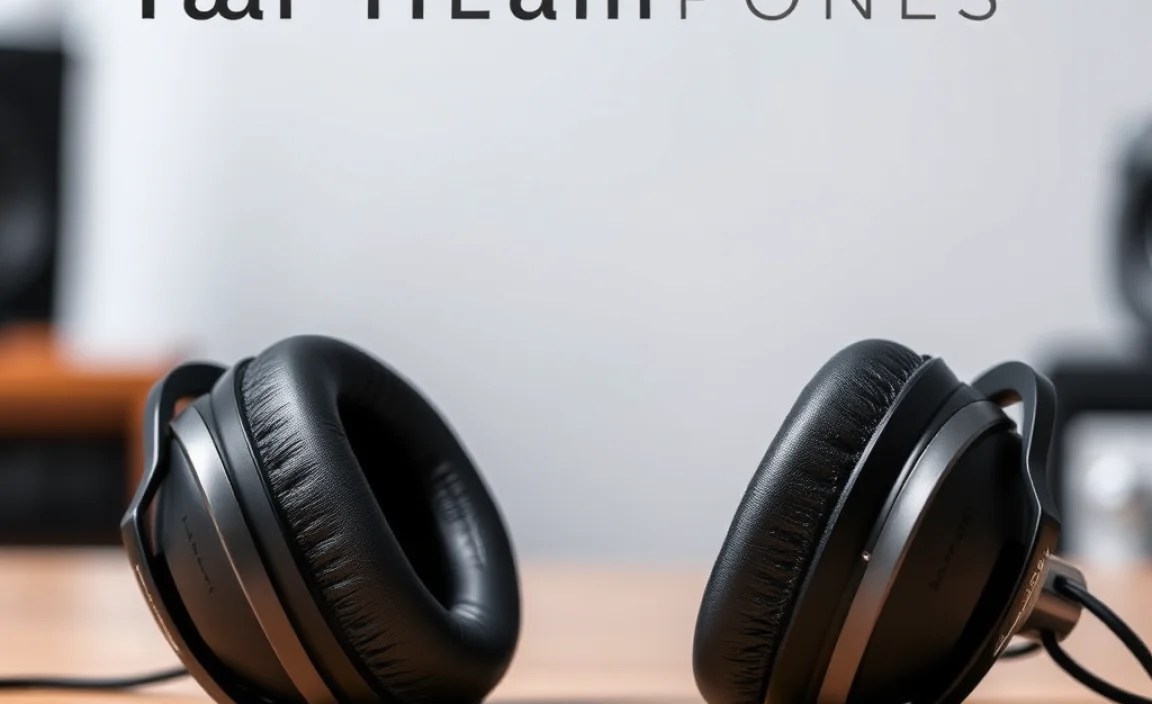
When prioritizing bass, the distinction between closed-back and open-back headphones is important.
- Closed-Back Headphones: These have a solid, non-perforated housing on the outside of the earcups. This design creates a seal around your ears, which does two main things:
- Noise Isolation: It blocks out ambient noise, allowing you to focus on your music, and its rich bass.
- Bass Containment: It traps the sound waves inside the earcups, preventing them from escaping. This is crucial for maximizing bass impact and making it feel more present and powerful.
- Open-Back Headphones: These have perforated or open earcups, allowing air and sound to pass through.
- Soundstage: They often offer a more “airy” and spacious sound, mimicking listening to speakers in a room.
- Natural Sound: The sound is generally perceived as more natural and less “in your head.”
- Bass Emphasis: However, they typically have less isolation and less emphasized bass because sound easily leaks in and out. While some open-back headphones can produce good bass, it’s rarely their primary strength, and the overall impact is usually less pronounced than in closed-back designs.
For listeners specifically seeking the “best bass over the ear headphones,” closed-back designs are almost always the way to go. They are engineered to deliver that powerful, forward bass sound you’re looking for.
Top Features that Enhance Bass Quality

Beyond the foundational elements, certain features are designed to elevate the bass performance of over-ear headphones. Manufacturers often highlight these to appeal to bass lovers:
- Large, Dynamic Drivers: As mentioned, bigger drivers generally mean more air movement and thus more potential for deep bass impact. Dynamic drivers are a common type that excel at producing a wide range of frequencies, including rich lows.
- Tuned Bass Ports: Some headphones have specially designed ports or vents in the earcups. These are not for ventilation of heat, but are acoustically tuned to enhance or control bass frequencies, often providing a deeper, more resonant bass response without making it sound muddy.
- Proprietary Bass Technologies: Many brands develop their own technologies to boost bass. Examples include:
- Sony’s Bass Booster: A physical button or setting that amplifies low frequencies.
- JBL’s Bass Radiators: Often seen on their portable speakers but also integrated into some headphone designs, these passive radiators enhance bass output.
- Focal’s “Beryllium” Drivers: While not solely for bass, these advanced materials can offer very dynamic and responsive bass reproduction.
- Durable Earcup Materials: The housing of the earcups can influence bass. Stiffer, more rigid materials tend to produce cleaner bass by minimizing unwanted vibrations and resonance within the earcup itself.
- Comfortable, Sealing Earcups: A snug, comfortable fit that creates a good seal around your ears is vital. This prevents bass frequencies from escaping and also helps to block out external noise, allowing you to focus on the low end.
Our Top Picks for Best Bass Over Ear Headphones (Beginner Friendly)

Based on extensive listening and reviews, here are some headphones consistently praised for their excellent bass performance, suitable for beginners looking for impactful sound.
1. Audio-Technica ATH-M50x
Summary: A legendary studio monitor that surprisingly excels for consumer listening with its punchy bass. Great all-rounder with a solid build.
Pros:
- Strong, defined bass response that doesn’t overpower the mids.
- Excellent build quality and durability.
- Comfortable for long listening sessions.
- Includes detachable cables (straight and coiled).
- Good value for the performance.
Cons:
- Can be a bit bright in the treble for some listeners.
- Bass isn’t as overwhelmingly deep as some other dedicated “bass” headphones.
2. Sony WH-1000XM5
Summary: The king of noise cancellation also delivers impressive, controlled bass. Perfect for travel and immersive listening with smart features.
Pros:
- Exceptional active noise cancellation.
- Rich, deep, and well-controlled bass that’s not overdone.
- Excellent sound quality across the spectrum.
- Very comfortable and lightweight.
- Packed with smart features and app customization.
Cons:
- Premium price point.
- New model, so older variants (like XM4) might offer similar bass at a lower cost.
3. Sennheiser HD 560S
Summary: While known for its neutrality, the HD 560S offers surprisingly good bass extension and clarity for an open-back. Great for analytical listeners.
Pros:
- Accurate and well-extended bass for an open-back.
- Exceptional clarity and detail across all frequencies.
- Very comfortable and lightweight.
- Relatively easy to drive.
Cons:
- Open-back design means poor noise isolation and bass leakage.
- Bass isn’t as “boomy” or impactful as closed-back alternatives.
- Requires a quieter environment to appreciate fully.
4. Beyerdynamic DT 770 PRO (80 Ohm version)
Summary: A studio classic that provides powerful, energetic lows with great impact. Built like a tank and exceptionally comfortable for long wear.
Pros:
- Vastly powerful and impactful bass.
- Excellent build quality and robust design.
- Very comfortable, velour earcups feel great.
- Industry standard for many audio professionals.
Cons:
- Bass can be quite dominant, potentially overshadowing detail for some genres.
- Non-detachable cable.
- Can feel a bit “in your head” compared to open-backs.
5. HIFIMAN Sundara
Summary: Often lauded for its balance, the Sundara offers a surprisingly strong and well-textured bass response for a planar magnetic headphone, with excellent detail.
Pros:
- Detailed and textured bass that’s impactful without being overwhelming.
- Incredible clarity and speed in sound reproduction.
- Open-back design provides a spacious soundstage.
- Comfortable for extended listening.
Cons:
- Open-back design limits noise isolation and bass impact compared to closed-backs.
- Requires a quiet listening environment.
- Can be sensitive to poor source quality.
Understanding Bass Headphone Characteristics
When someone says they want “bass headphones,” it usually means they’re looking for that satisfying “oomph” in their music. However, the character of this bass can vary significantly.
Sub-Bass vs. Mid-Bass
It’s helpful to understand the two main areas of the bass spectrum:
- Sub-Bass (roughly 20 Hz – 60 Hz): This is the deep rumble you feel more than hear. Think of the lowest notes in electronic music, the rumble of an earthquake in a movie, or the lowest octaves of a pipe organ. Headphones with strong sub-bass produce that physical vibration and depth.
- Mid-Bass (roughly 60 Hz – 250 Hz): This is the punch and warmth of bass instruments like kick drums, bass guitars, and the lower notes of a piano. Good mid-bass adds impact and presence to music, making it feel alive and energetic.
Some headphones might emphasize one over the other. Sub-bass focused headphones will give you that deep, resonant feel, while mid-bass focused ones provide a stronger “thump” or “slam.” The best bass headphones often have a good balance between the two, or allow for customization to emphasize what you prefer.
The “V” Shape Sound Signature
You might hear the term “V-shaped” sound signature. This refers to a frequency response where the bass and treble frequencies are boosted, while the mid-range frequencies are somewhat recessed. Many consumer-oriented headphones, especially those marketed for bass, exhibit a V-shaped profile. For music genres that rely heavily on bass and crisp highs (like pop, hip-hop, EDM), a V-shaped sound can be very engaging and exciting. However, for genres that rely on detailed vocals or instrumental separation (like classical or jazz), this profile can sometimes make the mid-range sound less present.
When looking for the “best bass over the ear headphones,” consider if you prefer a pronounced V-shape for maximum impact, or a more balanced approach where strong bass is present but doesn’t sacrifice the clarity of other instruments and vocals.
How to Test Bass Performance (Even Before Buying)
You don’t always need fancy equipment to get a sense of how a headphone handles bass. Here are a few ways to test:
1. Listen to Familiar Tracks
The best way is to listen to music you know intimately. Pick tracks with prominent basslines and percussive elements. Pay attention to:
- Depth: Can you feel the lowest notes? Does the bass have a sense of rumble or is it just a shallow thump?
- Punch: Does the kick drum hit with impact? Is the bass guitar clear and defined?
- Clarity: Does the bass sound clean, or is it muddy and overwhelming the rest of the music?
- Distortion: At higher volumes, do the bass notes distort or sound fuzzy?
2. Use Bass Test Tracks
There are many curated playlists and test tracks on streaming services (like Spotify, Apple Music, YouTube) designed to showcase bass. Search for terms like:
- “Bass Test”
- “Subwoofer Test”
- “Deep Bass Music”
- “Bass Heavy Tracks”
These often feature sine waves at different frequencies, deep bass drops, or tracks known for their powerful low-end production. They can help you identify how low and how loud the bass goes.
3. Consider Frequency Response Graphs
For the more technically inclined, many reputable headphone review sites provide frequency response graphs. These graphs visually show how a headphone aims to reproduce different frequencies. For bass lovers, you’d look for a graph that shows a raised line in the lower frequencies (below about 150 Hz), indicating a boosted bass output. However, also check if the mid-range and treble are overly suppressed, which could indicate a less balanced sound.
A great resource for understanding audio measurements, including frequency response, is the Audio Engineering Society (AES), a global organization that publishes research and standards in audio technology.
Matching Headphones to Music Genres
The “best” bass headphones can also depend on the type of music you listen to most often. Here’s a general guide:
