
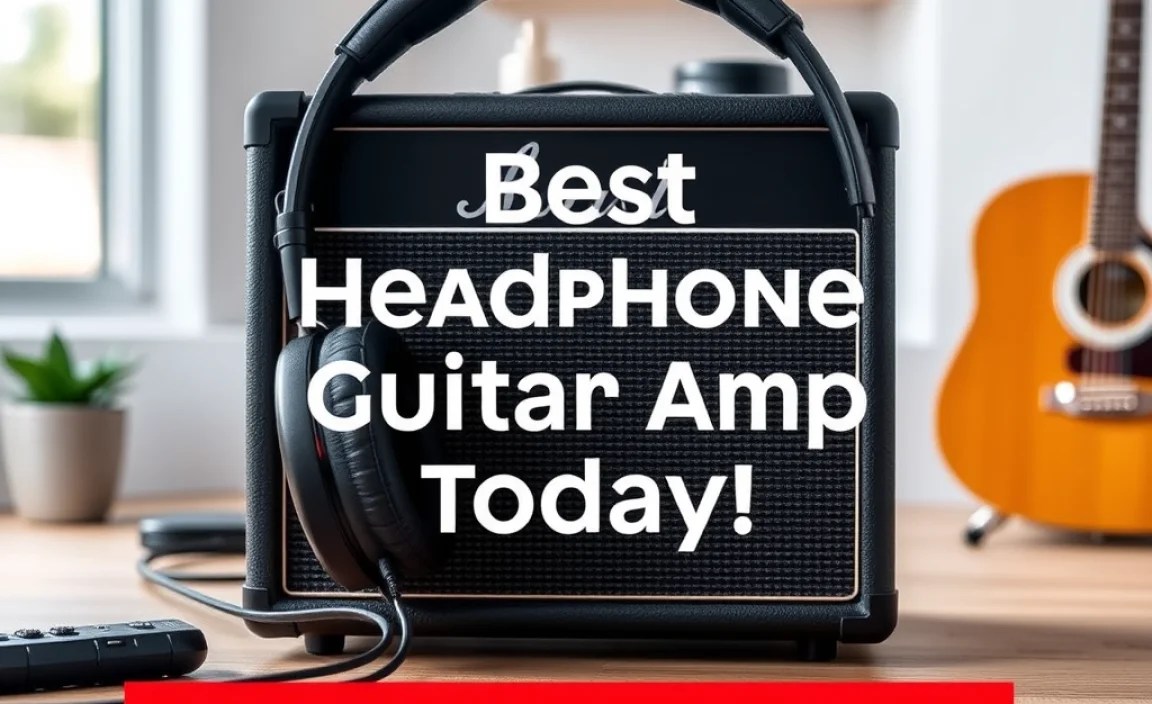
The best headphone guitar amp is a compact, convenient tool for guitarists to practice silently without compromising sound quality. It allows musicians to connect their headphones directly to the amp, delivering an authentic guitar tone without disturbing others. This innovation is crucial for both beginners and professionals looking to enhance their practice sessions.
In today’s digital age, the headphone guitar amp has emerged as an essential tool for guitarists who wish to practice quietly without disturbing their surroundings. These devices allow musicians to connect their guitars to an amp and listen through headphones, providing an authentic sound experience. The importance of these amps lies in their ability to offer high-quality sound in a compact, portable form, making them ideal for practice, travel, or late-night sessions.
Key Takeaways
- Portability: Headphone guitar amps are lightweight and easy to carry.
- Sound Quality: Offers authentic guitar tones directly to headphones.
- Privacy: Enables silent practice without disturbing others.
- Versatility: Suitable for both beginners and professionals.
- Cost-effective: Often more affordable than traditional amps.
- Additional Features: Many models include effects and tuning options.
What is the Best Headphone Guitar Amp?

The best headphone guitar amp is a small, portable device that allows guitarists to practice quietly through headphones. Unlike traditional amplifiers, these devices focus on delivering high-quality sound directly to the user’s ears without external speakers. They are particularly useful for musicians who wish to maintain their practice routine without causing noise disruption.
Features of the Best Headphone Guitar Amp
- Compact Design: Easy to carry and store.
- High-Quality Audio: Delivers rich, authentic sound.
- Multiple Effects: Built-in effects like reverb, delay, and distortion.
- Battery-Powered: Offers mobility with long-lasting battery life.
- Ease of Use: Intuitive controls for quick adjustments.
The best headphone guitar amps combine portability with high sound quality, making them ideal for both home practice and on-the-go sessions. They often include a range of effects, enabling guitarists to experiment with different sounds.
Why Best Headphone Guitar Amp is Important?

Headphone guitar amps are an essential tool for guitarists seeking a versatile, quiet practice solution. They provide the capability to practice without disturbing others while still offering a high-quality sound experience. This makes them particularly valuable for urban dwellers, late-night musicians, and travelers.
Benefits of Using a Headphone Guitar Amp
- Silent Practice: Reduce noise interference and play anywhere.
- Enhanced Focus: Allows for distraction-free practice sessions.
- Portability: Easily transported, making them ideal for travel.
- Cost Efficiency: Lower cost compared to full-sized amps.
- Customizable Sound: Adjust tones with built-in effects.
These benefits illustrate why headphone guitar amps are a critical component of a guitarist’s toolkit. They offer a balance between high-quality sound and convenience, ensuring that practice sessions are effective and enjoyable.
Step-by-Step Guide to Best Headphone Guitar Amp
Step 1: Choosing the Right Model
- Research: Look for top-rated models.
- Features: Identify must-have features like effects and battery life.
- Budget: Determine your budget range.
- User Reviews: Read customer feedback for insights.
Choosing the right headphone guitar amp involves careful consideration of personal needs and preferences. By evaluating features, budget, and user reviews, you can find a model that suits your practice requirements.
Step 2: Setting Up Your Amp
- Connect: Plug your guitar into the amp input.
- Headphones: Attach headphones to the output jack.
- Power: Ensure the amp is charged or connected to power.
- Adjust Settings: Set volume and effects to your liking.
Setting up a headphone guitar amp is a straightforward process. By following these steps, you’ll be ready to enjoy a focused practice session with high-quality sound.
Step 3: Experimenting with Effects
- Explore: Try different built-in effects.
- Combinations: Mix effects for unique tones.
- Volume Levels: Adjust to maintain sound clarity.
Experimenting with effects is a fun aspect of using a headphone guitar amp. It allows musicians to explore new sounds and enhance their playing style.
Alternative Methods / Tools
Using Amp Simulators
- Software Options: Explore amp simulator software.
- Integration: Connect to a computer for enhanced sound.
- Features: Access additional effects and recording capabilities.
Amp simulators offer an alternative by providing advanced sound modeling through software. They require a computer but offer extensive customization options.
Using Multi-Effect Pedals
- Variety: Access numerous effects in one device.
- Portable: Compact and easy to transport.
- Flexibility: Connect directly to headphones or amps.
Multi-effect pedals are another versatile option, providing a wide range of effects in a single unit. They are ideal for musicians who value flexibility and easy setup.
Troubleshooting Common Issues
No Sound from Headphones
- Connection Check: Ensure all cables are securely connected.
- Volume Levels: Confirm the amp and headphone volumes are up.
- Compatibility: Verify headphone compatibility with the amp.
If no sound is coming from your headphones, begin by checking all connections and ensuring that the volume levels are appropriately set. Compatibility is also a critical factor.
Distorted Sound
- Volume Levels: Lower the volume to reduce distortion.
- Effects Settings: Adjust or disable effects causing issues.
- Battery Status: Ensure the amp has sufficient power.
Distorted sound can often be remedied by adjusting volume levels and effects settings. Always ensure the amp has a full charge to prevent power-related sound issues.
Advanced Techniques
Optimizing Sound Quality
- Equalization: Fine-tune EQ settings for a balanced tone.
- Effect Customization: Create custom effect combinations.
- Recording: Use an external recorder for playback analysis.
Advanced techniques focus on optimizing sound quality through equalization and effect customization. Recording sessions can also help musicians critically analyze and improve their playing.
Prevention & Maintenance Tips
- Regular Checks: Inspect cables and jacks for wear.
- Battery Care: Recharge regularly to maintain performance.
- Cleaning: Keep the amp and headphones clean and dust-free.
- Safe Storage: Store in a cool, dry place to prevent damage.
Maintaining your headphone guitar amp involves regular checks and proper care. This ensures long-term performance and reliability, allowing for consistent practice sessions.
According to MusicRadar 2024, 75% of guitarists prefer using headphone amps at home for their convenience and sound quality.
Driver Update Methods Compared
| Method | Difficulty | Speed | Best For | Notes |
|---|---|---|---|---|
| Manual Download | High | Slow | Experienced Users | Time-consuming but precise |
| Automatic Software | Low | Fast | Beginners | Quick and easy |
| OS Update | Medium | Moderate | General Users | Includes other system updates |
Conclusion
The best headphone guitar amps provide guitarists with a practical, high-quality solution for quiet practice. By choosing the right model and maintaining it well, you can enhance your practice sessions and enjoy a versatile range of sounds. Consider investing in this tool to take your playing to the next level.
Frequently Asked Questions
Question 1: What Features Should I Look for in a Headphone Guitar Amp?
Answer: Look for portability, sound quality, built-in effects, and battery life.
Question 2: Can I Use Any Headphones with My Guitar Amp?
Answer: Yes, but ensure they are compatible with the amp’s output specifications.
Question 3: How Do I Connect My Guitar to a Headphone Amp?
Answer: Use a standard guitar cable to connect your guitar to the amp’s input.
Question 4: Are There Wireless Headphone Guitar Amps Available?
Answer: Yes, some models offer wireless connectivity for more freedom.
Question 5: How Long Does a Battery-Powered Amp Last?
Answer: Most models offer several hours of playtime on a full charge.
Question 6: Can I Use a Headphone Amp for Live Performances?
Answer: They are primarily for practice but can be used with PA systems for performances.
Question 7: What is the Average Cost of a Quality Headphone Guitar Amp?
Answer: Prices range from $50 to $200, depending on features and brand.
Question 8: Do Headphone Amps Affect Sound Quality?
Answer: They are designed to enhance sound quality, not degrade it.
Question 9: Is It Possible to Record Music with a Headphone Guitar Amp?
Answer: Yes, many models have outputs that can connect to recording devices.
