
Choosing the best headphones for home recording is key for clear audio monitoring. This guide helps beginners understand critical factors like open-back vs. closed-back designs, comfort, and sound accuracy. We’ll explore essential features so you can make an informed decision to elevate your recording projects.
Best Headphones For Home Recording: Your Essential Buyer’s Guide

Hey there, audio adventurers! Edward Cavitt from Headphone Horizon here. So, you’ve taken the exciting plunge into home recording. That’s fantastic! Whether you’re laying down your first vocal track, practicing an instrument, or experimenting with music production, having the right gear makes all the difference.
And when it comes to hearing every nuance of your sound, your headphones are your best friend. But with so many options out there, picking the “best headphones for home recording” can feel a bit like navigating a sonic maze. Don’t worry! We’re going to break it all down, clear as a bell, so you can choose headphones that help you create your best work, without all the technical headaches.
Why Are Specific Headphones Needed for Home Recording?

You might be thinking, “Can’t I just use the headphones I already have?” While any headphones can let you hear sound, home recording demands something more. Recording headphones aren’t just about listening; they’re about critical listening.
This means they need to provide a very honest and accurate representation of the sound you’re capturing. They also need to prevent that sound from leaking back into your sensitive microphone.
Think of it like this: If you’re painting, you wouldn’t use cheap, watered-down paint and expect a masterpiece. Similarly, for recording, you need gear that reveals the true nature of your audio. Recording headphones are designed with:
- Accuracy: They aim for a “flat” or neutral frequency response, meaning they don’t artificially boost bass or treble. This allows you to hear exactly what’s being recorded, so you can pinpoint issues and make precise adjustments.
- Isolation: Especially with closed-back headphones, they’re built to create a seal around your ears, preventing the headphone’s sound from bleeding into your microphone. This is crucial for clean vocal and instrument recordings.
- Comfort: You might be wearing them for hours as you record and mix. Comfort is paramount to avoid fatigue and stay focused on your sound.
Open-Back vs. Closed-Back Headphones: What’s the Difference for Recording?

This is one of the first big decisions you’ll face when looking for recording headphones, and it’s a pretty important one. The design of the earcups affects how sound is perceived and contained. Let’s break down the key differences and why they matter for your home studio.
Closed-Back Headphones
These headphones have a solid, sealed backing to their earcups. This design is fantastic for isolation. The seal prevents most of the sound from escaping, which is incredibly important if you’re recording vocals or acoustic instruments with a microphone. You won’t have to worry about the headphone audio bleeding into your recording, causing unwanted echoes or re-recorded sounds.
Pros of Closed-Back Headphones for Recording:
- Excellent Isolation: Prevents sound leakage, crucial for mic-based recording.
- Great for Tracking: Ideal for musicians and vocalists during performance and recording sessions.
- Deeper Bass Response: The sealed design often contributes to a more pronounced bass.
Cons of Closed-Back Headphones for Recording:
- Can Sound “Boxy”: Some may perceive the sound as less spacious or natural compared to open-backs.
- Can Cause Ear Fatigue: The isolation and pressure can sometimes be less comfortable for very long sessions for some users.
- Less Natural Soundstage: The sound might not feel as open or airy.
Open-Back Headphones
Open-back headphones have grilles or vents on the back of the earcups, allowing air and sound to pass through. This design creates a more natural, spacious, and airy sound. It often feels more like listening to speakers in a room rather than having sound directly pumped into your ears. However, this openness means sound leaks in and out.
Pros of Open-Back Headphones for Recording:
- Natural and Spacious Sound: Excellent for critical listening, mixing, and mastering.
- Reduced Listener Fatigue: The open design generally feels more comfortable for extended wear.
- Wider Soundstage: Better separation and imaging of instruments.
Cons of Open-Back Headphones for Recording:
- Poor Isolation: Sound leaks out easily, making them unsuitable for recording sessions where a microphone is present.
- Sound Leakage: Others nearby can hear what you’re listening to, and ambient noise can enter.
- Not Ideal for Tracking: Not recommended for vocalists or instrumentalists while recording with a mic.
Which Type is Best for You?
For most beginners starting out in home recording, especially if you plan to record vocals or acoustic instruments, a good pair of closed-back headphones will likely be your most versatile choice.
They offer the essential isolation needed to protect your recordings. If you find yourself primarily mixing and mastering (i.e., editing and fine-tuning recorded tracks) and have a quiet environment, open-back headphones can offer a more enjoyable and revealing listening experience for those stages.
Key Features to Look For
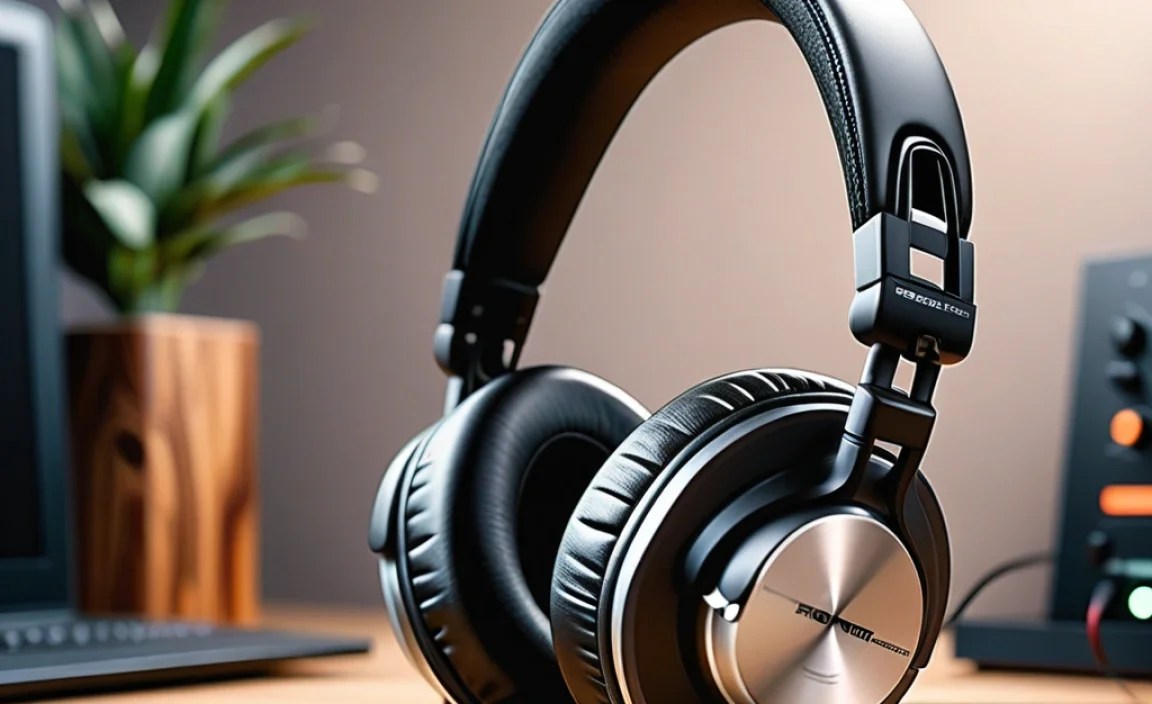
Beyond the open vs. closed-back debate, several other features are critical for making sure your headphones are up to the task of home recording. Let’s dive into what makes a pair of headphones truly shine in a studio setting.
1. Sound Accuracy & Frequency Response
As mentioned, accuracy is king. You want headphones that reproduce sound as faithfully as possible. This is often described by their “frequency response,” which shows how well they reproduce different pitches (from deep bass to high treble).
Headphones with a “flat” or “neutral” frequency response are ideal for recording because they don’t color the sound with artificial warmth or brightness. This allows you to hear exactly what your microphone is picking up.
While a perfectly flat response is rare, look for headphones that are advertised as “studio monitor headphones” or “reference headphones.” You can often find charts online that illustrate a headphone’s frequency response. For instance, understanding the Hertz (Hz) scale helps: lower numbers (e.g., 20 Hz) are bass, while higher numbers (e.g., 20,000 Hz or 20 kHz) are treble. An ideal range for music covers 20 Hz to 20 kHz.
A reliable source like Crutchfield often provides detailed specifications, including frequency response charts for many headphones, which can be a great reference point.
2. Comfort and Fit
You’ll likely be wearing your headphones for extended periods, especially during long recording or mixing sessions. Uncomfortable headphones can lead to distraction, fatigue, and even physical discomfort, negatively impacting your creative flow. Look for:
- Earpad Material: Plush, breathable materials like velour can be more comfortable than stiff leatherette for long sessions.
- Headband Padding: A well-padded headband distributes weight evenly across your head.
- Clamping Force: The headphones should fit snugly enough to stay put but not so tight that they cause headaches or ear pain.
- Weight: Lighter headphones are generally more comfortable for prolonged use.
Try to find reviews that specifically mention long-term comfort. Sometimes, even headphones with replaceable earpads can be modified for better comfort.
3. Durability and Build Quality
Your home studio gear should be able to withstand regular use. Look for headphones made with robust materials. Metal components in the headband or yokes are often a sign of better durability than all-plastic constructions. Also, consider if the cable is detachable. Detachable cables are a huge plus because if a cable gets damaged (a common failure point), you can simply replace it without needing new headphones.
4. Impedance and Sensitivity
These terms can sound a bit technical, but they’re important for ensuring your headphones will work well with your audio interface or recording device.
- Impedance (Ohms, Ω): This relates to how much power the headphones need to produce a certain volume. Lower impedance (e.g., 32-80 Ω) headphones are easier to drive and work well with low-power devices like smartphones or laptops. Higher impedance (e.g., 250 Ω or more) headphones often require a headphone amplifier to reach adequate volume and deliver their best sound quality. For most home recording interfaces, headphones with impedance between 80-250 Ω are a good middle ground.
- Sensitivity: This indicates how loud the headphones can get with a given amount of power. Higher sensitivity (measured in dB/mW) means they’ll be louder with less power.
For beginners, it’s generally safe to look for headphones with lower to medium impedance (under 100 Ω) if you plan to plug them directly into your computer or audio interface without a dedicated headphone amp. If you see really high impedance numbers, you might need additional gear.
5. Cable and Connectors
As mentioned, detachable cables are a big win for durability. Also, consider the cable length – you’ll want enough slack to move around comfortably without pulling them off. Most studio headphones come with a sturdy, coiled or straight cable. Ensure they come with a standard 1/4-inch (6.35mm) adapter, as this is what most audio interfaces and mixers use, though many also have a 3.5mm (1/8-inch) connector for direct computer or device use.
Top Picks for Beginners: Best Headphones for Home Recording

Now, let’s get to some recommendations. These headphones are consistently praised for their balance of performance, comfort, and value for home recording beginners. Remember, the “best” is often subjective, but these are excellent starting points.
Our Top 3 Recommendations
| Headphone Model | Type | Key Features | Best For |
|---|---|---|---|
| Audio-Technica ATH-M50x | Closed-Back | Excellent clarity, robust build, detachable cable, good isolation, balanced sound. | Versatile all-rounder for tracking and mixing. |
| Sennheiser HD 280 Pro | Closed-Back | Exceptional noise isolation, durable, accurate sound reproduction, comfortable for long sessions. | Ideal for noisy environments or when maximum isolation is needed. |
| AKG K240 Studio | Semi-Open Back | Spacious soundstage for the price, detailed mids and highs, self-adjusting headband, comfortable. | Great for mixing and detailed listening in quiet spaces; can be used for tracking if isolation isn’t critical. |
A Deeper Look at a Few Favorites
Let’s expand on why these are such solid choices:
Audio-Technica ATH-M50x
These are practically legendary in the home studio world for a reason. The ATH-M50x offers a fantastic blend of clarity, punchy bass, and excellent isolation. They’re built like tanks and come with a few different cable options and a carrying pouch, adding to their value. Their sound is engaging, making them good for both critical listening during mixing and for musicians to track with confidently. The only minor drawback is that some find their bass a little more prominent than a perfectly “flat” studio headphone, but for many, this makes them enjoyable for longer listening sessions and still accurate enough for professional work.
Sennheiser HD 280 Pro
If isolation is your absolute top priority, look no further. The HD 280 Pro is designed to keep external noise out and your recorded sound in. They boast incredibly effective passive noise cancellation thanks to their supra-aural (on-ear) design and plush earpads that create a tight seal.
They deliver a very clear, uncolored sound that’s perfect for hearing every detail. While they might not be as “exciting” sounding as some others, their accuracy is exactly what you need when you can’t afford any sonic surprises. They are also incredibly robust and built to last.
AKG K240 Studio
The K240 Studio often gets recommended to beginners because it offers a taste of open-back spaciousness at a very accessible price point. They are technically “semi-open,” meaning they have vents but not as freely as fully open headphones.
This allows for a wider, more natural soundstage than most closed-back options, which is wonderful for mixing and getting a sense of instrument separation. They provide a natural, detailed sound. However, because they are not fully closed, there is some sound leakage, making them less ideal for loud vocal tracking with sensitive microphones.
How to Test Headphones for Recording
When you get your new headphones home, or if you’re trying them out at a store, you’ll want to “test drive” them to see if they’re the right fit for your recording needs. Here’s a simple process:
- Play Familiar Music: Listen to tracks you know inside and out. Did you hear details you never noticed before? Does the bass sound natural, or is it overly boomy? Are the vocals clear and present, or are they tinny?
- Listen for “Honesty”: Does the sound feel neutral and transparent, or does it seem to emphasize certain frequencies (like making everything sound bass-heavy or sharp)? For recording, you want “honesty” above all.
- Check for Fatigue: Wear the headphones for at least 15-30 minutes. Do your ears start to hurt? Do you get a headache? If so, they might be too tight, too heavy, or the earpads aren’t comfortable for you.
- Test the Isolation (for Closed-Back): If you’re using closed-back headphones, try playing some music at a moderate volume and then talking. Can you hear yourself clearly? Conversely, have someone play music through the headphones while you’re in the same room with a microphone (if possible). Is there significant sound leakage into the mic’s pickup pattern?
- Assess the Soundstage: For mixing, try listening to a track where you can easily distinguish different instruments (e.g., drums, bass, guitar, vocals). Can you tell where each instrument is placed in the stereo field? Does it sound wide and open, or narrow and in your head?
Headphone Maintenance for Longevity
Just like any other piece of gear, taking care of your headphones will ensure they last longer and continue to sound their best. Here are a few simple tips:
- Store Them Properly: When not in use, store your headphones away from dust, direct sunlight, and extreme temperatures. A dedicated stand or the original box/case is ideal.
- Keep Them Clean: Earpads can accumulate sweat and earwax. Gently wipe them down with a slightly damp, soft cloth periodically. Avoid harsh chemicals. For removable earpads, some can be hand-washed (check your manual), but always ensure they are completely dry before reattaching.
- Manage the Cables: Avoid yanking cables out of Jacks. Don’t wrap cables too tightly around the headphones; instead, use a loose, figure-eight wrap to prevent internal wire damage. If you have a detachable cable, disconnect it when storing for long periods.
- Handle with Care: While studio headphones are built tough, avoid dropping them or putting excessive pressure on the headband or earcups.
- Consider a Headphone Amplifier: For higher impedance headphones (over 250 Ω), a headphone amplifier is essential. It not only provides sufficient power for proper volume but also ensures you’re not overdriving your audio interface’s output, which can damage it or lead to poor sound quality. A good interface or amplifier protects your headphones too.
Frequently Asked Questions (FAQ)
Here are some common questions beginners have about choosing and using headphones for home recording:
Q1: Do I need expensive headphones for home recording?
Not necessarily! While very high-end headphones can offer incredible detail, there are many excellent, affordable options perfect for beginners and even seasoned professionals. Focus on accuracy and comfort for your budget. The models mentioned in this guide are great examples of value.
Q2: Can I use my gaming headset for recording?
Most gaming headsets are designed for immersion rather than sonic accuracy. They often have exaggerated bass and treble, and their microphones are typically lower quality. While you can technically use them, they won’t give you the honest sound reproduction needed for good recording and mixing. It’s highly recommended to get dedicated studio headphones.
Q3: What’s the difference between studio monitor headphones and regular consumer headphones?
Studio monitor headphones aim for a “flat” or neutral frequency response, meaning they reproduce sound accurately without artificially boosting bass or treble. Consumer headphones often have a more “exciting” sound profile designed for enjoyable listening, which can be misleading when trying to hear subtle details in a recording.
