
Quick Summary: Choosing the best headphones for studio recording is crucial for accurate monitoring. This guide explains what to look for, like flat frequency response and comfort, and recommends top beginner-friendly models to help you capture your best sound.
Best Headphones For Studio Recording: Essential Gear for Clarity
Hey everyone, Edward Cavitt here from Headphone Horizon! If you’re just dipping your toes into the exciting world of studio recording, congratulations! It’s a fantastic journey. One of the most important pieces of gear you’ll need—almost as vital as your microphone—is a great pair of headphones. But not just any headphones will do. For studio work, you need headphones that tell you the honest truth about your sound, without adding their own flavor. This means looking for something with a “flat” frequency response, which helps you hear exactly what’s being recorded. Don’t worry if this sounds a bit technical; we’re going to break it all down in a way that makes sense, and help you find headphones that will be your reliable audio companions. Let’s get your recording setup sounding its absolute best!
Why Studio Headphones Are Different

You might be wondering, “Can’t I just use my everyday headphones?” While your favorite pair might sound amazing for casual listening, studio recording demands a different kind of performance. Regular consumer headphones are often designed to “color” the sound, boosting bass or treble to make music sound more exciting. This is fun for your playlist, but it’s a big no-no in the studio. When you’re recording, you need to hear the raw, unadulterated audio. You need to catch every little detail, every subtle nuance, and every potential imperfection. Studio headphones, often called “monitoring headphones,” are built with a neutral sound profile to provide an accurate representation of the audio signal. This allows you to make critical mixing and recording decisions with confidence, knowing you’re hearing the true sound.
Key Features to Look For in Studio Recording Headphones

When you’re on the hunt for the best headphones for studio recording, a few key features will guide you. Think of these as your checklist to ensure you’re picking a winner.
1. Frequency Response: The Flatness Factor
This might be the most important spec. Frequency response tells you how well headphones reproduce different frequencies (bass, mids, treble). For studio work, you want a “flat” or “neutral” frequency response. This means the headphones reproduce sounds across the audible spectrum (typically 20Hz to 20kHz) at roughly the same volume. They shouldn’t artificially boost or cut any particular range. This accuracy is crucial for making informed decisions about your mix. Consumer headphones often have a V-shaped curve (boosted bass and treble), which can mislead you into thinking your recordings sound better than they actually do.
You can often find frequency response graphs for headphones online. Look for a graph that is as straight and horizontal as possible within the audible range.
2. Type of Headphones: Open-Back vs. Closed-Back
There are two main types of headphone designs, and each has its strengths and weaknesses in a studio setting:
- Closed-Back Headphones: These have a sealed ear cup design. This is excellent for isolation, meaning they prevent sound from leaking out and also block outside noise from entering. This makes them ideal for recording vocals or instruments where you don’t want the headphone sound bleeding into the microphone. They are also great for noisy environments. However, some users find the soundstage (the perceived “space” of the audio) to be less natural or immersive compared to open-back models.
- Open-Back Headphones: These have ear cups with vents or perforations, allowing air and sound to pass through. This design generally provides a more natural, spacious, and accurate soundstage, making them a favorite for mixing and critical listening. However, sound leakage is significant—both from the headphones outwards and from the environment inwards. This makes them unsuitable for tracking (recording) but excellent for detailed mixing and mastering when noise isolation isn’t a concern.
For beginners, starting with a good pair of closed-back headphones is often the most versatile choice, as they can be used for both recording and initial mixing. As you advance, you might consider adding a pair of open-back headphones specifically for mixing.
3. Comfort and Fit: For Those Long Sessions
You’ll likely be wearing these headphones for extended periods, especially during recording sessions or when mixing. Comfort is not just a nice-to-have; it’s essential for focus and accuracy. Look for headphones with:
- Plush, breathable ear pads that don’t get too hot.
- A lightweight design that doesn’t feel heavy on your head.
- An adjustable headband that provides a secure but not overly tight fit.
- Ear cups that are large enough to comfortably enclose your ears without pressing on them.
Consider the materials used for the ear pads – velour can be more breathable than pleather for long sessions.
4. Durability and Build Quality: Built to Last
Studio gear often goes through a lot. While we aim for gentle handling, things happen. Headphones that are built with robust materials, strong hinges, and a solid headband will stand the test of time. Metal components often indicate better durability than all-plastic constructions. Detachable cables are also a big plus, as cables are often the first point of failure. If a cable gets damaged, you can simply replace it instead of the entire headphone.
5. Impedance: Matching Your Gear
Impedance is measured in Ohms (Ω) and relates to how much electrical resistance the headphones have. This is important because it affects how loud the headphones can be driven by your audio interface or amplifier.
- Low Impedance (e.g., 16-32 Ω): These are generally easier to drive and will get sufficiently loud from almost any headphone jack, including smartphones or basic audio interfaces.
- High Impedance (e.g., 80 Ω and above): These require more power to reach adequate listening levels and often sound best when connected to a dedicated headphone amplifier or a more powerful audio output.
For beginners using standard audio interfaces, headphones with impedance in the range of 32-80 Ω are usually a safe bet. If you plan on connecting directly to a computer soundcard or mobile device without an amp, lower impedance is generally preferred.
Recommended Headphones for Studio Recording (Beginner-Friendly)

Finding the “best” is subjective, but certain models consistently deliver excellent performance for their price and are popular choices among beginners and professionals alike. Here are a few top contenders that offer great value and accuracy:
| Headphone Model | Type | Key Features | Ideal For |
|---|---|---|---|
| Audio-Technica ATH-M series (e.g., ATH-M40x/M50x) | Closed-Back | Durable build, good isolation, relatively flat response (M50x has a bit of a signature sound, M40x is flatter), swappable cables. | Tracking vocals/instruments, general monitoring, some mixing tasks. The M40x leans more towards flat, while the M50x is more popular for its slightly more exciting sound, making it a good all-rounder. Learn more about Audio-Technica studio headphones. |
| Sennheiser HD 280 Pro | Closed-Back | Excellent sound isolation, robust construction, balanced sound profile, comfortable for long wear. | Live recording, tracking instruments where isolation is paramount, detailed monitoring. |
| Beyerdynamic DT 770 Pro | Closed-Back | Legendary comfort, very robust build, detail-oriented sound, excellent long-term wearability. Available in different impedance (80 Ohm is common for studios). | Tracking in noisy environments, critical listening, extended mixing sessions. |
| AKG K240 Studio | Semi-Open-Back | Affordable, good detail, comfortable, semi-open design offers a blend of isolation and a more open soundstage than fully closed-back. | Beginner’s first studio pair, mixing and monitoring where extreme isolation isn’t needed. Offers a taste of an open soundstage at a great price. |
How to Use Your Studio Headphones Effectively

Simply owning a great pair of studio headphones isn’t enough; knowing how to use them properly will elevate your recording and mixing game.
1. For Recording (Tracking): Prioritize Isolation
When you’re recording vocals, acoustic instruments, or anything where you don’t want the headphone bleed to be picked up by your microphone, closed-back headphones are your best friend. Ensure they fit snugly to create a good seal. You want to hear your performance clearly through the headphones, but you don’t want that sound to travel back into the microphone and contaminate your recording.
Pro Tip: Advise the performer to use the lowest volume necessary in their headphones that still allows them to hear themselves and the backing track clearly. Overpowering the headphones can lead to increased bleed, even with closed-back designs.
2. For Mixing and Mastering: Seek Accuracy
This is where open-back or semi-open-back headphones truly shine, though good closed-back models can also be used if isolation is a concern. The goal here is to hear every detail of your mix as accurately as possible. Pay attention to:
- The SoundSTAGE: How wide and deep does the music sound? Can you pinpoint where instruments are placed in the stereo field?
- Transient Detail: Can you hear the sharp, percussive attack of drums or plucks of a guitar string clearly?
- Subtle Frequencies: Are the bass frequencies clear and defined, or are they muddy? Is the high-end harsh or smooth?
Remember, mixing on headphones requires developing a critical ear over time. Your perception of bass and stereo image can be different on headphones than on studio monitors. It’s often recommended to use headphones as part of your monitoring setup, alongside studio monitors if possible, to get a well-rounded perspective. Information on room acoustics and speaker placement can be found at resources like the Acoustics Training website, which can help you understand how your environment impacts sound.
3. Calibrating Your Listening Levels
Listening too loud for too long can damage your hearing and lead to ear fatigue, which significantly impacts your ability to make accurate mixing decisions. It can also create a false sense of the mix’s balance (e.g., bass sounds more prominent at higher volumes). Aim for moderate listening levels where you can maintain clarity without straining your ears.
A good rule of thumb is to set your headphone volume so that a vocal track sounds about as loud as if someone were speaking to you from a few feet away.
4. Check for Comfort and Fit Regularly
During long sessions, take breaks to rest your ears and adjust your headphones if needed. Even the most comfortable headphones can become irritating after hours of wear if they’re not positioned correctly or if the ear pads are getting warm.
Troubleshooting Common Headphone Issues
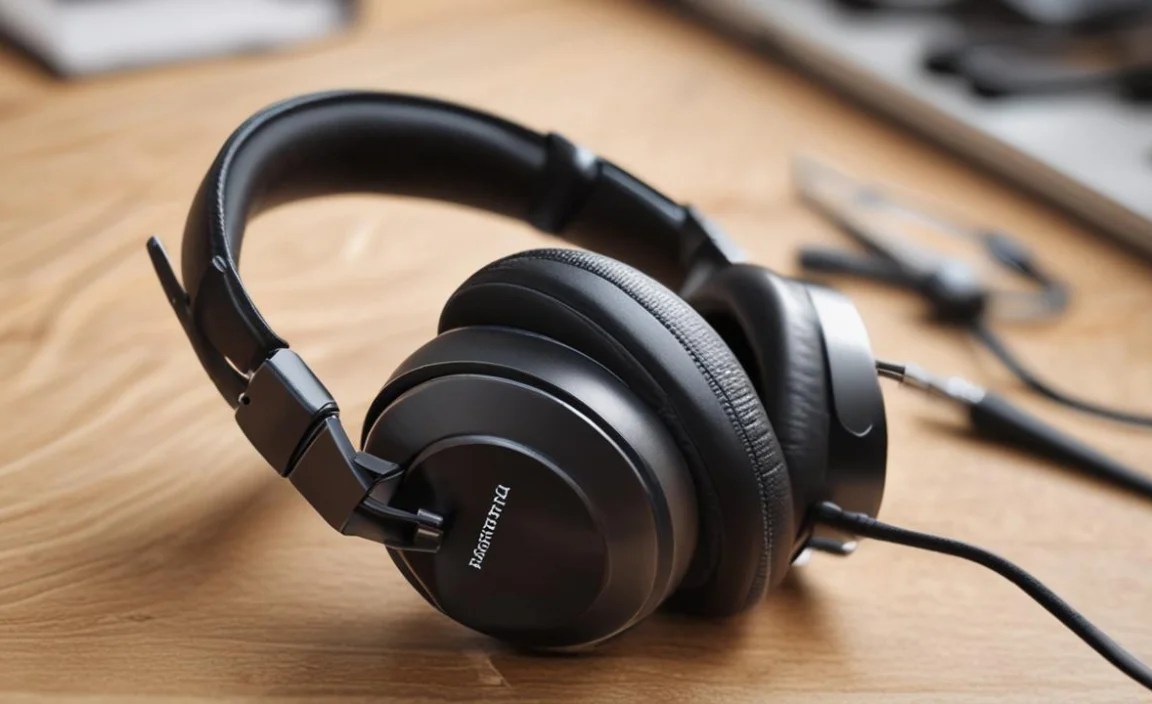
Even the best gear can sometimes present little quirks. Here are a few common issues and how to address them:
- One Side Not Working: This is often caused by a broken connection in the cable. Try wiggling the cable at the headphone cup and at the plug. If it’s a detachable cable, try unplugging and re-plugging it securely. If the problem persists, you may need to replace the cable.
- Distortion or Crackling: This can happen if the headphones are being overdriven by a weak amplifier or if the audio source itself is distorted. Try lowering the volume on your audio interface or playback device. If it’s a specific track that sounds bad, the issue might be with the recording or mix, not your headphones.
- Low Volume: This is usually an impedance mismatch or an insufficient amplifier. Ensure your headphones’ impedance is suitable for your audio interface’s headphone output. If you have high-impedance headphones, you might need a dedicated headphone amplifier.
- Uncomfortable Fit: Adjust the headband, try different angles for how the earcups sit on your head, or consider replacement ear pads made from a different material (like velour for more breathability).
- Sound Leakage into Microphone: If you’re using closed-back headphones and still experiencing significant bleed, ensure the earcups are creating a good seal around your ears. Try lowering the headphone volume or using a higher impedance headphone that requires more power to drive.
When to Consider an Upgrade or Additional Pair
While a good starting pair of studio headphones can last you quite a while, there comes a time when you might want to expand your toolkit:
- For Critical Mixing: Once you’re comfortable mixing and want to refine your soundstage perception, investing in a pair of open-back headphones can be a game-changer.
- For Specific Tasks: Some engineers prefer different headphones for different tasks. For example, a pair with a slightly boosted low-end might be useful for checking how bass-heavy a mix will sound on consumer systems, even if it’s not for critical mastering.
- Ear Fatigue Reduction: If you find yourself experiencing significant ear fatigue, trying a different model with a more comfortable fit or a slightly different sound profile might help.
The journey of sound is continuous, and your gear can evolve with your skills!
Frequently Asked Questions About Studio Recording Headphones
Q1: Do I really need special headphones for studio recording?
Yes, absolutely! Studio headphones are designed for accuracy, providing a neutral frequency response so you can hear your audio exactly as it is. Regular consumer headphones often color the sound, which can lead to poor mixing decisions.
Q2: What’s the difference between open-back and closed-back headphones for studio use?
Closed-back headphones offer excellent sound isolation, preventing audio bleed into microphones and blocking external noise. They are ideal for recording. Open-back headphones provide a more natural, spacious soundstage and are preferred for mixing and critical listening when isolation isn’t a concern.
Q3: Are expensive studio headphones always better?
Not necessarily. While higher price points often come with better build quality and more refined sound, there are many excellent and affordable studio headphones that are perfect for beginners and even advanced users. Focus on the key features like frequency response and comfort first.
Q4: Can I use my studio headphones for everyday listening?
You can, but you might find the sound less “exciting” than what you’re used to with consumer headphones. Studio headphones prioritize accuracy over enhanced bass or treble, so music might sound flatter. However, they can help you appreciate the nuances in your music!
Q5: How important is comfort for studio headphones?
Very important! You’ll be wearing them for extended periods. Uncomfortable headphones can lead to ear fatigue and distraction, negatively impacting your focus and the quality of your work.
Q6: What does “impedance” mean for headphones, and why does it matter?
Impedance (measured in Ohms) indicates how much power headphones need to reach a certain volume. Low impedance headphones are easier to drive and work well with phones and basic audio interfaces. High impedance headphones often require a headphone amplifier for sufficient volume and optimal performance.
Conclusion: Your Ears Will Thank You
Choosing the best headphones for studio recording is a foundational step in creating great audio. By understanding critical features like flat frequency response, the difference between open and closed-back designs, and the importance of comfort and build quality, you’re well-equipped to make a smart decision. The models we’ve discussed are fantastic starting points, offering reliability and accuracy without breaking the bank. Investing in a good pair of studio headphones isn’t just buying a piece of gear; it’s investing in clearer recordings, more confident mixes, and ultimately, a more enjoyable and productive creative process. So take your time, consider your needs, and enjoy the process of listening critically to your music. Happy recording!
