
Quick Summary: Discover the best helmet headphones for clear communication and entertainment during outdoor activities. This guide breaks down essential features, top picks, and important safety considerations to help you choose the perfect audio gear for your adventures.
Best Helmet Headphones: Proven Essential Gear for Your Adventures

Hey everyone, Edward Cavitt over at Headphone Horizon! If you’re like me, you love hitting the slopes, trails, or roads, and want to bring your favorite tunes or stay connected. But what about keeping that audio safe and secure when you’re wearing a helmet? Finding the right helmet headphones can feel a bit tricky with all the options out there. That’s why I’ve put together this beginner-friendly guide to help you navigate the world of helmet audio. We’ll explore what makes a great helmet headphone, what to look for, and some top contenders that will make your next adventure even more enjoyable, without compromising your safety or sound quality.
Why You Need Helmet Headphones

Let’s face it, helmets are crucial for safety in many sports and activities. But that doesn’t mean you have to go without your audio fix or the ability to take important calls. Helmet headphones are specifically designed to integrate seamlessly with your protective headgear, offering a convenient and safer way to experience sound on the go. Whether you’re skiing, snowboarding, cycling, or even working in a loud environment, these specialized headphones can provide:
- Enhanced Safety: By offering a discreet way to communicate or listen to navigation prompts, helmet headphones can help you stay aware of your surroundings and connected to your group.
- Entertainment: Enjoy your favorite music or podcasts to make long rides or runs more engaging.
- Communication: Many helmet headphone systems include built-in microphones, allowing for hands-free calls or communication with fellow riders or workers via intercom systems.
- Comfort: Designed to fit comfortably within helmet ear pads, they avoid the bulk and discomfort of traditional headphones.
What to Look for in the Best Helmet Headphones

When you’re shopping for the best helmet headphones, there are a few key features that make a real difference. Think of these as your checklist to ensure you’re getting a product that’s both high-performing and safe for your activity.
Sound Quality & Volume
This is probably the most obvious one! You want headphones that can deliver clear audio, even with wind noise or engine sounds. Look for drivers that produce a balanced sound profile, with decent bass for your music and clear mids and highs for calls and spoken word. Importantly, ensure they can get loud enough to overcome ambient noise without distorting.
Durability and Weather Resistance
Your helmet headphones will likely face some tough conditions – think snow, rain, dust, and maybe even a tumble or two. Opt for models with robust construction and a good level of water and dust resistance (look for an IP rating, like IPX5 or higher) to ensure they can withstand the elements and keep working reliably.
Connectivity (Bluetooth Version)
Bluetooth is the name of the game here. The latest Bluetooth versions (like 5.0 or higher) offer better range, faster pairing, and more stable connections, which is especially important if you’re relying on them for communication. Consider battery life as well. Extended sessions require headphones that can keep up.
Comfort and Fit
These need to fit snugly and comfortably within your helmet’s ear cups. Look for low-profile designs that won’t create pressure points or make your helmet feel too tight. Some are designed as integrated speakers, while others are slim earbuds that fit under fabric padding. Consider the thickness and shape to ensure they work with your specific helmet.
Safety Features
This is paramount. While some headphones offer noise cancellation, for activities requiring situational awareness (like cycling or skiing), you’ll want to avoid complete noise isolation. Look for headphones that allow some ambient sound through or have a transparency mode. Also, ensure they don’t interfere with the helmet’s protective properties or its fit.
Ease of Use
Controls should be easy to access and operate, even with gloves on. Buttons should be tactile and well-spaced. Pairing with your phone or device should be straightforward, and any accompanying app, if available, should be user-friendly.
Top Types of Helmet Headphones
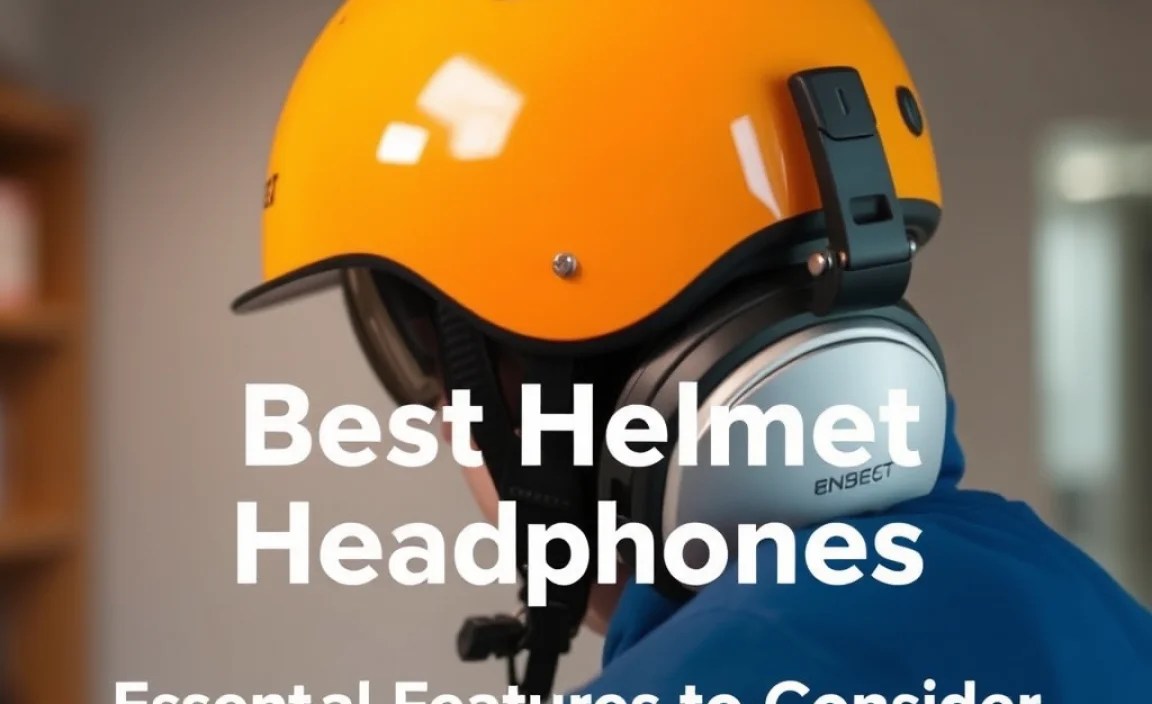
Helmet headphones come in a few main varieties, each with its own advantages. Understanding these will help you pinpoint the best fit for your needs.
Integrated Speaker Systems
Many modern helmets come with built-in audio-ready ear pads, or you can purchase speaker systems designed to slide directly into the ear cups of most helmets. These are often Bluetooth-enabled and designed to be low-profile.
- Pros: Seamless integration, often designed for specific helmet compatibility, good comfort.
- Cons: May be less versatile if you switch helmets, sound quality can vary greatly by brand.
Earbud-Style Helmet Headphones
These look like traditional earbuds but are designed to be slim enough to fit comfortably under helmet earpads. Some come with special earfins or loops to help keep them in place, while others rely on the snug fit of the helmet itself.
- Pros: Can offer better sound isolation if desired, often more affordable, portable for use outside the helmet.
- Cons: Can be tricky to get a secure fit, potential for discomfort if too bulky, risk of falling out.
Wired vs. Wireless (Bluetooth)
While wired options exist, Bluetooth is overwhelmingly the most popular choice for helmet headphones due to convenience and freedom of movement. The reliability of Bluetooth has improved dramatically over the years.
- Pros (Bluetooth): No tangled wires, easy pairing with devices, freedom to move.
- Cons (Bluetooth): Battery life is a consideration, potential for interference (rare with newer versions).
Essential Features to Consider for Specific Activities
The ‘best’ helmet headphones really depend on what you’re doing. Here’s a quick rundown for common activities:
For Skiers & Snowboarders
- Must-haves: Excellent cold-weather performance, water resistance, easy-to-use controls for gloved hands, good battery life (cold drains batteries faster), and enough volume to overcome wind noise. Integrated speakers in helmet ear pads are very popular here.
- Consider: Intercom features for group communication.
For Cyclists
- Must-haves: Situational awareness is KEY. Look for open-ear designs (bone conduction) or headphones that allow significant ambient sound. Lightweight, secure fit, and weather resistance are also important. Bluetooth for navigation and calls is a plus.
- Consider: Aerodynamics – bulky headphones can create drag.
For cyclists, understanding traffic noise is crucial. According to the National Highway Traffic Safety Administration (NHTSA), “Sound is one of the ways drivers detect and identify hazards. Without adequate hearing, drivers may not react in time to avoid crashes.” While this primarily applies to drivers, it highlights the importance of hearing your surroundings when operating vehicles or bicycles. Learn more from NHTSA on driver safety.
For Motorcyclists
- Must-haves: Superior wind noise reduction, clear microphone for calls and intercom, robust connectivity, long battery life for extended rides, and designs that fit snugly into helmet ear cavities without interfering with the helmet’s protective seal.
- Consider: AM/FM radio functionality, integration with motorcycle communication systems.
For Construction Workers/Industrial Use
- Must-haves: Hearing protection is often paramount. Look for models that combine hearing protection with communication capabilities, or headphones that can be worn over ear defenders. Durability, excellent noise cancellation (for loud machinery), and clear two-way radio or intercom integration are vital.
- Consider: Safety certifications (e.g., for hazardous environments).
How to Install and Use Helmet Headphones
Getting your helmet headphones set up is usually straightforward. Here’s a general guide:
- Prepare Your Helmet: Most helmets designed for audio have specific pockets or slots for speakers in the ear cups. Some require you to remove existing padding. Check your helmet manual if you’re unsure.
- Install the Speakers:
- For integrated systems, simply slide the speakers into the designated pockets. Ensure they are positioned correctly over your ears.
- For earbud-style headphones, place them into the helmet’s ear pads. Some models come with adhesive strips or special attachments to keep them secure.
- Route any connecting wires discreetly along the inside of the helmet liner or chin strap, ensuring they don’t hang loose or interfere with the helmet’s fit or operation.
- Charge the Headphones: Before first use, fully charge your helmet headphones using the provided USB cable.
- Pair with Your Device:
- Turn on your helmet headphones and put them into pairing mode (usually by holding down the power button).
- On your smartphone, tablet, or music player, go to Bluetooth settings and scan for new devices.
- Select your helmet headphones from the list of available devices. You may hear an audio confirmation once paired.
- Test the Fit and Audio: Put on your helmet and check that the speakers are comfortable and positioned correctly. Play some audio to ensure the sound is clear and the volume is adequate. Test the microphone if your headphones have one.
Popular Helmet Headphone Brands & Models (Examples)
While specific models change rapidly, here are some reputable brands and types of products that are generally well-regarded in the helmet headphone market. Always check for the latest versions!
| Brand | Typical Product Type | Key Features | Best For |
|---|---|---|---|
| Sena | Integrated Bluetooth Communication Systems | Intercom, microphone, music streaming, long battery life, rugged | Motorcyclists, Skiers, Snowboarders |
| Carne (formerly Outdoor Tech®) | Drop-in Helmet Audio Chips | Wireless audio, easy installation, long battery life, durable | Skiers, Snowboarders, Mountain Bikers |
| Zoleo | Helmet Audio – Zoleo Headphones | Designed for helmets, clear audio, decent mic, weather-resistant | Skiers, Snowboarders |
| Skullcandy | Wired & Wireless Helmet Audio Speakers | Good sound quality, affordable, easy to install replacements | Skiers, Snowboarders, generally budget-conscious |
| Shokz (formerly AfterShokz) | Bone Conduction Headphones | Open-ear design for safety, lightweight, sweat/water-resistant | Cyclists, Runners, anyone needing situational awareness |
Understanding IP Ratings
When looking at weather resistance, you’ll often see “IP” ratings. These are international standards indicating how well a device is protected against intrusion from solids (like dust) and liquids (like water). The first digit after “IP” refers to solid particle protection, and the second refers to liquid ingress protection.
| IP Rating | Protection Against Solids | Protection Against Liquids |
|---|---|---|
| IPX4 | No specific protection | Splashing water from any direction |
| IPX5 | No specific protection | Water jets from any direction |
| IP65 | Dust tight (total protection against dust entry) | Water jets from any direction |
| IPX7 | No specific protection | Immersion in water up to 1 meter for 30 minutes |
For helmet headphones, an IPX4 or IPX5 rating is generally good for sweat and light rain. If you expect to be in heavy downpours, look for higher ratings like IP65 or IPX7, though these are less common for audio devices.
Safety First: Best Practices for Helmet Audio
While it’s fun to have audio on your adventures, safety should always be the top priority. Here are some crucial guidelines:
- Situational Awareness: Never crank your volume so high that you can’t hear important sounds around you – other people, vehicles, animals, or warnings. For activities like cycling or hiking on shared trails, consider open-ear or bone conduction headphones.
- Volume Limits: It’s a good idea to keep your volume at or below 60% of the maximum. Prolonged exposure to loud noises can cause irreversible hearing damage. The CDC offers guidelines on preventing noise-induced hearing loss that are worth reviewing.
- Check Your Helmet Fit: Never use headphones that prevent your helmet from fitting correctly. A properly fitted helmet is essential for its protective function.
- Wired Hazards: If you opt for wired headphones, be extremely careful about where you route the cable. A snagged wire could cause you to lose control or even pull the helmet off.
- Emergency Communication: If you’re in an area with limited cell service, ensure you have a backup communication plan or device, especially if you’re relying on your helmet headphones for calls.
Troubleshooting Common Helmet Headphone Issues
Even the best gear can sometimes have a hiccup. Here are a few common problems and how to fix them:
Issue: Headphones won’t pair with my device.
- Solution: Ensure both your headphones and device are charged and within range (typically 30 feet). Turn off Bluetooth on both devices and then turn it back on. Try restarting both devices. Make sure the headphones are in pairing mode (refer to your manual on how to do this). If previously paired with another device, try “forgetting” the headphones in your device’s Bluetooth settings and re-pairing.
Issue: Audio is cutting out or weak.
- Solution: Check the distance between your device and headphones. Obstacles like thick clothing, metal objects, or even your own body can interfere. Ensure your device’s battery is sufficient. If using integrated speakers, check they are properly seated in the helmet ear cups.
Issue: Microphone isn’t working.
- Solution: Verify that the microphone is not obstructed. Ensure that your device has granted permission for the headphones to access the microphone (check app permissions or Bluetooth settings). Try reconnecting the Bluetooth.
Issue: Battery life is much shorter than advertised.
- Solution: Battery performance can be affected by extreme temperatures (especially cold), high volume levels, and frequent use of features like intercoms. Ensure you are charging them fully and consider this when planning longer outings.
Frequently Asked Questions (FAQ)
Q1: Can I use regular earbuds with my helmet?
A1: While you can try, regular earbuds are often too bulky to fit comfortably and securely inside helmet ear cups. They can create pressure points, fall out easily, or interfere with the helmet’s proper fit. Specialized helmet headphones are designed to be low-profile and fit more securely.
Q2: Do helmet headphones affect the safety of my helmet?
A2: Generally, no, as long as they are designed to fit within the helmet’s ear cups and don’t force the helmet to sit higher or tighter on your head. Always ensure your helmet still fits snugly and correctly after installing headphones. Refer to your helmet manufacturer’s guidelines if unsure.
Q3: How loud can helmet helmet headphones get?
A3: Volume varies by model. High-quality helmet headphones can get quite loud, enough to overcome wind and engine noise. However, it’s crucial to practice safe listening habits and avoid damaging your hearing by exceeding safe volume levels for extended periods.
