
Quick Summary: Discover essential wired headphones for kids, prioritizing safety, durability, and comfort. This guide simplifies choosing the best wired options for enhanced learning, entertainment, and protected listening without the complexities of Bluetooth. Find proven essential gear here.
Best Kids Wired Headphones: Proven Essential for Young Ears
Hello audio explorers! Edward Cavitt here from Headphone Horizon, your friendly guide to all things sound. Today, we’re diving into a topic that’s close to many parents’ hearts: finding the best wired headphones for the special little ones in your life. In a world buzzing with wireless convenience, wired headphones for kids remain a surprisingly powerful and reliable choice, offering fantastic sound quality, enhanced durability, and, most importantly, peace of mind regarding volume levels. They’re not just an accessory; they’re an essential tool for everything from story time and online learning to enjoying their favorite tunes without disturbing the household. Let’s explore why wired is still wonderful for kids and how to pick the perfect pair!
Why Wired Headphones are Still a Top Choice for Kids

When it comes to children’s audio gear, several factors come into play: safety, durability, ease of use, and cost-effectiveness. Wired headphones often excel in these areas, making them a smart, practical choice for parents and a comfortable, engaging experience for kids.
Safety First: Volume Protection is Key
This is, arguably, the most crucial reason to consider wired headphones for children. Many kids’ wired headphones come equipped with built-in volume limiters. These features are designed to cap the maximum sound output at a safe level, typically around 85 decibels (dB). Prolonged exposure to sound levels above 85 dB can cause permanent hearing damage. International health organizations, like the World Health Organization (WHO), highlight the risks associated with excessive noise exposure. Wired headphones with these safety features offer a direct and effective way to protect young ears during extended listening sessions.
Durability for Little Hands
Kids can be tough on their belongings, and headphones are no exception. Wired headphones, especially those designed specifically for children, are often built with robust, kid-friendly materials. They are frequently made from flexible, shatter-resistant plastics and feature reinforced cables that can withstand bending, twisting, and the occasional drop. This rugged construction means they’re moreLikely to survive the rigors of daily use compared to more delicate electronic devices.
Simplicity and Reliability
There’s no fuss with pairing or battery life. Plug them in, and they work. For children, this simplicity is a huge advantage. They don’t need to worry about charging batteries or troubleshooting Bluetooth connections. For parents, this means fewer “my headphones aren’t working!” moments, especially during crucial times like online classes or long car rides. The straightforward nature of wired headphones makes them incredibly reliable.
Cost-Effectiveness
Generally speaking, wired headphones tend to be more affordable than their wireless counterparts. This makes them an accessible option for many families, allowing you to get a high-quality, safe listening device without breaking the bank. Plus, their inherent durability can mean they last longer, further adding to their value.
What to Look for in the Best Kids Wired Headphones

Choosing the right pair of kids’ wired headphones involves considering a few key features that ensure comfort, safety, and enjoyment. Here’s a breakdown of what to prioritize:
- Volume Limiting Technology: As mentioned, this is paramount. Look for headphones that explicitly state they limit volume to 85 dB or below.
- Comfort and Fit: Kids’ heads come in all sizes, and comfort is vital for extended wear. Padded earcups and an adjustable headband are essential. Over-ear designs are often preferred for comfort and a better seal, while on-ear can be more compact.
- Durability and Build Quality: Seek out headphones made from sturdy, kid-friendly materials like BPA-free plastics. Flexible headbands and tangle-resistant cords are also big pluses.
- Sound Quality: While safety is the priority, good sound quality makes them enjoyable. Look for clear audio that’s suitable for speech (for educational content) and music.
- Microphone (Optional but Useful): If the headphones will be used for online learning or calls, a built-in microphone is a great feature.
- Aesthetics: Kids love to express themselves! Many kids’ headphones come in a variety of fun colors and designs.
Top Features to Understand
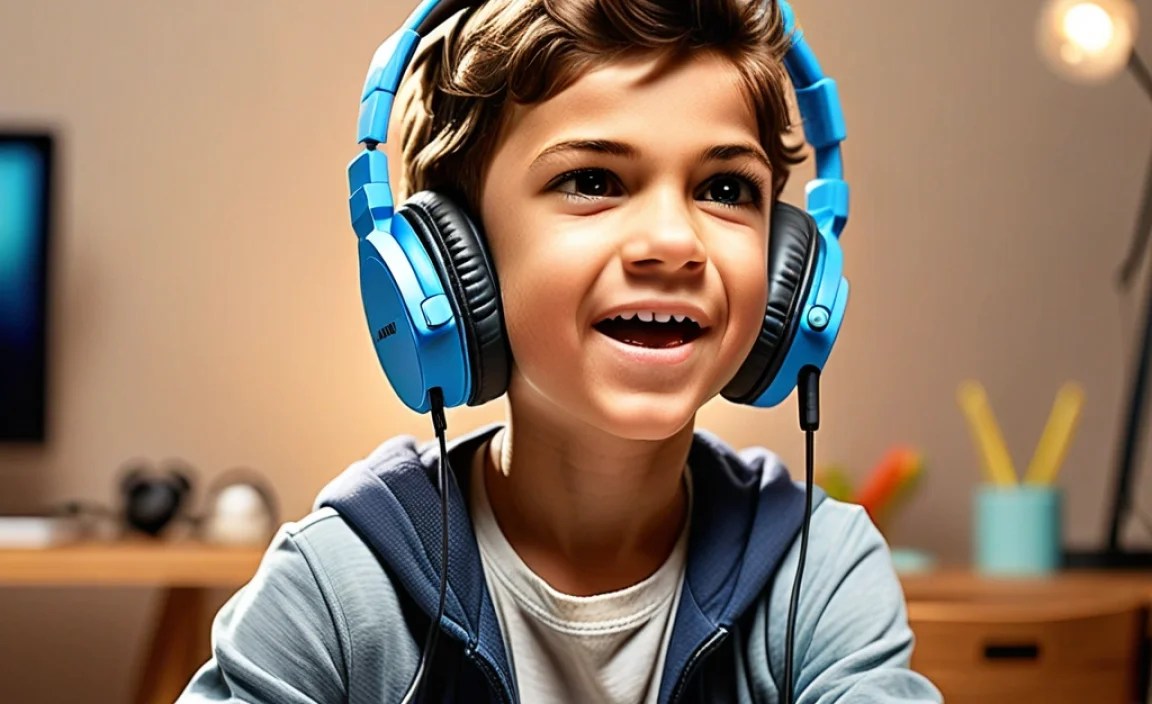
Let’s break down some of the technical aspects in a way that’s easy to grasp. Understanding these will help you make an informed decision.
Volume Limiter Explained
This is non-negotiable. Headphones with a built-in volume limiter use internal circuitry to ensure the sound never exceeds a safe threshold. This protects the delicate structures of a child’s developing ears. It’s different from simply telling a child to “turn it down,” as it’s a hard cap that cannot be overridden by device settings. The industry standard for safe listening is often cited as 85 dB, though individual sensitivity can vary. For more on noise and hearing safety, you can check out resources from the National Institute on Deafness and Other Communication Disorders (NIDCD).
Driver Size and Sound
The “driver” is the part of the headphone that produces sound. Larger drivers (measured in millimeters, mm) can often produce a wider range of frequencies and deeper bass, leading to a richer sound experience. For children’s headphones, you don’t need audiophile-grade drivers, but a decent size (e.g., 30mm or 40mm) will ensure that music and spoken words sound clear and engaging.
Impedance and Compatibility
Impedance (measured in Ohms, Ω) relates to how much electrical resistance the headphone’s drivers have. Lower impedance (typically under 32Ω) means headphones are easier to drive, requiring less power from the device they’re plugged into. Most kids’ headphones are designed with low impedance to work well with tablets, smartphones, and laptops without needing a separate amplifier. This is generally not something to worry too much about for standard kids’ headphones, as they are designed for broad compatibility.
Frequency Response
This refers to the range of sound frequencies (low notes to high notes) that the headphones can reproduce. It’s measured in Hertz (Hz). A typical human hearing range is from about 20 Hz to 20,000 Hz. While kids’ headphones might not have the most extensive frequency response compared to high-end adult headphones, a good range ensures that they can produce clear highs, mids, and lows for an enjoyable listening experience.
Step-by-Step Guide: Choosing the Perfect Pair
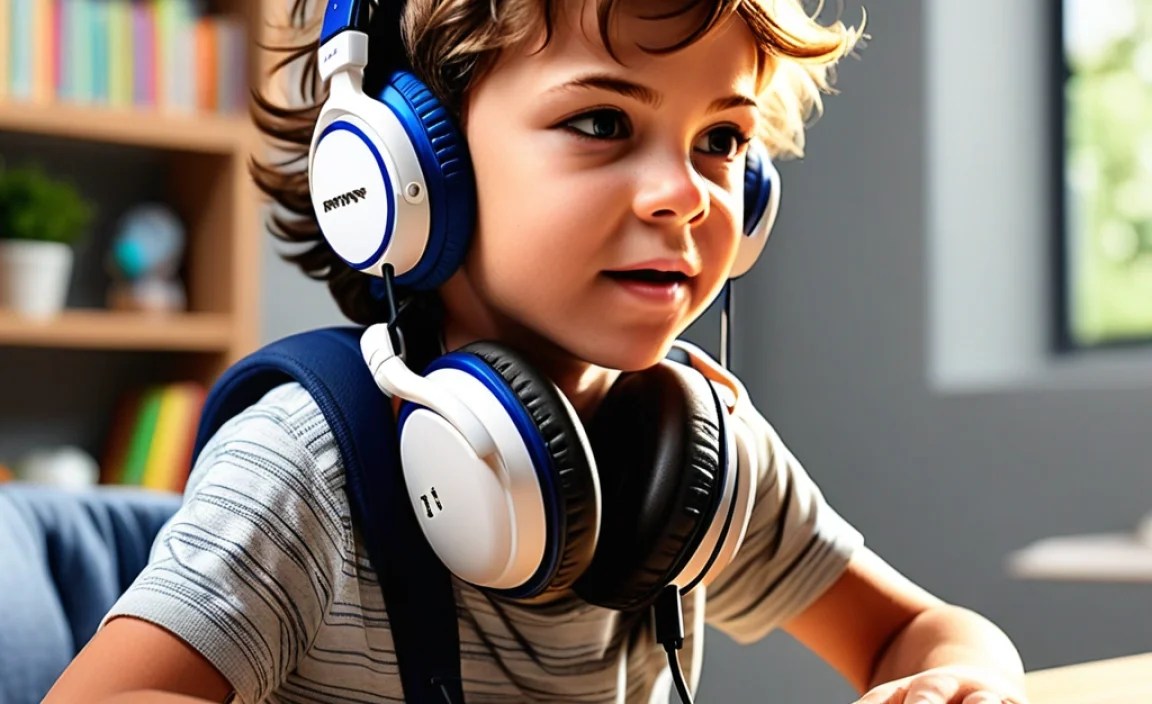
Ready to find the ideal headphones for your child? Follow these simple steps to make an informed and confident purchase.
Step 1: Prioritize Safety Features
Start by focusing on headphones with explicit volume-limiting technology. This should be your absolute first filter. If a product doesn’t clearly state it has a built-in limiter set at or below 85 dB, move on. Look for certifications or mentions of compliance with safety standards for children’s audio products.
Step 2: Consider Comfort and Fit
Watch your child use them. Are the earcups soft and breathable? Does the headband adjust to fit snugly but not too tightly?
- Measure your child’s head circumference if possible for a better idea of headband size.
- Read reviews specifically mentioning how comfortable the headphones are for long periods.
- Check if the earcups swivel or have a flexible design to fit different ear shapes.
Step 3: Assess Durability
Think about how and where the headphones will be used. Will they be used primarily at home for schoolwork, or are they destined for travel?
- Look for flexible materials that can bend without snapping.
- Check for reinforced cable entry points, as this is often a weak spot.
- Consider over-ear designs, which can offer more robust construction than some very small earbuds.
Step 4: Evaluate Sound Quality (for their needs)
While safety is first, the headphones still need to sound good enough to be enjoyable.
- Do reviews mention clear audio for voices and music?
- Are they described as having a balanced sound, not overly bass-heavy or tinny?
- For educational use, clarity of speech is often more important than booming bass.
Step 5: Check for Extra Features
Do you need a microphone? Is a foldable design important for portability?
- If online learning or video calls are common, a built-in microphone with a mute button can be a fantastic addition.
- Some headphones include inline controls for volume adjustment or play/pause, which can be convenient.
- Consider if they come with accessories like a carrying pouch or audio splitter.
Step 6: Read Reviews and Compare
Once you have a shortlist of models that meet your safety and feature requirements, dive into customer reviews. Pay attention to what other parents say about longevity, comfort, and suitability for their children’s ages. Compare prices across different retailers to find the best value.
Popular Features and Technologies in Kids Wired Headphones

Let’s look at some of the common technologies and features you’ll encounter when shopping:
Tangle-Free Cords
Tired of untangling headphone cords? Many kids’ wired headphones come with flat or braided cables designed to resist tangling. This is a small feature that makes a big difference in daily use.
Swivel Earcups
Earcups that can swivel flat or rotate inwards are beneficial for storage and can help create a more secure fit around the ears.
Built-in Microphones
For school, online games, or chatting with family, a microphone is a key feature. Look for integrated microphones that clearly pick up your child’s voice.
Shareable Audio Jacks
Some headphones come with an additional audio jack on one of the earcup housings. This allows another headphone to be plugged into the first, enabling two children (or a child and a parent) to listen to the same audio source from a single tablet or device.
Here’s a table summarizing common features:
| Feature | Description | Benefit for Kids |
|---|---|---|
| Volume Limiter (85 dB) | Caps maximum sound output at a safe level. | Protects developing hearing from damage. |
| Padded Earcups | Soft cushioning around the ears. | Increases comfort for extended wear. |
| Adjustable Headband | Allows for customization of fit. | Ensures a secure and comfortable fit for various head sizes. |
| Durable, Flexible Materials | Made from robust, bendable plastics. | Withstands rough handling and accidental drops. |
| Tangle-Resistant Cable | Designed to minimize knots and tangles. | Reduces frustration and makes for quicker use. |
| Built-in Microphone | Captures audio for communication. | Enables participation in online classes and calls. |
| Shareable Audio Jack | Allows multiple headphones to connect to one source. | Facilitates shared listening experiences. |
Recommended Categories of Kids Wired Headphones
Not all kids’ headphones are created equal. Depending on your child’s age and needs, certain types might be more suitable:
For Toddlers and Preschoolers (Ages 3-6)
At this age, ease of use, extreme durability, and the absolute highest standard of safety are key. Smaller earcups and headbands are important for tiny heads.
- Look for squishy, resilient materials.
- Simple, bright colors are usually a hit.
- Focus on basic functionality and extreme volume limiting.
For Elementary Schoolers (Ages 7-12)
This age group can handle headphones with a bit more complexity and features, like built-in microphones for school. They might also have stronger preferences for style.
- Durability remains important, but aesthetics might start playing a bigger role.
- Headphones with microphones become more relevant.
- Comfort for longer learning sessions is a plus.
For Travel and Outdoor Use
If headphones will be used on the go, consider models that are more compact, foldable, and perhaps offer a bit more robustness against the elements (though still not waterproof!).
- Look for carrying cases or foldable designs.
- Tangle-resistant cords are extra valuable here.
- Ensure they fit comfortably within a backpack or travel bag.
A Quick Comparison of Popular Brands/Models (Illustrative)
While specific models frequently change, here’s a general idea of what you might find from reputable brands known for kids’ audio gear. Always check current product specifications for the latest features and safety standards.
| Brand Example | Key Strengths | Typical Features | Considerations |
|---|---|---|---|
| JLab Kids | Value, Durability, Volume Limiting | 85 dB volume limit, Padded earpads, Built-in mic option, Bright colors, Tangle-free cord | Widely available, good for everyday use. |
| BuddyPhones | Safety Focus, Comfort, Special Needs Adapted Options | 4 Safe Audio Modes (e.g., Travel, Toddler, High-Fidelity), Built-in microphone, Durable construction, Often include shareable jack | A bit pricier, but dedicated to child safety. |
| LilGadgets | Comfort, Durability, Style, Shareable Jack | 85 dB limit, Soft earcups, Adjustable size, Shareable audio jack, Fun designs | Consistently well-reviewed for comfort and build. |
| Philips Kids/Onn (Walmart Brand) | Affordability, Basic Safety | Volume limiting (check dB level), Comfortable fit, Simple design | Budget-friendly options, good for occasional use. |
Maintenance and Care for Longevity
To ensure your child’s headphones last as long as possible and remain hygienic, a little care goes a long way.
Cleaning
- Earcups: Gently wipe the earcups with a slightly damp cloth. For tougher grime, use a mild soap solution and wipe clean with a separate damp cloth. Ensure they are completely dry before use.
- Headband: Wipe down the headband similarly. If it has fabric padding, check the manufacturer’s instructions for cleaning.
- Cable: Wipe the cord with a dry or slightly damp cloth. Avoid pulling or yanking on the cable.
- Never submerge headphones in water.
Storage
- When not in use, store headphones in a cool, dry place.
- If they came with a pouch or case, use it! This protects them from dust and accidental damage.
- Avoid leaving them in direct sunlight for extended periods, as this can degrade plastic materials.
- Keep them away from pets, as chewing can be a hazard.
Handling the Cable
Teach your child to unplug headphones by pulling on the connector, not the cord. Avoid wrapping the cord too tightly around the headphones, as this can stress the internal wires.
Frequently Asked Questions (FAQ)
Q1: Are wired headphones safe for babies?
While wired headphones are safer than wireless due to the lack of EMR exposure (though research on this is ongoing and currently considered safe by most major health organizations), it’s generally recommended to limit audio device use for babies and very young toddlers. If headphones are needed for specific reasons (like travel noise), ensure they are specifically designed for infants and have a very strict 85 dB volume limit. Always supervise usage.
Q2: Can a child’s device override the volume limiter on headphones?
No, if the volume limiter is built into the headphones themselves (as it should be for children’s models), it acts as a hard-set cap on the audio output from the headphones themselves, regardless of the volume setting on the connected device. This is a key safety feature designed to be unalterable by the user or the source device.
Q3: How do I know if the volume limiter is actually working?
Look for clear labeling on the product packaging and specifications, often stating “85 dB volume limit” or “
