
Quick Summary: Elevate your audio experience without breaking the bank. Discover top-tier mid-range headphones offering superior sound quality, comfort, and features ideal for music lovers, students, and professionals seeking an essential sound upgrade.
Best Mid Range Headphones: Your Essential Sound Upgrade
Hello, fellow audio adventurers! Edward Cavitt here from Headphone Horizon. Are you tired of the tinny sound from your earbuds or the vague rumble from your old headphones? Do you dream of hearing your favorite music with crystal clarity, feeling every beat, and immersing yourself in podcasts and audiobooks like never before? If the thought of shelling out hundreds, or even thousands, for premium headphones makes your wallet weep, then you’re in the right place. The world of audio is vast, but thankfully, there’s a sweet spot – the mid-range headphone market. These gems offer a truly significant upgrade in sound quality, comfort, and features without demanding a king’s ransom. Let’s dive in and find the perfect pair to unlock an essential sound upgrade!
What Exactly Are Mid-Range Headphones?

When we talk about headphones, the price spectrum can be a bit overwhelming. At the low end, you have budget earbuds and basic models that often compromise on sound fidelity, build quality, and comfort. At the high end, you find audiophile-grade equipment with exotic materials and extremely detailed sound reproduction, often requiring specialized amplification. Mid-range headphones, however, sit comfortably in the middle. They represent a fantastic balance, typically falling in the $100 to $300 price bracket (though this can vary). This is where manufacturers can really start to pack in impressive audio technology, comfortable designs, and useful features like active noise cancellation or robust connectivity.
Think of it like this: if budget headphones are like a standard car, and high-end audiophile gear is a supercar, then mid-range headphones are your reliable, comfortable, and feature-rich SUV or a sporty sedan. They provide a vastly superior experience to the basic model and deliver performance that many users will find more than satisfactory for daily listening, work, or study.
Why Investing in Mid-Range Headphones is a Smart Move

Upgrading to a good mid-range pair of headphones isn’t just about louder sound; it’s about a richer, more detailed, and more enjoyable listening experience. Here’s why it’s an investment worth making:
- Superior Sound Quality: Mid-range headphones typically feature better drivers (the parts that produce sound), improved acoustic design, and higher-quality materials. This translates to clearer highs, more defined mids, and deeper, more impactful bass. You’ll start to hear nuances in your music you never noticed before.
- Enhanced Comfort: Long listening sessions require comfort. Mid-range options often boast plush earcups, adjustable headbands, and lighter designs, making them ideal for extended use whether you’re working at your desk, studying for exams, or enjoying a long flight.
- Durability and Build Quality: While budget headphones can feel flimsy, mid-range models usually employ more robust materials like metal accents, higher-grade plastics, and better-constructed hinges, ensuring they can withstand daily wear and tear.
- Advanced Features: This price point often unlocks features previously found only in high-end models, such as effective active noise cancellation (ANC), Bluetooth connectivity with advanced codecs (like aptX or LDAC for better wireless sound), longer battery life, and integrated microphones for clear calls.
- Reduced Listening Fatigue: Poorly made headphones can sometimes produce harsh or sibilant (excessively bright) sounds that can be fatiguing over time. Mid-range options are generally tuned for a more balanced and pleasing sound profile, making listening sessions more enjoyable for longer periods.
Key Features to Look For in Mid-Range Headphones

Navigating the world of headphone specs can be daunting. Here’s a breakdown of what matters most in the mid-range arena:
1. Sound Signature
This refers to how the headphone emphasizes certain frequencies. Common sound signatures include:
- Balanced: All frequencies (bass, mids, treble) are represented equally. Great for all-around listening and critical appreciation of music.
- V-Shaped: Bass and treble are boosted, with mids slightly recessed. Popular for pop, rock, and electronic music, offering an exciting, energetic sound.
- Warm: Bass and lower mids are emphasized, leading to a smooth, rich, and laid-back sound. Good for relaxing listening and genres like jazz or R&B.
- Bright: Treble is more prominent, leading to a detailed and clear sound, sometimes at the risk of sounding harsh.
For beginners, a balanced or slightly warm signature is often a safe and highly enjoyable starting point.
2. Driver Type and Size
Drivers are the heart of the headphone, translating electrical signals into sound.
The most common are:
- Dynamic Drivers: The most prevalent type, offering good bass response and efficiency. Found in almost all mid-range headphones.
- Planar Magnetic Drivers: Less common in this price range but offer exceptional detail, clarity, and fast transient response.
- Balanced Armature Drivers: Often used in in-ear monitors (IEMs), known for detail and efficiency, but can sometimes lack bass impact compared to dynamics.
While driver tech is important, the tuning and design of the headphone play a larger role in the final sound than the driver type alone in the mid-range.
3. Comfort and Fit
This is highly personal, but generally look for:
- Over-Ear (Circumaural): Earcups completely surround your ears. Often more comfortable for long sessions and offer better passive noise isolation.
- On-Ear (Supra-aural): Earcups rest directly on your ears. Can be lighter but may cause discomfort for some and offer less isolation.
- Earcups Material: Memory foam, velour, or leatherette can all offer different levels of comfort and breathability.
- Weight and Clamping Force: A headphone that’s too heavy or clamps too tightly can cause fatigue.
4. Wired vs. Wireless (Bluetooth)
- Wired: Offers the purest sound quality and requires no charging. Ideal for critical listening at home or in a studio.
- Wireless (Bluetooth): Provides freedom of movement and convenience. Look for support for codecs like aptX, aptX HD, or LDAC for near-wired sound quality on compatible devices. Battery life is crucial here.
5. Active Noise Cancellation (ANC)
ANC uses microphones to detect ambient noise and generate opposing sound waves to cancel it out. It’s a game-changer for noisy environments like commutes, offices, or flights. Mid-range ANC is often very effective, though typically not quite as powerful as top-tier models.
6. Build Quality and Design
While aesthetics are subjective, pay attention to materials (metal vs. plastic), hinge durability, and overall feel. A well-built headphone not only looks better but also lasts longer.
Top Mid-Range Headphones to Consider (Examples)
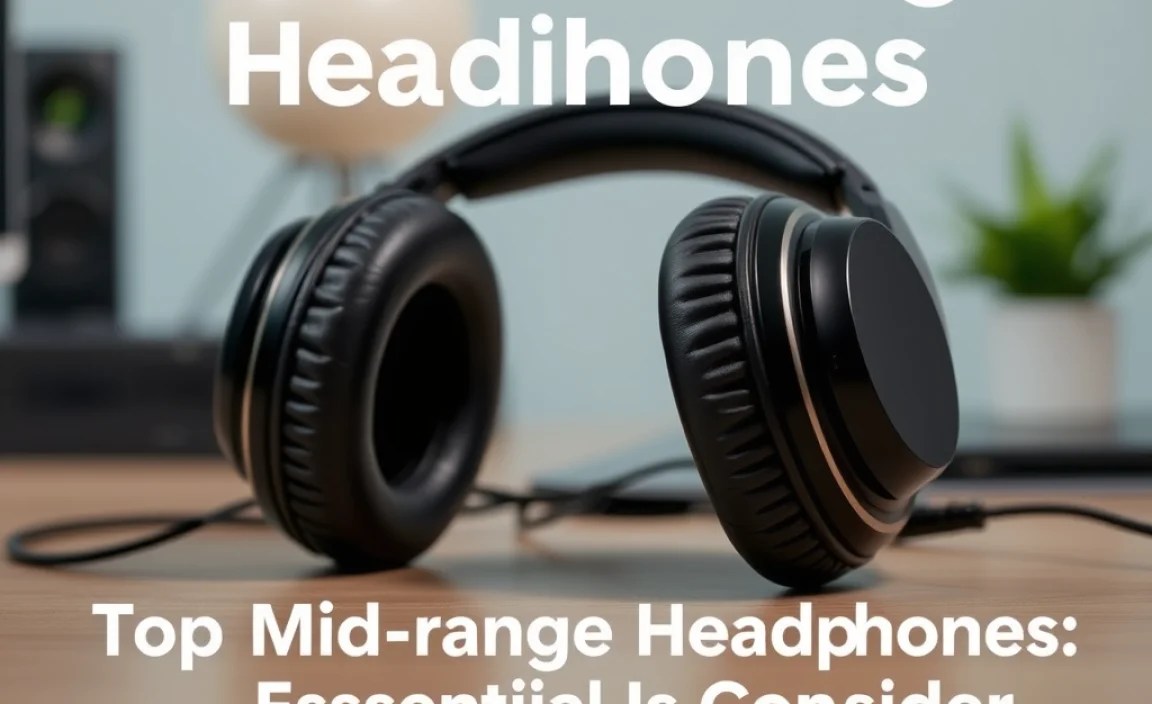
The “best” headphones are subjective and depend on your priorities. However, several models consistently receive high praise in the mid-range category. Here are a few types and what they excel at:
For Immersive Listening (Over-Ear, Closed-Back)
These are great for blocking out external noise and providing a focused listening experience. Perfect for commuting or noisy environments.
| Headphone Model Example | Key Strengths | Consider If… |
|---|---|---|
| Sennheiser HD 450BT | Good ANC, excellent battery life, balanced sound, comfortable. | You need reliable ANC for travel and long listening sessions. |
| Sony WH-CH720N | Lightweight, effective ANC, pleasant sound, great value. | Comfort is paramount, and you want strong ANC on a budget. |
| Bose QuietComfort SE (often found at mid-range prices) | Industry-leading ANC, superb comfort, easy to use. | Noise cancellation is your absolute top priority, closely followed by comfort. |
For Critical Listening & Studio Use (Over-Ear, Open-Back)
Open-back headphones offer a wider soundstage (sense of space) and a more natural sound but don’t isolate noise effectively. Best for quiet environments.
| Headphone Model Example | Key Strengths | Consider If… |
|---|---|---|
| Audio-Technica ATH-M50x | Popular studio standard, detailed sound, excellent build, good isolation for a closed-back. | You want a versatile headphone that’s great for tracking, mixing, and general listening. |
| Beyerdynamic DT 770 Pro (80 Ohm version) | Comfortable, durable, excellent detail retrieval, strong bass. | You’re looking for a professional sound with a bit of punch and renowned comfort. |
| Philips SHP9600 | Very natural and open soundstage, comfortable, excellent value for an open-back. | Enjoying natural, spacious sound in a quiet room is your goal. |
For Portability & Everyday Use (On-Ear or Compact Over-Ear)
These are often lighter and more compact, making them easy to take with you.
| Headphone Model Example | Key Strengths | Consider If… |
|---|---|---|
| JBL Tune 760NC | Solid ANC, good bass, long battery life, foldable design. | You need a reliable all-rounder with decent ANC for on-the-go use. |
| AKG K361 BT | Studio-tuned sound in a portable package, good build, Bluetooth option. | You appreciate accurate sound and want it in a more compact form factor. |
For In-Ear Enthusiasts (True Wireless & Wired IEMs)
True Wireless Stereos (TWS) offer ultimate freedom, while In-Ear Monitors (IEMs) provide a compact, high-fidelity solution.
| Headphone Model Example | Key Strengths | Consider If… |
|---|---|---|
| Anker Soundcore Liberty 4 NC | Impressive ANC for the price, good sound, long battery, app customization. | You want feature-rich true wireless earbuds with strong noise cancellation without paying premium prices. |
| Moondrop Aria | Exceptional detail and clarity for the price, neutral-warm sound signature, comfortable fit. | You want wired IEMs that punch well above their weight in sound quality for music enjoyment. |
Disclaimer: Product availability and pricing can change. Always check reviews and specifications for the latest models.
Tips for Choosing Your Best Mid-Range Headphones

Finding the perfect pair involves a few proactive steps:
- Identify Your Primary Use Case: Are you commuting, working in a noisy office, studying at home, or primarily listening in a quiet room? This dictates whether ANC, portability, or soundstage is more important.
- Read Reviews from Trusted Sources: Look for in-depth reviews from reputable audio websites and YouTubers who focus on objective testing and transparent comparisons. Websites like Rtings.com offer comprehensive data.
- Consider Your Music Preferences: If you love heavy bass, look for headphones known for their low-end. If you prefer vocal clarity, prioritize models with strong mid-range performance.
- Check Comfort Features: If possible, try them on! If not, read detailed reviews about the earcup material, headband padding, and weight.
- Understand Return Policies: Especially when buying online, know the retailer’s return policy in case the headphones don’t fit your ears or sound the way you expect.
- Don’t Overlook Wired Options: Even if you primarily use wireless, consider a pair with a detachable cable. This offers flexibility and acts as a backup if battery life is a concern.
Understanding Headphone Specifications (Simplified)
You might see numbers and terms like frequency response, impedance, and sensitivity. Here’s a quick, beginner-friendly guide:
- Frequency Response: Measured in Hertz (Hz), e.g., 20 Hz – 20 kHz. This indicates the range of audible sound frequencies the headphones can reproduce. The human hearing range is generally considered to be 20 Hz to 20 kHz, so most headphones aim to cover this. What matters more is how they reproduce these frequencies (i.e., the sound signature).
- Impedance: Measured in Ohms (Ω). This indicates how much electrical resistance the headphones have.
- Low Impedance (under 50 Ω): Easy to drive, meaning they can be powered sufficiently by most devices like smartphones, laptops, and controllers without needing a dedicated amplifier. Most consumer mid-range headphones fall here.
- High Impedance (over 50 Ω, often 250 Ω or more): Require more power to reach optimal volume and performance. Often found in professional studio headphones or higher-end audiophile gear.
- Sensitivity: Measured in decibels (dB) per milliwatt (mW) or dB/V. It indicates how loud the headphones get for a given amount of power. Higher sensitivity means they get louder more easily. This is important for low-impedance headphones to ensure they are loud enough from portable devices.
- What to Prioritize: For most users buying mid-range headphones, focus less on the exact Hz or dB numbers and more on the sound signature described in reviews and ensure the impedance is low enough for your devices (which is usually the case for consumer models).
Maintaining Your Mid-Range Headphones
A little care goes a long way to ensure your new sound upgrade lasts:
- Keep Them Clean: Gently wipe earcups and the headband with a soft, damp cloth. For stubborn grime, use a mild soap solution and ensure they are completely dry before use. Clean speaker grilles with a dry, soft brush or a can of compressed air (held at a distance).
- Store Them Properly: When not in use, store them in a case or on a stand to protect them from dust, physical damage, and accidental drops. Avoid cramming them into tight spaces, which can damage the headband or drivers.
- Manage Cables (for wired models): Avoid wrapping the cable too tightly around the headphones. Coil it loosely or use a velcro strap. Don’t yank the cable to unplug; grasp the connector.
- Protect from the Elements: Avoid exposing your headphones to extreme temperatures, moisture, or direct sunlight for extended periods.
- Be Mindful of Volume: Listening at excessively high volumes for prolonged periods can damage both your hearing and your headphones. The World Health Organization (WHO) provides great resources on safe listening levels: WHO Safe Listening Guidelines.
Troubleshooting Common Issues
Even great headphones can encounter minor hiccups. Here are quick fixes:
Problem: No Sound / Only One Side Working
- Wired: Ensure the cable is fully plugged into both the headphones and the device. Try a different cable if possible, or a different audio source. Sometimes, a bent or damaged jack is the culprit.
- Wireless: Check if the headphones are charged and properly paired with your device. Try unpairing and re-pairing them. Restart both the headphones and your device.
Problem: Bluetooth Connectivity Issues
- Ensure Bluetooth is enabled on your device.
- Move closer to your device; walls and distance can interfere.
- Turn off other nearby Bluetooth devices that might be causing interference.
- Perform a factory reset on the headphones (check your manual for how-to).
Problem: Static or Crackling Sound
- Wired: Check the cable for damage, especially near the connectors. A faulty cable is often the cause.
- Wireless: Ensure you have a clear line of sight to your device. Interference from Wi-Fi routers or microwaves can cause this. Low battery can also sometimes lead to audio artifacts.
- Software: Ensure your device’s audio drivers are up to date.
