
Quick Summary: Seeking the best noise cancellation Bluetooth headphones? This guide breaks down active noise cancellation (ANC), Bluetooth features, and comfort to help you find your perfect pair for immersive listening, clear calls, and peaceful commutes. Learn what matters and how to choose wisely.
Hey everyone, Edward here from Headphone Horizon! If you’re dreaming of a world where your music or podcasts stand out without the annoying rumble of your commute, the chatter of a busy cafe, or the hum of an airplane, then you’ve landed in the right spot. Finding the “best noise cancellation Bluetooth headphones” can feel like navigating a maze, but my goal is to make it as simple as enjoying your favorite song. We’ll dive into what makes noise-canceling headphones so magical, explore the convenience of Bluetooth, and uncover how to pick a pair that feels like they were made just for you. Get ready to discover your audio sanctuary!
Why Noise Cancellation Headphones Are a Game-Changer

Imagine this: you’re trying to focus on an important call, but the background noise is so loud it’s impossible. Or maybe you’re on a long flight, and the engine noise makes it hard to relax or enjoy your movie. This is where noise-cancellation technology swoops in to save the day! It’s not just about making things quieter; it’s about creating a personal bubble of focused sound, allowing you to truly immerse yourself in what you want to hear. This technology has revolutionized personal audio, making it easier than ever to find peace and clarity amidst life’s auditory chaos.
Understanding Active Noise Cancellation (ANC)
So, how does this magic work? It’s actually a clever bit of science! Active Noise Cancellation (ANC) uses tiny microphones on the outside of your headphones to detect ambient sounds. Then, it generates an “anti-noise” soundwave – basically, the exact opposite of the incoming noise. When these two waves meet, they cancel each other out. Think of it like adding a ‘negative’ number to a ‘positive’ number in math; they neutralize each other. This is incredibly effective for constant, low-frequency noises like airplane engines, train rumble, or air conditioning hums. While ANC is fantastic for these types of sounds, it’s less effective at blocking out sudden, sharp noises like someone talking directly to you or a car horn, which is where passive noise isolation comes in.
Passive Noise Isolation vs. Active Noise Cancellation
It’s important to distinguish between passive noise isolation and active noise cancellation, as both contribute to a quieter listening experience.
- Passive Noise Isolation: This is the physical barrier your headphones create. A good seal around your ears, like those provided by snug earcups or well-fitting ear tips, physically blocks out sound. It’s like plugging your ears with your fingers – it reduces the amount of external noise reaching your eardrums.
- Active Noise Cancellation (ANC): As we discussed, this is an electronic process that actively fights against ambient sound.
The best noise-canceling headphones often combine both passive isolation and active cancellation for the most effective results. You’ll notice that over-ear headphones typically offer better passive isolation due to their larger earcups creating a more substantial seal.
The Convenience of Bluetooth Connectivity

When we talk about the “best noise cancellation Bluetooth headphones,” Bluetooth is the key to that untethered freedom. No more fumbling with tangled wires or being tethered to your device. Bluetooth technology allows your headphones to connect wirelessly to your smartphone, tablet, laptop, or any other Bluetooth-enabled gadget. This makes moving around, working out, or just generally enjoying your audio without restriction incredibly convenient. The latest Bluetooth versions offer faster pairing, more stable connections, and better power efficiency, meaning longer battery life for your headphones.
Bluetooth Versions and Codecs Explained (Simply!)
You might see terms like “Bluetooth 5.0” or “aptX” when looking at headphones. Don’t let them scare you! Here’s a quick rundown:
- Bluetooth Versions: Think of these like software updates. Newer versions (like Bluetooth 5.0, 5.1, 5.2, 5.3) generally offer better range, speed, and energy efficiency. For most users, Bluetooth 5.0 and above is excellent.
- Bluetooth Codecs: These are essentially the “languages” your headphones and device use to communicate audio data wirelessly. All devices understand a basic codec called SBC. However, some support more advanced codecs that can deliver higher quality audio, especially if your source device (phone, for example) also supports them.
- SBC: The universal standard, good for basic audio.
- AAC: Commonly used by Apple devices (iPhones, iPads), offering better quality than SBC for Apple users.
- aptX: Popular for Android devices and Windows, often providing near CD-quality sound with lower latency (good for watching videos). There are variations like aptX HD and aptX Low Latency.
- LDAC: Developed by Sony, it can transmit very high-resolution audio over Bluetooth, often considered the best for audiophiles if both your headphones and device support it.
For the average listener, a pair supporting SBC and AAC is perfectly fine. If you’re an Android user looking for stellar audio quality, also look for aptX support.
Multipoint Pairing: Connecting to Two Devices at Once
One of the most convenient features to look for is Multipoint Pairing. This allows your Bluetooth headphones to connect to two devices simultaneously. Imagine listening to music on your laptop and then seamlessly switching to take a call on your phone – all without having to re-pair your headphones. This is a huge productivity booster for professionals and students!
Key Features to Consider in Your Search
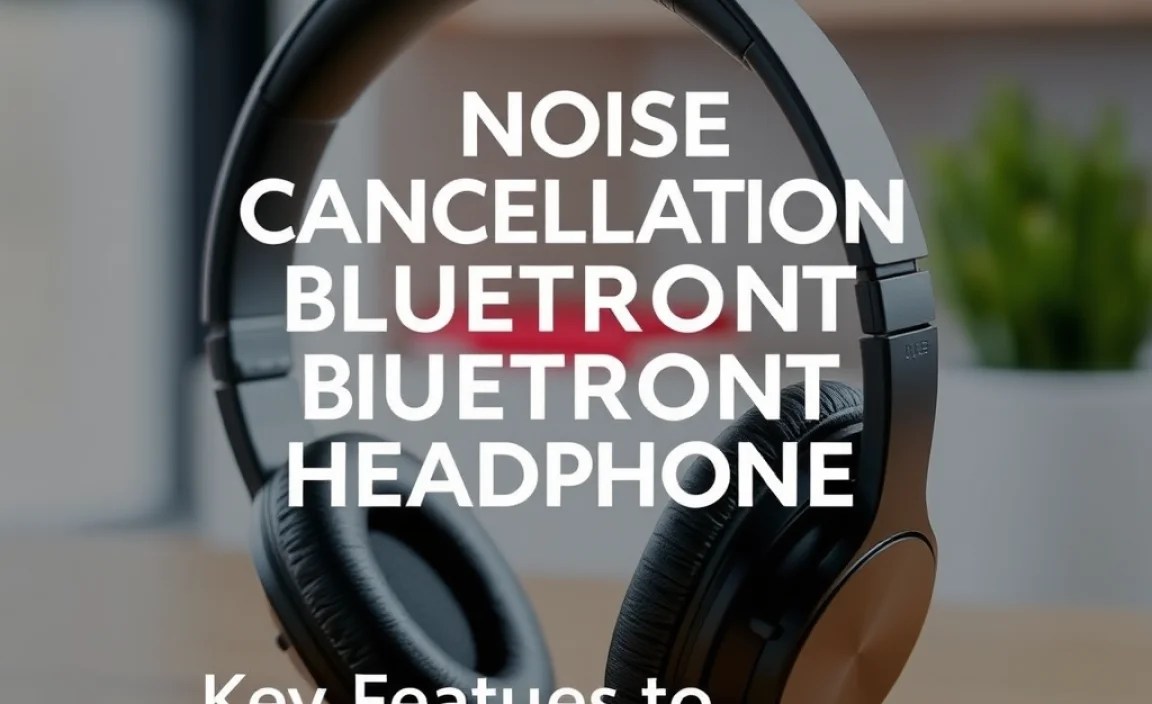
Beyond noise cancellation and Bluetooth, several other factors make a big difference in your daily listening experience. Let’s break them down:
Comfort and Fit Are King
You can have the best noise cancellation in the world, but if your headphones are uncomfortable, you won’t want to wear them. Consider these points:
- Over-Ear vs. On-Ear vs. In-Ear:
- Over-Ear: Earcups completely surround your ears. These generally offer the best comfort for long listening sessions and the best passive noise isolation. They can sometimes feel a bit bulkier.
- On-Ear: Earcups rest directly on your ears. These are often lighter and more compact than over-ear models but can sometimes press uncomfortably on the ears over time and may offer less passive noise isolation.
- In-Ear (Earbuds): These fit inside your ear canal. They are the most portable and discreet. For noise cancellation, you’ll want earbuds that come with various tip sizes to ensure a good seal in your ear canal, which is crucial for both sound quality and ANC effectiveness.
- Weight: Lighter headphones are generally more comfortable for extended wear.
- Materials: Look for plush earcups (often made of memory foam or artificial leather) and adjustable headbands.
- Clamping Force: This is how tightly the headphones grip your head. Too tight, and they’ll be uncomfortable; too loose, and they might slip off.
Battery Life: How Long Will Your Peace Last?
This is crucial, especially for frequent travelers or those who use their headphones all day. Battery life is typically measured in hours. You’ll often see two figures: one with ANC on and one with ANC off. ANC uses power, so expect fewer hours when it’s active.
Aim for:
- Over-Ear/On-Ear Headphones: 20-30 hours with ANC on is a good benchmark.
- Earbuds: 4-8 hours per charge, with a charging case that provides 2-3 additional charges.
Many modern headphones also support quick charging, giving you a few hours of playback from just a 10-15 minute charge – a lifesaver when you’re in a rush!
Sound Quality: It’s All About How It Sounds
While noise cancellation is a major draw, you still want your music to sound great! Look for headphones that offer:
- Balanced Audio: Clear highs, present mids, and defined bass. Avoid headphones that make everything sound muddy or tinny.
- Customization: Some headphones offer companion apps that allow you to adjust EQ settings to your preference.
- Driver Size (for Over-Ear/On-Ear): Larger drivers (the bits that produce sound) can often produce richer, more powerful sound, but this isn’t the only factor.
Reading reviews from trusted audio sites can give you a good idea of a headphone’s sound profile. For example, Rtings.com provides in-depth objective measurements and subjective reviews which are invaluable.
Call Quality: More Than Just Listening
If you plan to use your headphones for calls, especially in noisy environments, good microphone performance is essential. Look for headphones that boast:
- Multiple Microphones: These help isolate your voice and reduce background noise during calls.
- Voice Pickup Technology: Features designed to focus on your voice.
- Wind Noise Reduction: A lifesaver if you’re often taking calls outdoors.
Reviews often specifically mention how well headphones perform for calls, so pay attention to those details.
Durability and Build Quality
Your headphones are an investment, so you want them to last. Consider:
- Materials: Sturdy plastics, metal accents, and robust hinges make a difference.
- Portability: Do they fold up? Do they come with a protective case? This is especially important for travel.
Top Picks for Best Noise Cancellation Bluetooth Headphones (Examples)

While the “best” is subjective and changes with new releases, here are some popular categories and examples that consistently receive high marks. These are often lauded for their effectiveness in noise cancellation, comfort, sound quality, and overall value. Remember to check the latest models and reviews for the most up-to-date information!
For the Traveler: Over-Ear Comfort and Top-Tier ANC
These headphones excel at creating a quiet sanctuary, perfect for long flights or noisy commutes. They typically offer plush earcups and industry-leading noise cancellation technology.
| Feature | Example Brands/Models (Check Latest Versions) | Key Strengths | Considerations |
|---|---|---|---|
| Noise Cancellation | Sony WH-1000XM series, Bose QuietComfort series | Industry-leading ANC, excellent for constant low-frequency noise. | Can be an investment. |
| Comfort | Bose QuietComfort series, Sennheiser Momentum series | Plush earcups, light build, excellent for long wear. | Some users may find certain clamping forces too firm or loose. |
| Sound Quality | Sony WH-1000XM series, Bowers & Wilkins PX7 | Rich, detailed, and often customizable sound profiles. | May require EQ adjustments for some listeners. |
| Battery Life | Most premium models | Often 25-30+ hours with ANC enabled. Quick charge capabilities. | ANC does reduce overall playtime. |
For Mobility: Compact Yet Powerful Earbuds
These are for those who prioritize portability and a discreet listening experience. The noise cancellation here relies heavily on a good fit and advanced ANC processing.
| Feature | Example Brands/Models (Check Latest Versions) | Key Strengths | Considerations |
|---|---|---|---|
| Noise Cancellation | Apple AirPods Pro, Bose QuietComfort Earbuds, Sony WF-1000XM series | Impressive ANC for their size, good at silencing ambient noise. | Fit is critical for optimal performance. |
| Portability | All true wireless earbuds | Extremely compact charging cases, easy to carry anywhere. | Easier to misplace than over-ear headphones. |
| Fit & Stability | Various brands with different tip options | Multiple ear tip sizes included to ensure a secure and comfortable fit. | May take some experimenting to find the best seal. |
| Battery Life | Most premium models | Typically 4-7 hours per charge, with cases providing multiple recharges. | Frequent charging of the case is needed. |
How to Choose Your Perfect Pair: A Step-by-Step Approach

Ready to make a decision? Follow these steps to narrow down your choices:
Step 1: Define Your Primary Use Case
Where and how will you use your headphones most often?
- Commuting/Travel: Focus on top-tier ANC and long battery life. Over-ear models are often best for this.
- Office/Studying: Good ANC for focus, comfortable for long periods, and clear call quality. Over-ear or comfortable on-ear might be ideal.
- Workouts/Active Use: Look for secure fit, sweat resistance (IPX rating), and decent ANC or ambient sound modes. True wireless earbuds are usually the top choice here.
- Home Listening: Comfort and sound quality might be your main priorities, with ANC being a bonus.
Step 2: Set Your Budget
Noise-canceling Bluetooth headphones range widely in price. Premium models with the latest technology can cost $200-$400+, while more budget-friendly options can be found for $50-$150. Deciding on a budget early will help you narrow down brand and model choices. As a general rule, you get what you pay for in terms of ANC effectiveness and overall build quality for noise-canceling technology, though great value can be found in the mid-range.
Step 3: Prioritize Key Features
Based on your use case and budget, rank the importance of features like:
- ANC effectiveness
- Comfort and fit
- Battery life
- Sound quality
- Call quality
- Portability
- Durability
Step 4: Research Top Contenders
Once you have a clearer picture, start looking at specific models. Focus on brands known for quality audio and ANC, such as Sony, Bose, Apple, Sennheiser, and Audio-Technica. Read reviews from reputable tech sites and watch video reviews. Pay attention to user feedback regarding comfort and real-world battery performance.
Step 5: Consider the Ecosystem
If you’re heavily invested in a particular ecosystem (like Apple or Android), you might benefit from headphones that integrate seamlessly. For example, Apple AirPods Pro and AirPods Max offer excellent integration with iPhones and Macs, including features like instant pairing and Spatial Audio.
Step 6: Try Them On (If Possible)
The best way to know if headphones are comfortable is to try them. Visit an electronics store and see how different models feel on your head or in your ears. Even a few minutes can tell you a lot about weight, clamping force, and earcup material.
Step 7: Check Warranty and Return Policies
Especially when buying online, make sure the retailer has a good return policy in case the headphones aren’t a good fit or you experience issues. Check the manufacturer’s warranty for peace of mind.
Maintaining Your Noise Cancellation Headphones
To get the most out of your investment, proper care is essential. Here’s how to keep them in top shape:
Cleaning Your Headphones
- Earcups/Eartips: For over-ear and on-ear headphones, gently wipe the earcups with a slightly damp, soft cloth. For earbuds, remove the eartips and clean them with a mild soap and water solution, ensuring they are completely dry before reattaching. Clean the earbuds themselves with a dry microfiber cloth.
- Headband: Wipe with a dry or slightly damp cloth. Avoid saturating it.
- Grilles/Mic Ports: Use a dry, soft brush (like a clean toothbrush or a small makeup brush) to gently remove any debris from speaker grilles or microphone ports. Never use liquids directly on these parts.
Storage and Handling
- Use the Case: Always store your headphones in their protective case when not in use. This guards against scratches, dust, and accidental damage.
- Avoid Extreme Temperatures: Don’t leave your headphones in a hot car or out
