
Quick Summary: Discover the best wired noise-cancelling headphones for peace and quiet. This guide explains what to look for, how they work, and top picks for immersive audio without distractions. Perfect for beginners seeking clear sound and focused listening, wired options offer reliable performance and no charging worries for uninterrupted peace.
Best Noise Cancelling Headphones Wired: Your Essential Guide to Uninterrupted Audio

Hello there, audio adventurers! Edward Cavitt here from Headphone Horizon, your friendly guide to all things sound. Today, we’re diving into a topic that brings tranquility to our often-noisy world: the best noise-cancelling headphones wired. If you’ve ever craved a bubble of silence on a bustling commute, a quiet study space in a loud cafe, or simply want to get lost in your music without the world intruding, you’ve come to the right place. Wired noise-cancelling headphones offer a fantastic blend of reliable performance, impressive sound quality, and the convenience of not needing to worry about battery life. Let’s explore how these marvels work and find the perfect pair to suit your ears and your life!
Why Choose Wired Noise Cancelling Headphones?

In a world increasingly dominated by wireless everything, you might be wondering, “Why go wired?” It’s a great question! Wired connections often provide a more stable audio signal, which can be crucial for audiophiles and anyone who values pristine sound quality. For noise-cancelling headphones, being wired means the magic of active noise cancellation (ANC) doesn’t rely on a battery. This translates to uninterrupted listening sessions, whether you’re on a transatlantic flight or deep into a work project. Plus, you never have to worry about Bluetooth pairing issues or your headphones dying at a critical moment.
Active Noise Cancellation (ANC) is the star of the show. It works by using microphones on the outside of the headphones to detect ambient sounds. Then, tiny electronic chips inside produce an “anti-noise” sound wave that’s the exact opposite of the incoming noise. When these two waves meet, they cancel each other out, leaving you with blissful quiet. This technology is particularly effective against low-frequency, constant noises like airplane engines, train rumbles, or office air conditioning.
Key Features to Look For
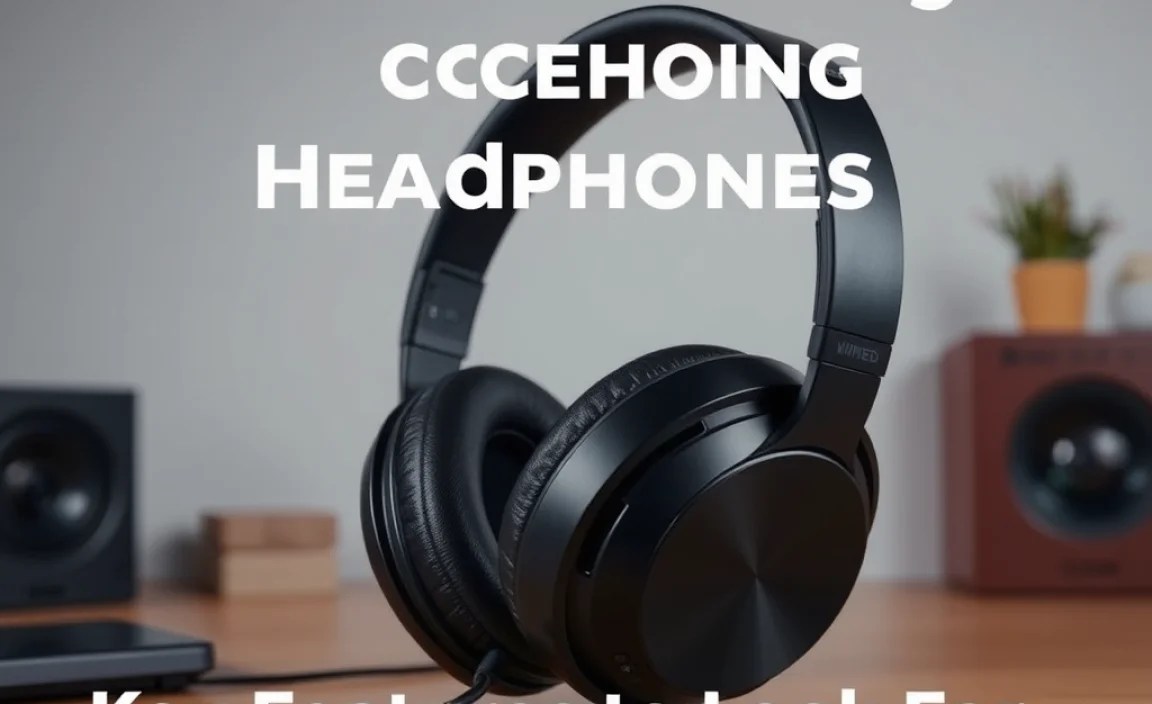
When shopping for the best noise-cancelling headphones wired, several factors can make a big difference. Think of these as your checklist to ensure you get a pair that truly fits your needs.
1. Noise Cancellation Effectiveness
This is paramount! Not all ANC is created equal. Look for headphones that are known to effectively block out a wide range of frequencies. Some headphones excel at dampening low hums, while others are better at reducing mid-range chatter.
2. Sound Quality
Noise cancellation is a wonderful feature, but it shouldn’t come at the expense of how your music, podcasts, or calls sound. Seek out headphones with clear highs, detailed mids, and, if you like it, a punchy bass that doesn’t muddy the overall soundscape.
3. Comfort and Fit
You’ll likely be wearing these for extended periods, so comfort is key. Consider the earcup material (plush leatherette or breathable fabric?), the clamping force (how tightly they grip your head), and the overall weight. Over-ear headphones are generally more comfortable for long listening sessions than on-ear or in-ear models, but personal preference plays a big role.
4. Build Quality and Durability
A good pair of headphones is an investment. Look for sturdy materials like metal in the headband and robust plastics for the earcups. Hinges and adjustment mechanisms should feel solid and reliable.
5. Cable Type and Length
Most wired ANC headphones use a standard 3.5mm audio jack, but check compatibility with your devices. The cable length should be sufficient for your typical use. Some cables also come with in-line microphones and remote controls, which are incredibly convenient.
6. Portability
While wired headphones can be slightly less convenient than their wireless counterparts for portability, many still fold up nicely and come with carrying cases. This is important if you plan to travel or commute frequently.
Top Considerations for Wired ANC Headphones

Let’s break down some of the practical aspects when choosing your ideal pair. Understanding these will help you make an informed decision.
Powering the ANC: Batteries vs. Bus Power
This is where wired ANC headphones differ from some wireless models. Many wired ANC headphones require their own power source, typically one or two AA or AAA batteries, or a rechargeable battery pack. Others ingeniously draw power directly from the audio source via USB (if they have a USB connection instead of a 3.5mm jack). This “bus powered” approach means you don’t need to worry about charging, as the headphones draw power from the device they’re connected to. Always check the product specifications to understand how the ANC is powered.
Drivers and Audio Performance
The “drivers” are the small speakers inside your headphones that produce sound. Their size and quality significantly impact audio fidelity. For noise-cancelling headphones, you want drivers that can deliver a balanced sound profile, allowing you to enjoy your music to its fullest, even with the ANC engaged. Larger drivers often provide a richer, more powerful sound, but precise engineering is more important than sheer size.
Impedance and Sensitivity
These are technical terms, but here’s a simple breakdown:
- Impedance (Ohms): This indicates how much electrical resistance the headphones have. Lower impedance (e.g., 32 ohms) means they’re easier to drive – they don’t need a powerful source to get loud. Higher impedance headphones (often 250 ohms or more) can sound better with dedicated headphone amplifiers but might not get loud enough from a smartphone or laptop alone. For most consumer-grade wired ANC headphones, you’ll find impedances in the easier-to-drive range.
- Sensitivity (dB): This measures how loud the headphones can get with a given amount of power. Higher sensitivity means they’re more efficient and will play louder.
For beginner-friendly wired ANC headphones, aim for a balance that works well with your typical devices like smartphones, tablets, and laptops without needing extra amplification.
The 3.5mm Jack vs. USB-C/Lightning
The traditional 3.5mm headphone jack is still common, offering broad compatibility. However, some modern wired headphones use USB-C or Lightning connectors. If your device lacks a headphone jack (like many newer smartphones), this can be a convenient option, and some of these connections allow for digital audio streaming and power delivery for ANC.
Step-by-Step Guide: Finding and Using Your Wired Noise Cancelling Headphones

Ready to find your perfect pair? Let’s walk through the process.
Step 1: Assess Your Needs
Before you even look at specific models, think about where and why you’ll use your headphones most.
- Commuting/Travel: Focus on strong ANC for engine noise and comfort for long wear.
- Work/Study: Prioritize comfort, good ANC for office chatter, and a clear microphone for calls.
- Home Listening: Sound quality and comfort might be your top priorities, with ANC as a bonus for a more immersive experience.
- Budget: Determine how much you’re willing to spend. High-end ANC can be pricier.
Step 2: Research Top Brands and Models
Reputable brands are a good starting point. Some well-regarded manufacturers known for their audio quality and ANC technology include:
- Sony
- Bose (though their top ANC models are often wireless, they have had wired options)
- Sennheiser
- Audio-Technica
- AKG
Read reviews from trusted tech websites and audio publications. Look for comparisons and long-term reviews to get a sense of durability and performance over time.
Step 3: Compare Features and Specs
Use online comparison tools or spec sheets to see how different models stack up in terms of:
- ANC effectiveness ratings (if available)
- Frequency response (a wider range generally means better sound)
- Driver size and type
- Battery life (if applicable)
- Weight and dimensions
- Connectivity (3.5mm, USB-C, etc.)
- Included accessories (carrying case, extra cables, adapters)
Step 4: Consider Price and Value
Set a budget and find the best combination of features and performance within that range. Sometimes, slightly older models offer excellent value as newer versions are released.
Step 5: Make Your Purchase
Once you’ve narrowed down your choices, make your purchase from a reputable retailer, either online or in-store. If possible, try to physically try on headphones that fit your criteria to get a feel for their comfort.
Step 6: Setting Up and Using Your Headphones
Using wired ANC headphones is generally straightforward:
- Connect the Cable: Plug the 3.5mm (or USB) cable into your device’s audio port and then into the headphones. Ensure a secure connection on both ends.
- Power On ANC: Locate the ANC switch or button on your headphones. It’s often on one of the earcups. Flip it to the ‘on’ position. If your headphones are battery-powered, ensure fresh batteries are inserted or the unit is charged.
- Test the Noise Cancellation: In a moderately noisy environment, turn the ANC on and off. You should notice a significant reduction in background noise when it’s on. The effect is most pronounced with constant, low-frequency sounds.
- Adjust for Comfort: Make sure the headband and earcups are positioned comfortably on your head and ears. Adjust the headband for a secure but not too tight fit.
- Enjoy Your Audio: Play your music, podcast, or audiobook. You might find you need to turn the volume down slightly compared to when ANC is off, as the background noise masking allows you to hear more detail at lower volumes.
A Look at Some Top Wired Noise Cancelling Headphone Contenders
While the market for wired ANC headphones might be smaller than for wireless, there are still excellent options available that deliver on performance and silence. Here are a few types of models and features to keep an eye out for:
Note: Specific models can change frequently. It’s always best to check current availability and reviews for the latest information.
Example Table: Wired Noise Cancelling Headphone Features (Illustrative)
| Feature | Example Model Type A (Travel Focus) | Example Model Type B (Audiofile Lite) | Example Model Type C (Budget-Friendly) |
|---|---|---|---|
| Noise Cancellation | Very Strong (Blocks plane engines, constant hums) | Good (Reduces office chatter, general ambient noise) | Moderate (Effective for basic background noise) |
| Sound Profile | Balanced, clear | Detailed, natural | Satisfying, slightly warmer |
| Comfort | Plush earcups, lightweight | Ergonomic design, breathable pads | Decent padding, adjustable |
| Power Source for ANC | Rechargeable battery or replaceable AA | Replaceable AAA or USB powered | Replaceable AA or AAA |
| Connectivity | 3.5mm audio jack, often with airplane adapter | 3.5mm audio jack | 3.5mm audio jack |
| Portability | Foldable with hard-shell case | Foldable with carrying pouch | May fold, usually no case |
This table is illustrative, showing how different models might prioritize various features. Always check the specific model you’re interested in.
Maintaining Your Wired Noise Cancelling Headphones
To ensure your headphones keep delivering that sweet silence and great sound for years to come, a little care goes a long way.
Cleaning the Earcups and Headband
Over time, earcups can accumulate earwax, sweat, and oils. Most earpads can be gently wiped down with a slightly damp, soft cloth. For leather or pleather pads, a mild soap and water solution can be used, but ensure the cloth is only slightly damp and never soak the pads. For fabric pads, a gentle brush can help remove surface debris. Always ensure the headphones are unplugged and powered off before cleaning.
Cleaning the Audio Jack and Cable
The 3.5mm audio jack and connector can get dusty or linty, which can sometimes cause intermittent sound or static. Gently clean the metal tip of the plug and around the port on your device with a dry cotton swab. Never use liquids directly on the jack. Inspect the cable for any kinks or damage; a damaged cable is often the most common point of failure and may need replacement.
Battery Care (if applicable)
If your headphones use replaceable batteries, use high-quality ones and replace them when the ANC performance noticeably degrades. For rechargeable batteries, avoid extreme temperatures, and follow the manufacturer’s charging guidelines if provided. Don’t consistently leave them plugged in for excessively long periods after they’ve reached full charge, as this can degrade battery health over time.
Storage
When not in use, store your headphones in a protective case or in a safe place where they won’t be crushed or exposed to extreme conditions. Excess pressure on the earcups or headband can cause damage.
Understanding How ANC Works (A Deeper Dive)
Let’s expand a bit on the fascinating science behind Active Noise Cancellation. It’s essentially a clever application of physics, specifically wave interference. Sound travels as waves. When you have two identical waves that are perfectly out of sync, they cancel each other out – this is called destructive interference. Imagine two ripples on water, one bulging upwards and the other downwards at the exact same time; when they meet, the water surface becomes flat.
ANC headphones have tiny microphones on the exterior. These microphones constantly listen to the ambient sound around you. This sound is then processed by a microchip inside the headphones. The chip generates a sound wave that is the exact inverse of the ambient sound wave. For example, if the incoming noise wave has a peak (upward pressure), the headphone generates a trough (downward pressure) at the same moment. When these two waves – the original noise and the generated anti-noise – meet your ear, they effectively neutralize each other.
This technology is most effective against consistent, low-frequency noises like the hum of an airplane engine, train tracks, or HVAC systems. It’s less effective against sudden, sharp noises (like a door slamming) or complex, higher-frequency sounds (like human speech), although it does take the edge off these too. To learn more about the science of sound and acoustics, resources like the Acoustical Society of America (.org) offer a wealth of information.
Pros and Cons of Wired Noise Cancelling Headphones
As with any technology, there are trade-offs. Here’s a quick look at the advantages and disadvantages:
Pros:
- Reliable Connection: No dropouts or Bluetooth pairing issues.
- No Battery Worries for Audio: Your music plays as long as your source device does, even if the ANC needs its own battery.
- Potentially Better Sound Quality: Wired connections can sometimes offer a purer, uncompressed audio signal.
- Often More Affordable: Compared to their wireless ANC counterparts, wired versions can sometimes be less expensive.
- Immediate Power for ANC: Connect and go, especially if the ANC is powered by the source device.
Cons:
- Limited Mobility: The cable restricts your movement and can get snagged.
- Cable Management: Untangling cables can be a minor annoyance.
- Device Compatibility: Newer phones and laptops might lack a 3.5mm jack, requiring an adapter.
- ANC Requires Power: Most wired ANC headphones still need their own battery power for the noise cancellation feature, adding an extra layer to manage (though some USB-powered models avoid this).
- Fewer Models: The market for new wired ANC headphones is smaller than for wireless models.
