
Quick Summary: Discover the best pro headphones for educators, focusing on comfort, sound clarity, and noise isolation to enhance teaching and personal listening. This guide helps you choose reliable gear for focused instruction and relaxation, ensuring a better experience in and out of the classroom.
Best Pro Headphones: Essential Gear for Educators
Hello everyone, Edward Cavitt here from headphonehorizon! As educators, you juggle countless tasks, from lesson planning and grading to engaging with students. Sometimes, you just need a moment of peace or a way to truly focus, whether it’s on an important audio cue in a virtual lecture or simply enjoying your favorite music after a long day. That’s where a great pair of professional-grade headphones can become your secret weapon. They aren’t just for audiophiles; they’re incredibly useful tools for anyone who relies on clear sound and a bit of quiet. In this guide, we’ll explore why educators can benefit immensely from “pro” headphones and how to pick the perfect pair that won’t break the bank, ensuring your audio experience is as rich and clear as your lessons.
Why Educators Need Pro Headphones
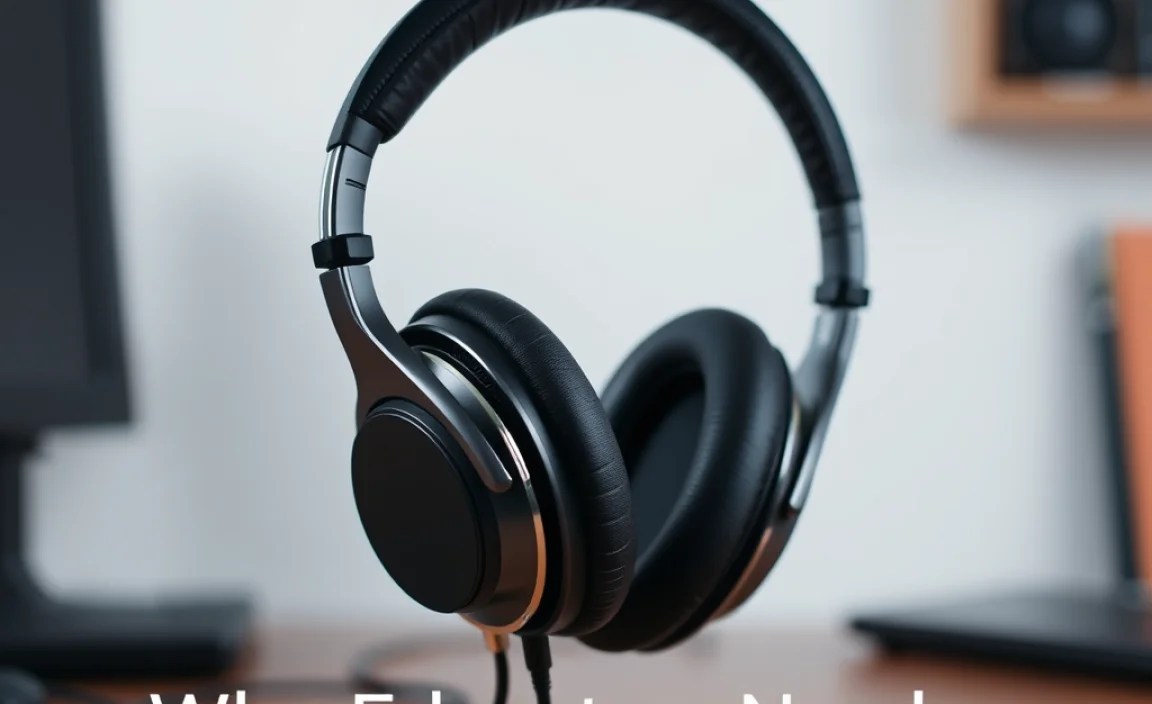
Being an educator often means working in dynamic environments. Whether you’re in a bustling classroom, a quiet office, or conducting online lessons from home, the ability to control your audio environment is invaluable. Pro headphones, generally designed for critical listening or professional use, offer superior sound quality, comfort for long wear, and often, excellent noise isolation or cancellation. These features translate directly into practical benefits for educators.
Enhanced Focus and Concentration
Distractions are a constant challenge in any educational setting. Loud hallways, neighboring conversations, or even the hum of classroom technology can disrupt your concentration. Professional headphones, especially those with active noise cancellation (ANC), can create a personal haven of quiet. This allows you to:
- Focus on intricate lesson preparation without interruption.
- Clearly hear online lectures, remote meetings, or student audio submissions.
- Concentrate on grading or administrative tasks in a noisy environment.
- Drift into relaxation more easily during downtime.
Improved Audio Clarity for Online Teaching
For educators who teach online or hybrid classes, clear audio is non-negotiable. Your voice needs to be heard perfectly, and you need to be able to distinguish the nuances in student responses or audio materials. Pro headphones often feature:
- Accurate sound reproduction, ensuring your voice sounds natural to others.
- Good microphone quality (in headset models) for crisp communication.
- Balanced audio profiles that don’t overemphasize bass or treble, making speech intelligibility higher.
This clarity helps prevent misunderstandings and ensures a more engaging and effective learning experience for your students.
Comfort for Extended Use
Educators often wear headphones for several hours a day. Whether listening to educational podcasts, participating in professional development webinars, or simply using them for online classes, comfort is paramount. Pro headphones are typically built with:
- Ergonomic designs for a secure yet comfortable fit.
- Plush earcups that cushion your ears.
- Adjustable headbands to accommodate different head sizes.
- Lightweight construction to minimize fatigue.
Finding a pair that fits well means you can wear them all day without discomfort, which is crucial when you’re on your feet or in front of a screen for hours.
Versatility Beyond the Classroom
Your headphones aren’t just for work! They can significantly enhance your personal listening experiences. After a demanding day, unwinding with music or a podcast is essential for well-being. Pro headphones deliver:
- Rich, detailed sound for enjoying music, audiobooks, or any audio content.
- Durable build quality that stands up to daily wear and tear.
- A premium listening experience that makes your downtime more enjoyable.
Types of Pro Headphones for Educators

When we talk about “pro” headphones, we’re usually referring to models designed for professional audio use, like those for music production, mixing, or sound engineering. However, many of these qualities are transferable and highly beneficial for educators. Here are the main types to consider:
Over-Ear Headphones
These are the most common type of pro headphones. They completely enclose your ears, providing good passive noise isolation and excellent comfort for long listening sessions. They come in two main subtypes:
- Closed-Back: These have a solid casing that prevents sound from leaking out and blocks external noise effectively. Ideal for noisy environments or when you need to prevent sound from disturbing others.
- Open-Back: These have perforated or vented casings, allowing for a more natural, spacious soundstage. They’re great for critical listening in quiet environments but offer less noise isolation and can leak sound. Primarily for those who need the most accurate audio reproduction in a quiet space.
On-Ear Headphones
These headphones rest directly on your ears. They are often more portable than over-ear models but can become less comfortable with prolonged wear for some people. They typically offer less passive noise isolation than closed-back over-ear designs.
In-Ear Monitors (IEMs)
These are small, earbud-style headphones that fit inside your ear canal, creating a seal. They offer excellent noise isolation and are very portable. While some IEMS are designed for critical listening, they might not be as comfortable for extended wear as well-padded over-ear headphones for some educators.
Key Features to Look For

Not all pro headphones are created equal. Here are the essential features you should prioritize when selecting a pair for your educational needs:
Comfort and Ergonomics
This is arguably the most important factor for educators. Look for:
- Plush Earcups: Materials like velour or soft memory foam distribute pressure evenly and reduce heat buildup.
- Adjustable Headband: Ensure it has enough range to fit comfortably without excessive clamping force.
- Lightweight Design: Heavy headphones can cause neck and shoulder strain over time.
- Replaceable Earpads: This extends the life of your headphones.
Sound Quality and Clarity
You want headphones that reproduce sound accurately, especially for spoken word and voice. Key aspects include:
- Balanced Frequency Response: A neutral or flat response means you’re hearing sound as it’s intended, without artificial boosts. This is essential for speech intelligibility.
- Clear Mid-Range: The mid-range frequencies are where human voices primarily reside. Good detail here is crucial.
- Low Distortion: At higher volumes, good headphones will remain clear without sounding muddy or harsh.
Build Quality and Durability
Your headphones are an investment. They should be built to last. Consider:
- Robust Materials: Metal and high-quality plastics are signs of durability.
- Reinforced Cables: Detachable and replaceable cables are a huge plus, as cables are often the first point of failure.
- Solid Construction: Avoid flimsy hinges or plastic parts that feel like they might snap.
Noise Isolation vs. Noise Cancellation
Both terms affect how well you can block out external sound, but they work differently:
- Passive Noise Isolation: Achieved through the physical design of the headphones (e.g., well-fitting earcups) to block out sound. Common in closed-back over-ear headphones.
- Active Noise Cancellation (ANC): Uses microphones to detect ambient noise and generate opposing sound waves to cancel it out. This is particularly effective against low-frequency, constant noises like HVAC systems or airplane engines.
For educators in potentially noisy environments or those requiring deep concentration, ANC can be a game-changer. However, ANC technology can sometimes slightly alter the sound profile. For pure audio accuracy in a quiet setting, passive isolation might be preferred.
Connectivity
Think about how you’ll use your headphones. Do you need wireless freedom, or is a wired connection sufficient?
- Wired (3.5mm jack): Offers a stable, high-quality connection with no latency. Essential for some professional audio tasks and often more budget-friendly.
- Wireless (Bluetooth): Provides freedom of movement. Look for models with modern Bluetooth codecs (like aptX or LDAC) for better sound quality and low latency if video synchronization is important.
- USB-C/USB-A: Some headphones connect directly via USB, often ideal for computers and offering digital audio transmission.
Top Picks: Best Pro Headphones for Educators

Here are some highly-regarded professional-grade headphones that offer excellent value and performance for educators, categorized by their strengths. These are often recommended for their balance of sound, comfort, and build quality.
For Superior Noise Cancellation & Comfort: Sony WH-1000XM5
The Sony WH-1000XM series is renowned for its industry-leading active noise cancellation. The XM5 model refines this further with an even more comfortable design and exceptional sound quality. It offers a fantastic seal for passive isolation as well.
Pros:
- Unmatched active noise cancellation.
- Comfortable for long listening sessions.
- Excellent sound clarity, with customizable EQ.
- Long battery life and quick charging.
- Good for both voice and music.
Cons:
- Premium price point.
- Can be overkill if you only need quiet in a very silent environment.
For Balanced Sound & Durability: Audio-Technica ATH-M50x
A staple in studios and among discerning listeners, the ATH-M50x offers a robust build and a balanced, detailed sound profile. They are known for their accuracy, making them great for understanding nuances in speech and music. Their closed-back design provides excellent passive isolation.
Pros:
- Exceptional sound clarity and detail.
- Durable, professional build quality.
- Good passive noise isolation.
- Detachable, replaceable cables (comes with multiple types).
- Relatively good value for the performance.
Cons:
- Can be a bit tight on the head for some users initially.
- No active noise cancellation (relies on passive isolation).
- May not be the most comfortable for extremely long periods without breaks for some users.
For Open and Immersive Sound: Sennheiser HD 560S
If you work in a quiet office or home environment and prioritize the most natural and spacious sound, open-back headphones like the Sennheiser HD 560S are fantastic. They offer incredibly detailed, uncolored audio, great for critical listening and understanding every subtle detail. Their open design also leads to less ear fatigue.
Pros:
- Remarkably transparent and detailed sound reproduction.
- Wide soundstage for an immersive listening experience.
- Very comfortable for extended wear due to their open design and light clamp.
- Good for analytical listening and identifying subtle audio cues.
Cons:
- Sound leaks out, making them unsuitable for noisy environments or public spaces.
- External noise can easily enter, defeating the purpose in loud settings.
- No ANC.
For a Budget-Conscious, Reliable Option: Samson SR850
For educators on a tighter budget, good performance doesn’t have to mean a high price. The Samson SR850 (often considered half-open or semi-open) provides surprisingly good clarity and a wide soundstage for its price point. They are comfortable for moderate listening sessions and offer a stepping stone into quality audio.
Pros:
- Excellent value for the audio quality.
- Good clarity for spoken word.
- Comfortable for students and moderate use.
- Wide soundstage for the price.
Cons:
- Build quality is good for the price but not as robust as higher-end models.
- Sound leakage exists (less than fully open, more than fully closed).
- Not suitable for extremely noisy environments.
Headphone Terminology Explained
Navigating the world of headphones can sometimes feel like learning a new language. Here’s a simple breakdown of common terms you’ll encounter:
- Frequency Response: This indicates the range of sound frequencies (from deep bass to high treble) a headphone can reproduce, often shown as a graph. A wider range generally means fuller sound. For educators, a focus on the mid-range (where voices lie) is key.
- Impedance (Ohms): This measures the electrical resistance of the headphones. Higher impedance headphones (typically 250 Ohms or more) require a more powerful amplifier to sound their best. Most consumer devices (phones, laptops) can drive lower impedance headphones (under 100 Ohms) adequately.
- Sensitivity: This measures how loud the headphones can get with a given amount of power. Higher sensitivity means they’ll play louder with less power.
- Soundstage: This refers to the perceived space and dimension of the sound. A wide soundstage can make music or voices feel like they are coming from outside your head, creating a more natural and immersive experience.
- Drivers: These are the small speakers inside the headphones that produce sound. They come in various sizes and types (e.g., dynamic, balanced armature).
When to Choose Wired vs. Wireless
The choice between wired and wireless headphones often comes down to your primary needs and environment.
Wired Headphones
Pros:
- Generally offer superior sound quality and stability for the price.
- No batteries to charge.
- No latency (delay) in audio transmission, crucial for video conferencing or playing instruments.
- Often more durable as they don’t have complex Bluetooth components.
Cons:
- Tethered by a cable, which can be restrictive.
- Cable can break or get tangled.
- May require adapters for newer devices (e.g., phones without headphone jacks).
Wireless Headphones (Bluetooth)
Pros:
- Freedom of movement and no tangled cables.
- Convenient for use with smartphones and many laptops.
- Many models include ANC for active noise cancellation.
Cons:
- Require regular charging.
- Sound quality can sometimes be slightly compromised compared to wired, depending on the Bluetooth codec.
- Potential for latency, which can be an issue for real-time audio-visual work.
- More expensive due to the Bluetooth technology.
For educators who need to move around while teaching virtually, or simply prefer not to be tethered, wireless is a great option. However, if pristine audio quality and zero delay are paramount, especially for critical listening or online interaction, a wired connection is often superior. Many professional headphones offer detachable cables, allowing you to switch between wired and wireless if the model supports it.
Maintenance and Care for Your Headphones
To ensure your investment lasts and your headphones perform optimally, a little maintenance goes a long way. Follow these simple steps:
Cleaning Your Headphones
Regular cleaning is essential for hygiene and longevity.
- Earpads: For fabric or leatherette earpads, use a slightly damp cloth with mild soap and water. Gently wipe them down, then use a separate dry cloth to remove excess moisture. Avoid harsh chemicals.
- Headband: Wipe with a dry or slightly damp cloth.
- Earcups (Exterior): Use a dry or slightly damp microfiber cloth to remove dust and grime.
- Grills/Mesh: Use a soft, dry brush (like a toothbrush you don’t use for teeth!) to gently dislodge any debris.
- Cable: Wipe down with a dry cloth.
Storage
Proper storage prevents damage when not in use.
- Use the Carrying Case: Most professional headphones come with a protective case. Use it whenever possible, especially for travel.
- Avoid Extreme Temperatures: Don’t leave headphones in hot cars or direct sunlight, as heat can damage the materials and electronics.
- Hang or Place Carefully: If not using a case, hang them on a headphone stand or place them on a stable surface where they won’t be easily knocked over or crushed. Avoid draping the cable over sharp edges.
Cable Care
Cables are often a point of failure.
- Avoid Yanking: Always grip the plug when disconnecting a cable, not the wire itself.
- Gentle Coiling: Coil cables loosely rather than tightly wrapping them around your device or hand.
- Detachable Cables: If your headphones have detachable cables, disconnect them for storage or travel to reduce
