
Quick Summary: Discover the best quality over-ear headphones for an immersive audio experience. This guide breaks down what to look for, from sound to comfort, helping you choose a pair that fits your needs and budget, ensuring a rewarding listening journey.
Welcome to headphonehorizon, where we make understanding audio gear as enjoyable as listening to your favorite tunes! If you’re looking to elevate your sound experience, you’ve come to the right place. There’s something truly special about a good pair of over-ear headphones – they envelop your ears, offering a rich, detailed soundstage that can transport you right into the heart of the music, podcast, or movie. But with so many options out there, how do you pick the “best quality over ear headphones” that are truly essential for you? Don’t worry, we’ll guide you through it, demystifying the jargon and focusing on what really matters for everyday listeners.
Why Over-Ear Headphones Are an Essential Choice

Over-ear headphones, also known as circumaural headphones, fully enclose your ears. This design offers several key advantages that make them an essential choice for many listeners seeking superior audio quality and comfort. Unlike their on-ear or in-ear counterparts, they create a seal around your ears, which naturally helps to block out external noise. This passive noise isolation is the first layer of immersion, allowing you to focus on your audio without distracting hums or chatter. Furthermore, the larger earcups provide more space for drivers, the components that produce sound. This extra space often translates to a wider, more detailed soundstage, clearer highs, richer mids, and deeper bass, giving you a more “hi-fi” listening experience.
For those who spend hours listening to music, working, or gaming, comfort is paramount. Over-ear designs distribute pressure more evenly around the head and ears, reducing fatigue compared to on-ear models that press directly against the ear cartilage. The plush padding often found on these headphones adds to the luxurious feel and long-term wearability. Whether you’re a seasoned audiophile or just someone who appreciates good sound, investing in a quality pair of over-ear headphones can significantly enhance your daily listening, making them a truly essential part of your audio setup.
Key Features to Look for in Quality Over-Ear Headphones

When embarking on your quest for the best quality over-ear headphones, several key features will significantly impact your listening experience. Understanding these will help you make a more informed decision and avoid common pitfalls. Let’s break down what truly matters:
1. Sound Quality (The Heart of the Matter)
This is, of course, the most crucial aspect. While “good sound” is subjective, objective qualities can be assessed. Look for:
- Frequency Response: This tells you the range of sound frequencies a headphone can reproduce, typically measured in Hertz (Hz). A wider range (e.g., 20Hz to 20kHz) is generally better, covering the full spectrum of human hearing. Pay attention to how balanced the sound is across this range – you don’t want overly boomy bass or tinny treble.
- Distortion: Lower distortion (Total Harmonic Distortion or THD) means a cleaner sound. You’ll often see THD expressed as a percentage. Lower is always better.
- Driver Size and Type: Larger drivers (typically 40mm or larger) can potentially move more air, leading to better bass response and overall power. Different driver types (e.g., dynamic, planar magnetic, balanced armature) have their own sonic characteristics. For beginners, dynamic drivers are the most common and versatile.
- Soundstage: This refers to how spacious the audio sounds, giving a sense of depth and the placement of instruments. Open-back headphones often excel here, creating a more natural, airy sound.
2. Comfort and Fit (For Long Listening Sessions)
You might have the best-sounding headphones in the world, but if they’re uncomfortable, you’ll rarely use them. Consider:
- Earcup Size and Depth: Ensure the earcups are large enough to comfortably fit around your ears without pressing on them. Deep earcups prevent your ears from touching the driver housing.
- Headband Padding and Adjustment: Look for generous padding on the headband to avoid pressure points on your head. The headband should also offer a good range of adjustment to fit different head sizes securely but gently.
- Weight: Lighter headphones are generally more comfortable for extended wear.
- Materials: Breathable materials like velour for earpads can prevent heat buildup and sweat, especially during long sessions. Leatherette or protein leather is also common and offers good isolation, but can get warmer.
3. Noise Isolation and Cancellation
This is where over-ear headphones truly shine. You have two main types to consider:
- Passive Noise Isolation: Achieved through the physical design of the headphones – a good seal around the ears. This is excellent for blocking out consistent, low-frequency noises like airplane engines or office hum. Most quality over-ear headphones offer good passive isolation.
- Active Noise Cancellation (ANC): Uses microphones to detect external noise and generates an opposite sound wave to cancel it out. This is highly effective for speech and a wider range of environmental sounds. Look for ANC if you frequently travel or work in noisy environments. Research from institutions like the National Institutes of Health has even explored the neurological effects of noise cancellation on auditory perception.
4. Build Quality and Durability
Quality headphones are an investment, so they should be built to last. Check for:
- Materials: Metal in the headband or yokes, robust plastics, and high-quality earpad materials contribute to durability.
- Hinge and Swivel Points: These are common points of failure. Ensure they feel sturdy and well-constructed.
- Cable: Detachable cables are a huge plus, as they can be easily replaced if damaged. Look for braided or reinforced cables for added toughness.
5. Wired vs. Wireless (Connectivity Options)
The choice between wired and wireless depends on your usage:
- Wired: Generally offers the best sound fidelity without compression. No need to worry about battery life. Ideal for home listening, studio work, or when maximum audio quality is the priority.
- Wireless (Bluetooth): Offers freedom of movement, convenience, and compatibility with most modern devices. Look for Bluetooth codecs like aptX HD or LDAC if you prioritize wireless audio quality, as these offer higher bitrates than standard SBC. Battery life is also a key consideration.
Top Categories of Best Quality Over-Ear Headphones

To help you narrow down your choices, let’s categorize some of the best quality over-ear headphones based on what they excel at. Remember, the “best” is always personal, but these categories can guide your search.
1. For the Audiophile: Uncompromising Sound Fidelity
These headphones are designed for critical listening, offering the most accurate and detailed sound reproduction. They often come with a higher price tag and may require dedicated amplification for optimal performance. They tend to be open-back, prioritizing soundstage and naturalness over noise isolation.
Features to Expect:
- Exceptional clarity and detail.
- Wide, natural soundstage.
- Accurate tonality across the frequency spectrum.
- Often require an external amplifier (DAC/Amp).
- Typically open-back design for superior imaging.
Examples of Brands/Models to Research:
- Sennheiser HD 600/650/800 S
- Beyerdynamic DT 990 Pro / DT 1990 Pro
- Audio-Technica ATH-R70x
2. For the Traveler/Commuter: Best Active Noise Cancellation (ANC)
If your priority is drowning out the world and immersing yourself in your audio, ANC headphones are your champions. They are usually closed-back to provide good passive isolation, then enhance it with active cancellation technology.
Features to Expect:
- Industry-leading ANC technology.
- Excellent sound quality, often tuned for popular music genres.
- Comfortable for long flights or commutes.
- Often wireless with long battery life.
- Good build quality for portability.
Examples of Brands/Models to Research:
- Sony WH-1000XM5 / WH-1000XM4
- Bose QuietComfort Ultra Headphones / QuietComfort 45
- Sennheiser Momentum 4 Wireless
3. For Everyday Listening: Best All-Arounders
These headphones strike a great balance between sound quality, comfort, features, and price. They’re versatile enough for music, podcasts, watching videos, and light office use. Open or closed-back designs are common here.
Features to Expect:
- Pleasing, balanced sound signature.
- Good comfort for extended wear.
- Decent build quality for daily use.
- Good value for money.
- May offer both wired and wireless options.
Examples of Brands/Models to Research:
- Audio-Technica ATH-M50x (Closed-back, studio monitor style)
- Grado SR80x (Open-back, known for lively sound)
- AKG K371 (Closed-back, studio-tuned)
- Beyerdynamic DT 770 Pro (Closed-back, excellent comfort and isolation)
4. For Gamers: Immersive Soundstaging and Comfort
Gaming headphones need to provide precise audio cues, create an immersive soundscape, and be incredibly comfortable for marathon gaming sessions. Many feature integrated microphones.
Features to Expect:
- Excellent directional audio for pinpointing enemies.
- Large earcups with ample padding.
- Durable construction.
- Often come with detachable boom microphones.
- May specifically support virtual surround sound technologies.
Examples of Brands/Models to Research:
- SteelSeries Arctis Nova Pro (Wireless or wired options)
- Beyerdynamic DT 990 Edition (often favored by pros)
- HyperX Cloud Alpha / Cloud II
- Logitech G PRO X
Comparing Key Features: A Quick Reference
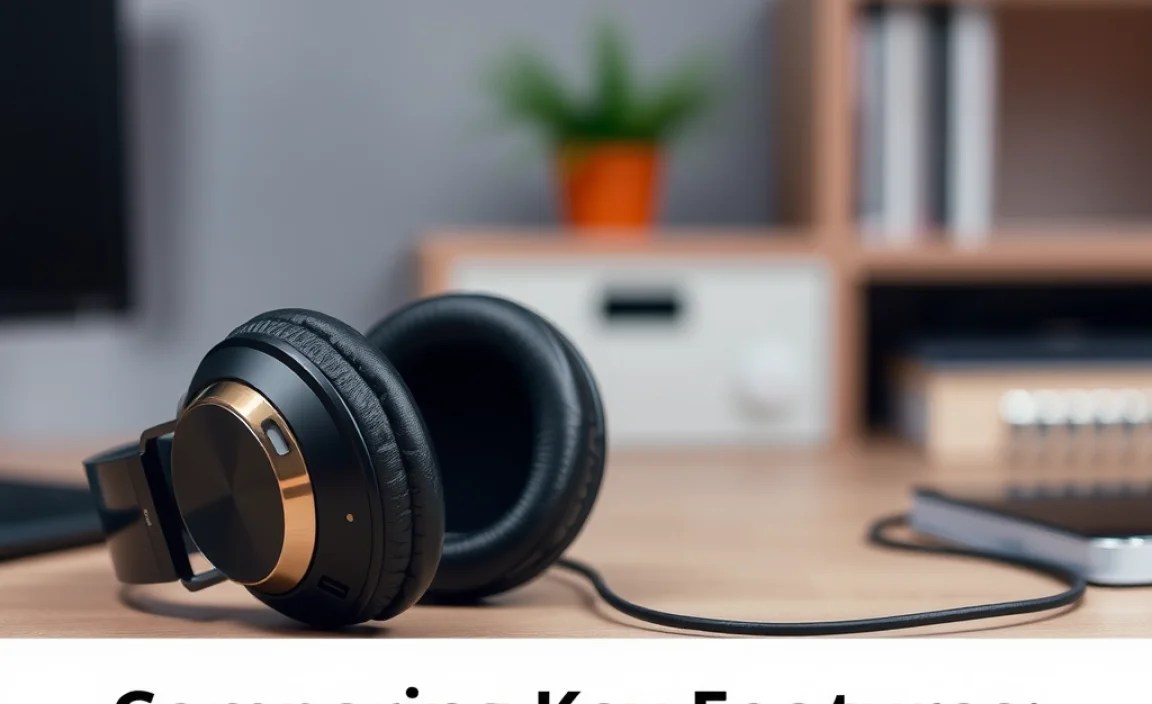
To get a clearer picture, let’s look at how different types of over-ear headphones might stack up against each other in key areas. This table is a generalization, and individual models can vary greatly within categories.
| Feature | Audiophile/Critical Listening | Travel/ANC | Everyday All-Arounder | Gaming |
|---|---|---|---|---|
| Sound Quality | Highest Fidelity, Accuracy | Balanced, Engaging (tends to be) | Pleasing, Versatile | Clear Positioning, Immersive |
| Noise Isolation/ANC | Low (often open-back) | Very High (ANC focus) | Moderate to High (passive) | High (closed-back focus) |
| Comfort | High (can be lighter) | Very High (designed for long wear) | High | Very High (designed for long sessions) |
| Portability | Low (often larger, home-use focused) | High (foldable, wireless) | Moderate | Moderate to Low (often larger) |
| Wired/Wireless | Mostly Wired | Mostly Wireless | Both | Both |
| Price Point | High | Mid to High | Mid-Range | Mid-Range to High |
Making your Choice: A Step-by-Step Guide

Choosing the right pair of the best quality over-ear headphones doesn’t have to be overwhelming. Follow these steps to make a confident decision:
Step 1: Define Your Primary Use Case
Before you even start looking at specific models, ask yourself: “What will I use these headphones for MOST?”
- At Home Listening (Music/Movies): Are you looking for pure audio bliss, detailed sound, or perhaps a cinematic experience?
- Work/Study: Do you need to block out distractions (ANC) or monitor audio accurately?
- Travel/Commute: Portability and noise cancellation will be key.
- Gaming: Hear every footstep and explosion with pinpoint accuracy.
- Exercise/On-the-Go: While over-ear isn’t ideal for intense activity and sweat, some might still prefer them for walking or casual listening. Durability and a secure fit are important.
Step 2: Set Your Budget
Headphones range from under $50 to over $1000. Knowing your budget will help narrow down your options considerably. A general guideline:
- Budget ($50 – $150): Good entry-level options, decent sound, adequate comfort.
- Mid-Range ($150 – $300): Excellent value, significantly improved sound and build quality, often good ANC or comfort.
- Premium ($300+): High-fidelity sound, top-tier ANC, luxurious materials, often specialized features.
Step 3: Prioritize Features
Based on your use case and budget, rank your desired features:
- Sound Quality (e.g., bass-heavy, neutral, bright)
- Comfort
- Noise Cancellation (ANC or passive)
- Wireless vs. Wired
- Durability
- Portability (e.g., foldable design)
- Microphone Quality (if for calls/gaming)
Step 4: Research and Read Reviews
Once you have an idea of what you’re looking for, it’s time to dive into specific models. Look for reviews from reputable sources:
- Professional Review Sites: Websites like Rtings.com, CNET, TechRadar, and SoundGuys offer in-depth, objective testing.
- User Reviews: Check customer reviews on retail sites, but take them with a grain of salt; focus on recurring themes regarding sound, comfort, and durability.
- YouTube Reviews: Many reviewers offer both technical analysis and subjective impressions.
Pay attention to reviews that match your intended usage. For instance, a gamer might find a review of gaming headphones more relevant than one heavily focused on audiophile nuances.
Step 5: Consider Open-Back vs. Closed-Back
This is a significant choice affecting sound and isolation:
- Closed-Back Headphones: Seal in sound, preventing music from leaking out and external noise from entering. This makes them great for noisy environments, public transport, and recording/monitoring. However, they can sometimes sound less natural or airy.
- Open-Back Headphones: Have perforated earcups that allow sound to escape and air to circulate. This creates a wider, more natural soundstage and can feel more comfortable for long periods as your ears stay cooler. They are best suited for quiet environments where sound leakage isn’t an issue.
Here’s a simple breakdown of their pros and cons:
| Type | Pros | Cons |
|---|---|---|
| Closed-Back | Excellent sound isolation (blocks noise in and out), good for public use and monitoring, often punchier bass | Can sometimes sound less spacious, may cause ears to get warm, potential for driver flex |
| Open-Back | Wider, more natural soundstage, excellent for casual and critical listening in quiet settings, often more comfortable and cooler | Poor sound isolation (sound leaks out and in), not suitable for noisy environments or recording vocals, bass can be less impactful |
Step 6: Try Before You Buy (If Possible)
The ultimate test is to wear them yourself. If you have a local electronics store or Hi-Fi shop, head in and try on different models. Pay attention to:
- How do they feel on your head and ears? Any immediate pressure points?
- Can you adjust them comfortably?
- Do the earcups fully enclose your ears?
- How do they sound with music you know well (even if it’s just a quick demo)?
Even a few minutes can tell you a lot about comfort. For sound, you’d ideally want to listen to your own music library if possible.
