
Quick Summary: Discover top-tier over-ear headphones for immersive sound and lasting comfort. This guide simplifies choosing the best quality headphones over ear, covering key features, testing tips, and maintenance to ensure your listening experience is always superb.
Best Quality Headphones Over Ear: Your Essential Guide to Incredible Sound
Hello, audio adventurers! Edward Cavitt here from Headphone Horizon, your friendly guide to all things sound. If you’re looking to dive into the wonderful world of over-ear headphones, you’ve come to the right place. These aren’t just accessories; they’re your personal concert halls, your private movie theaters, and your quiet sanctuaries in a noisy world. But with so many options out there, how do you pick the ones that truly deliver that “best quality” experience? Don’t worry, we’ll break it down simply. We’ll explore what makes a pair of over-ear headphones fantastic, how to test them like a pro (without being a pro!), and how to keep them sounding amazing for years to come. Let’s get your ears some excellent company!
Why Over-Ear Headphones? The Comfort & Quality Advantage

Over-ear headphones, also known as circumaural headphones, are beloved for a reason. They completely encircle your ears, providing a comfortable listening experience even during long sessions. This design also creates a natural barrier against outside noise and allows larger drivers (the parts that produce sound) to be used, often resulting in richer, more detailed audio. For those who prioritize comfort, immersive soundstage, and robust build quality, over-ear headphones are often the go-to choice.
Think of them like a cozy blanket for your ears. The earcups fit around your ears, not on them, which dramatically reduces pressure points that can lead to discomfort with on-ear designs. This generous padding, combined with their often larger size, means manufacturers can fit bigger, more powerful sound-producing components inside. This translates to:
- Superior Comfort: Plush earcups and adjustable headbands designed for extended wear.
- Enhanced Soundstage: A wider, more open sound that can make music feel more immersive and realistic.
- Better Noise Isolation: The natural seal around your ears helps to block out ambient noise, letting you focus on your audio.
- Deeper Bass: Larger drivers can often reproduce lower frequencies with more power and precision.
What Makes for the “Best Quality”? Key Features to Look For
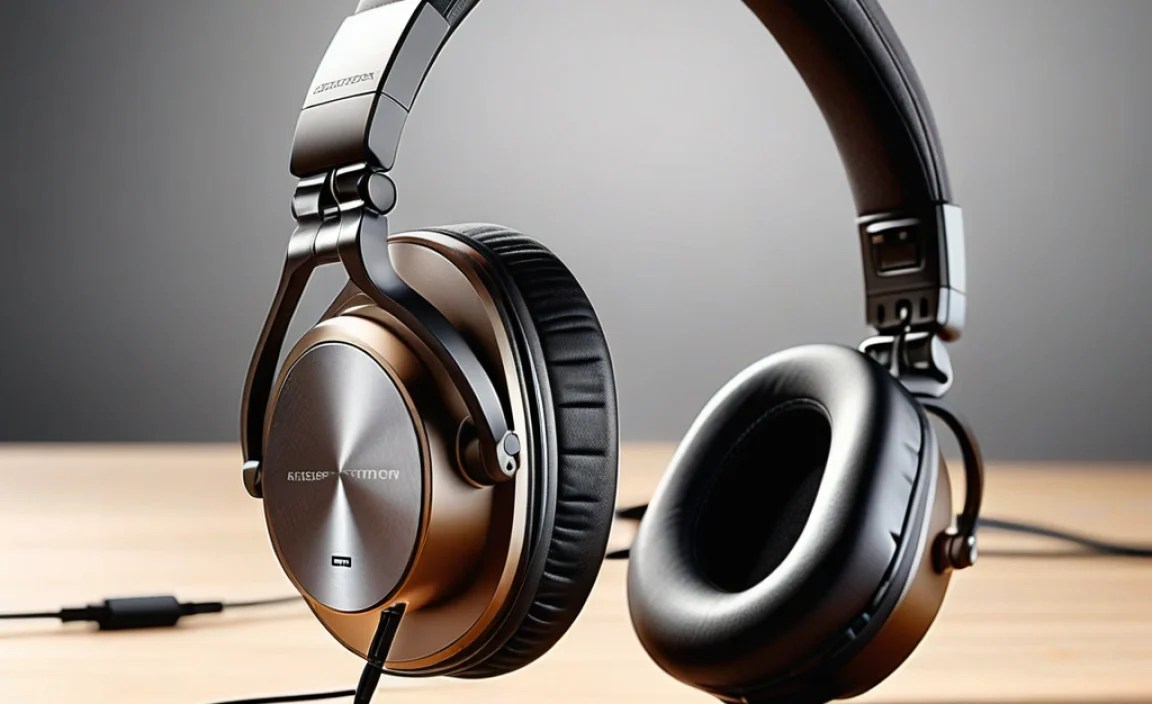
When we talk about “best quality” in headphones, it’s a combination of several important factors. It’s not just about a fancy brand name; it’s about how these elements work together to give you a superior listening experience. Here’s a breakdown:
1. Sound Quality: The Heart of the Matter
This is what it’s all about, right? High-quality sound means clarity, balance, and accuracy. You want to hear every instrument, every vocal nuance, exactly as the artist intended.
- Frequency Response: This refers to the range of sounds the headphones can reproduce, from the lowest bass rumble to the highest cymbal shimmer. A wider, flatter frequency response generally indicates a more accurate sound. Look for something generally in the 20Hz to 20kHz range (which is roughly what the human ear can detect), but how well the headphones deliver within that range is key.
- Distortion: Lower distortion means cleaner sound, especially at higher volumes. High-quality headphones are engineered to minimize this.
- Soundstage and Imaging: This is how “wide” the music sounds and how precisely you can pinpoint where each sound is coming from (like instruments in an orchestra). Good over-ear headphones excel here.
2. Build Quality & Materials: Durability You Can Feel
The best headphones aren’t just about the sound; they’re built to last and feel good in your hands and on your head.
- Materials: Premium headphones often use durable plastics, metal alloys (like aluminum or stainless steel), and high-quality synthetic leather or genuine leather for earcups and headbands.
- Construction: Look for solid joints, smooth adjustments, and a general feeling of robustness. Avoid headphones that feel flimsy or creak when you handle them.
- Comfort Features: This includes the padding on the earcups and headband, the clamping force (how tightly they grip your head – too tight is bad, too loose means poor seal), and the weight.
3. Comfort: Listening for Hours
If headphones aren’t comfortable, you won’t wear them, no matter how good they sound. This is where over-ear designs often shine.
- Earcups: Are they deep enough to fully encompass your ears without touching them? Are the materials breathable or do they get hot quickly?
- Headband: Is there adequate padding? Does it distribute weight evenly to avoid pressure on the crown of your head?
- Adjustability: Can the headband be adjusted to fit your head size securely and comfortably?
4. Connectivity & Features
Depending on your needs, these can be crucial.
- Wired vs. Wireless: Wireless (Bluetooth) offers freedom but can sometimes introduce slight compression or battery dependence. Wired connections usually offer the purest audio signal.
- Noise Cancellation (ANC): Active Noise Cancellation uses microphones to detect ambient sound and actively cancel it out. This is fantastic for travel or noisy environments.
- Microphone Quality: If you plan to take calls or game, a clear microphone is essential.
- Battery Life (for wireless): How long can they last on a single charge?
- Portability: Do they fold up nicely? Do they come with a carrying case?
Testing Headphones: Your Beginner’s Guide
You don’t need to be an audio engineer to know if a pair of headphones sounds good to you. Here’s how to try before you buy (or test your new purchase):
Step 1: Find a Quiet Place
The best way to truly hear headphones is with minimal background noise. If you’re in a store, try to find a quieter corner. If testing at home, turn off TVs, silence phones, and perhaps ask others in the household to keep it down for a few minutes.
Step 2: Listen to Familiar Music
Put on tracks you know inside and out. This makes it much easier to spot differences in clarity, bass response, and instrument separation. What songs do you love? A diverse playlist is best:
- Something with strong bass (e.g., electronic, hip-hop)
- Something with clear vocals (e.g., singer-songwriter, pop)
- Something with complex instrumentation (e.g., classical, jazz, rock)
Step 3: Focus on Different Frequencies
Try to listen for how the headphones handle different parts of the sound spectrum:
- Bass: Does it sound heavy and muddy, or tight and punchy? Can you distinguish the bass guitar from the kick drum?
- Mids: This is where vocals and most instruments live. Are vocals clear and present, or do they sound distant and muffled?
- Treble: This is the high-end: cymbals, sibilance (the ‘s’ sound in voices). Is it crisp and detailed, or harsh and piercing?
Step 4: Check for Comfort & Fit
Wear the headphones for at least 5-10 minutes. How do they feel?
- Do the earcups fully cover your ears without pressing on them?
- Is the headband comfortable on the top of your head?
- Is the clamping force too tight or too loose?
- Do your ears get warm or sweaty?
Step 5: Test Any Special Features
If they have ANC, turn it on and off. Does it significantly reduce noise without affecting the music? If they are wireless, test the Bluetooth connection. Is it stable?
Top Contenders: Examples of Quality Over-Ear Headphones (By Category)

While specific models change, here are some types of headphones and brands consistently lauded for their quality in different areas. This isn’t an exhaustive list, but it gives you a starting point for your research.
Finding the “best” headphones is subjective and depends heavily on your budget and primary use case. However, certain brands and models have consistently earned praise from critics and users alike for their superior sound, build, and comfort. Here are a few examples that often top “best quality” lists, categorized:
For Immersive Home Listening (Audiophile-Grade)
These often prioritize pure sound fidelity, sometimes at the expense of portability or features like ANC. They might be open-back, meaning sound can leak in and out – best for quiet environments.
Example: Sennheiser HD 600 Series
- Pros: Legendary soundstage, incredibly detailed and natural sound, very comfortable for long sessions, durable.
- Cons: Open-back design offers poor isolation, requires a good amplifier for optimal performance, often wired only.
For Travel and Commuting (Active Noise Cancellation Focus)
These are designed to silence the outside world, making them ideal for planes, trains, and busy offices. They are typically closed-back and wireless.
Example: Sony WH-1000XM Series
- Pros: Industry-leading ANC, excellent sound quality with customizable EQ, comfortable, long battery life, good microphone clarity.
- Cons: Can be pricey, some users may prefer a more neutral sound out-of-the-box.
Example: Bose QuietComfort Series
- Pros: Renowned for comfort and excellent ANC, balanced sound profile, easy to use.
- Cons: ANC can sometimes color the sound slightly, not as many customization options as some competitors.
For Everyday Versatility (Balanced Performance)
These headphones aim for a great all-around experience, offering good sound, comfort, and features suitable for various situations.
Example: Beyerdynamic DT 770 PRO (Closed-Back Studio)
- Pros: Robust build, excellent detail and clarity, comfortable velour earcups, good isolation for a studio headphone.
- Cons: Design is a bit industrial, can be a bit bass-emphasized for some strict neutral listeners, primarily wired.
Example: Audio-Technica ATH-M50x (Closed-Back Studio Monitor)
- Pros: Punchy bass, clear mids, durable and foldable design, detachable cables (multiple types included).
- Cons: Can be a bit bright for some, comfort might be less plush than ANC models for very long sessions.
Table: Comparing Key Over-Ear Headphone Types
This table highlights the general characteristics of different types of over-ear headphones to help you narrow down your search.
| Headphone Type | Typical Use Case | Sound Signature (General) | Noise Isolation | Portability | Key Features |
|---|---|---|---|---|---|
| Open-Back (Audiophile) | Critical listening in quiet environments | Open, spacious, natural | Poor (sound leaks in/out) | Low (often non-folding) | Superior soundstage, clarity |
| Closed-Back (Studio Monitor) | Recording, mixing, general listening where isolation is needed | Neutral, detailed, accurate | Good | Moderate (often foldable) | Durability, sound accuracy |
| Closed-Back (ANC) | Travel, commuting, noisy offices | Generally balanced, can vary | Excellent (Active + Passive) | High (often folding, wireless) | Active noise cancellation, wireless convenience |
| Closed-Back (Wireless/Lifestyle) | Everyday listening, casual use | Often warm, bass-forward, consumer-friendly | Good (Passive) | High (folding, wireless) | Convenience, battery life, connectivity |
Step-by-Step: Setting Up Your New Over-Ear Headphones

You’ve picked out a fantastic pair! Now let’s get them ready for their sonic debut.
For Wired Headphones:
- Unpack Carefully: Remove all headphones, cables, adapters, and any cases from the packaging.
- Identify the Cable: Most wired headphones will come with a removable audio cable. It might have a 3.5mm jack (the most common headphone plug) and sometimes a 1/4-inch adapter for audio equipment.
- Connect the Cable: Locate the input port on one of your headphones (usually on the earcup). Gently but firmly plug the appropriate end of the audio cable into the headphone.
- Connect to Your Device: Plug the other end of the audio cable (usually a 3.5mm jack) into the headphone port of your phone, laptop, tablet, or audio player. If your device doesn’t have a headphone jack, you might need a USB-C or Lightning to 3.5mm adapter.
For Wireless (Bluetooth) Headphones:
- Charge Them Up: Before first use, it’s always best to fully charge your headphones. Connect them to a power source using the provided USB cable and adapter. A light indicator will usually tell you when they’re charging and when they’re fully charged. (Always refer to your headphone’s manual for specific charging times and indicators).
- Power On: Once charged, press and hold the power button. You’ll typically hear an audible cue or see an LED light flash, indicating they are on.
- Enter Pairing Mode: For the first connection, you’ll need to put your headphones into pairing mode. This is usually done by pressing and holding the Bluetooth or a dedicated pairing button until an indicator light flashes rapidly or you hear a specific sound. Your headphones’ manual will detail this.
- On Your Device (Phone, Laptop, etc.):
- Go to your device’s Bluetooth settings.
- Turn Bluetooth on.
- Your device will scan for available Bluetooth devices.
- Look for your headphone’s model name in the list and select it.
- Confirm Pairing: You might hear a confirmation sound in your headphones, or the indicator light will change, signaling a successful connection. Your device should now show the headphones as connected.
- Subsequent Connections: Once paired, your headphones should automatically reconnect to your device when turned on and in range, provided your device’s Bluetooth is also on.
For Headphones with Active Noise Cancellation (ANC):
- Ensure they are ON: ANC requires power, so make sure your headphones are on and have battery life.
- Activate ANC: There’s usually a dedicated button or a toggle in the app to switch ANC on or off. Press it!
- What to Expect: You should notice a significant reduction in low-frequency ambient noise (like engine hums, HVAC systems). Sometimes there’s a slight hiss or a feeling of pressure, which is normal for ANC technology.
- Transparency/Awareness Mode: Many ANC headphones also have a mode that amplifies external sounds, so you can hear announcements or conversations without taking the headphones off. Look for this feature to activate it. For more on how ANC works and its potential effects, you can check out resources from organizations like the National Institute on Deafness and Other Communication Disorders (NIDCD), which discusses the importance of protecting hearing from noise exposure.
Maintaining Your Investment: Keep Them Sounding Great!

Even the best quality headphones need a little TLC to keep performing at their peak and stay comfortable. Simple care goes a long way.
1. Cleaning Your Headphones
This is perhaps the most crucial part of maintenance. Grimy earcups and dusty drivers can affect sound and hygiene.
- Earcups:
- Pleather/Leather: Use a slightly damp (not wet!) microfiber cloth. For tougher grime, a tiny bit of mild soap can be used on the cloth, then wiped clean with plain water on another cloth. Always dry thoroughly.
- Velour: These can be trickier. Gently brush with a soft-bristled brush. For deeper cleaning, you can try a very mild detergent solution on a cloth, but be extremely careful not to saturate them. Allow to air dry completely before reattaching or wearing.
- Headband: Clean with a slightly damp microfiber cloth, similar to the earcups.
- Drivers/Grilles: Never push anything liquid directly into the driver
