
Quick Summary: Discovering the best stereo headphones means balancing sound quality, comfort, and your budget. This guide breaks down key features, types, and essential considerations, making it easy for beginners to find headphones that deliver immersive audio bliss for music, movies, and more.
Best Stereo Headphones: Your Path to Proven Audio Bliss
Hello audio adventurers! Edward Cavitt here from Headphone Horizon, your friendly guide to the wonderful world of sound. Today, we’re diving headfirst into one of the most exciting corners of audio gear: stereo headphones. If you’ve ever felt like your music was missing something, or if you’re just starting to explore the magic of truly immersive sound, you’re in the right place. Choosing the “best” can feel overwhelming with all the tech talk and endless options, but my goal is to simplify it for you. We’ll walk through what really matters, from crystal-clear highs to deep, resonant lows, ensuring you find a pair that brings you genuine audio bliss, whether you’re a seasoned audiophile or just looking for a better listening experience. Let’s tune in and discover your perfect match!
What Exactly Are Stereo Headphones?

Before we pick out the perfect cans, let’s quickly demystify what “stereo” means in headphones. In the simplest terms, stereo sound aims to replicate how we hear the world naturally, with sound coming from distinct left and right channels. This creates a sense of space and direction, making music sound richer, movies more engaging, and games more immersive. Unlike mono sound (a single channel), stereo allows for distinct sounds to be placed and panned across the listening field. Most headphones you encounter are stereo headphones, designed to deliver this lifelike audio experience. It’s this precise separation and placement of sound that forms the foundation of audio bliss.
Why Invest in Quality Stereo Headphones?

You might be thinking, “Why bother? My earbuds work just fine!” And that’s a fair question. While basic headphones get the job done, investing in a quality pair of stereo headphones unlocks a whole new dimension of listening. It’s not just about louder sound; it’s about clarity, detail, and emotional connection. Imagine hearing subtle nuances in your favorite songs you never noticed before, feeling the rumble of a cinematic explosion as if you were there, or pinpointing enemy movements in a game with uncanny accuracy. Quality headphones offer:
- Improved Sound Fidelity: Experience clearer highs, richer mids, and deeper bass, revealing the full intent of the artist or sound designer.
- Enhanced Immersion: Stereo imaging and a wider soundstage create a more realistic and engaging listening environment.
- Comfort for Longer Listening: Well-designed headphones are built for extended wear, making them perfect for long flights, work sessions, or marathon gaming.
- Personalized Experience: Different headphone types cater to various listening preferences and environments, allowing you to tailor your audio.
- Durability and Longevity: Higher-quality materials and construction mean your investment lasts longer.
Key Features to Consider When Choosing Your Best Stereo Headphone

Navigating the headphone market can feel like a labyrinth, but understanding a few key features will make your journey much smoother. These are the elements that truly define the listening experience and will help you pinpoint the “best stereo headphone” for you.
1. Sound Quality: The Heart of the Matter
This is arguably the most important aspect. Sound quality is subjective to an extent, but certain characteristics are universally desirable:
- Frequency Response: This refers to the range of sound frequencies a headphone can reproduce, usually measured in Hertz (Hz). A wider range (e.g., 20Hz to 20,000Hz, which is roughly the range of human hearing) typically indicates better potential for detail. The responsiveness at different frequencies (bass, mids, treble) also matters.
- Soundstage: This is the perceived “space” or “width” of the sound. A wide soundstage makes audio feel like it’s happening around you, not just inside your head.
- Imaging: This refers to the headphone’s ability to place sounds accurately within that soundstage, creating a distinct sense of left, right, and center.
- Distortion: Look for headphones that produce sound clearly, even at higher volumes. Low distortion means a cleaner, more accurate reproduction of the audio signal.
2. Comfort and Fit: Essential for Extended Bliss
You can have the best sound in the world, but if your headphones pinch your ears or feel heavy, you won’t enjoy them for long. Consider:
- Earcup Design:
- Over-ear (Circumaural): These cups completely surround your ears. They tend to offer better comfort for long sessions and excellent passive noise isolation.
- On-ear (Supra-aural): These cups rest directly on your ears. They can be more compact but may cause discomfort or ear fatigue over time.
- Weight: Lighter headphones are generally more comfortable for extended wear.
- Clamping Force: The pressure the headband exerts on your head. Too much can be uncomfortable; too little means they might slip.
- Materials: Soft, breathable materials for earpads (like velour or memory foam) can significantly enhance comfort.
3. Type of Headphone: Open-back vs. Closed-back
This is a crucial distinction that significantly impacts sound and usability:
- Closed-back Headphones: These have solid earcups that seal in sound.
- Pros: Excellent noise isolation (they block outside noise and prevent your audio from leaking out), great for noisy environments like public transport or offices, and deliver more impactful bass.
- Cons: Sound can feel more “in your head,” and the soundstage might be less expansive than open-back designs.
- Open-back Headphones: These have perforated or vented earcups, allowing air and sound to pass through.
- Pros: Offer a more natural, spacious, and airy soundstage, often described as more “out-of-your-head” listening. Great for critical listening in quiet environments.
- Cons: Very poor noise isolation – they let in ambient sound and leak audio, so they’re unsuitable for shared spaces or noisy commutes.
4. Connectivity: Wired or Wireless?
Your lifestyle will dictate this choice. Both have their advantages:
- Wired Headphones:
- Pros: Generally offer superior audio quality without compression, no need for charging, and zero latency (delay), which is crucial for gaming and video editing.
- Cons: Can be inconvenient with the cable management, may require specific ports (or an adapter) on modern devices.
- Wireless Headphones (Bluetooth):
- Pros: Freedom of movement, convenience, and often come with extra features like Active Noise Cancellation (ANC).
- Cons: Requires charging, potential for audio compression depending on Bluetooth codecs used (e.g., SBC, AAC, aptX, LDAC), and can have slight latency.
For the best wireless audio, look for support for higher-quality codecs like LDAC or aptX HD. You can learn more about Bluetooth audio codecs on the Bluetooth SIG website.
5. Noise Cancellation (ANC): Your Sanctuary from Noise
Active Noise Cancellation (ANC) uses microphones and electronics to detect and cancel out ambient sounds. It’s a game-changer for commuters and frequent flyers.
- Pros: Significantly reduces low-frequency background noise (engine hum, chatter), allowing you to enjoy your audio at lower volumes, which is better for your hearing.
- Cons: Can sometimes introduce a slight hiss or affect sound quality, and it’s less effective against sudden or high-frequency noises.
6. Impedance and Sensitivity: For the Tech-Savvy
These are more technical specs, but good to know:
- Impedance (Ohms, Ω): This measures resistance to electrical current. Lower impedance (e.g., 16-32 Ω) typically means headphones are easier to drive and work well with mobile devices and laptops. Higher impedance (e.g., 250 Ω or more) often requires a dedicated headphone amplifier for optimal performance but can offer greater detail and dynamics.
- Sensitivity (dB/mW or dB/V): This indicates how loud the headphones get with a given amount of power. Higher sensitivity means they’re easier to drive and will perform better with less powerful sources.
For most beginner users with smartphones or standard computers, headphones with impedance between 16-80 Ohms and sensitivity above 95 dB/mW will work perfectly. If you’re looking to dive deep into dedicated audio setups, you might explore higher impedance options.
Top Stereo Headphone Types for Different Needs
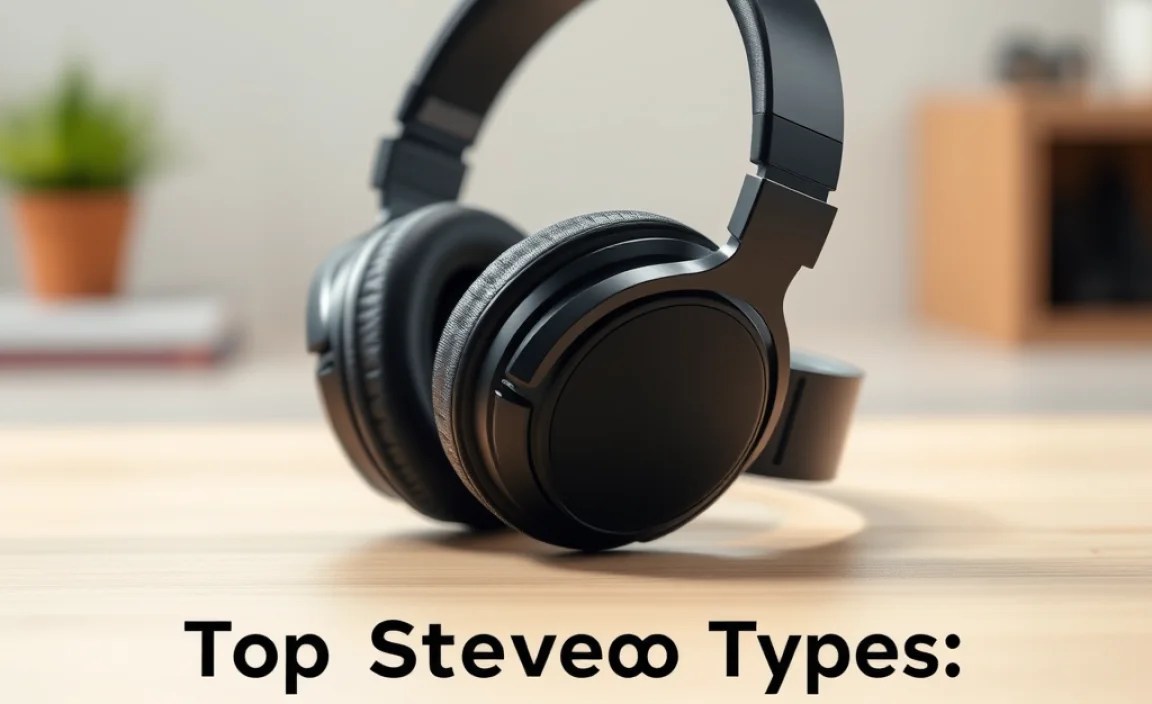
To help you narrow down your search, let’s look at some common types of stereo headphones and who they’re best suited for.
Over-Ear Headphones (Circumaural)
These are often considered the peak of comfort and sound quality for home or studio use, but many are also fantastic for travel.
- Best For: Music enthusiasts, gamers, home listening, individuals prioritizing comfort and immersion, users in quiet environments (especially open-back).
- Considerations: Can be bulky. Open-back versions offer superior soundstage but leak sound. Closed-back versions offer isolation.
On-Ear Headphones (Supra-aural)
A more portable option than their over-ear counterparts, sitting directly on the ears.
- Best For: Commuters, people who prefer a lighter, more compact design, users who want some situational awareness without total isolation.
- Considerations: Can cause ear pressure or discomfort for some over extended periods. Sound isolation is moderate.
In-Ear Monitors (IEMs) / Earbuds
Though small, high-quality IEMs can deliver astonishing stereo sound. They fit directly into the ear canal or just outside it.
- Best For: Portability, on-the-go listening, exercise, users who dislike the headphone “headband” feeling, budget-conscious buyers seeking good sound.
- Considerations: Fit is crucial for both comfort and sound quality (bass response especially). Can be prone to tangling if wired.
True Wireless Earbuds
The ultimate in portable convenience, these earbuds have no wires connecting them to each other or your device.
- Best For: Extreme portability, commuting, exercise, users who want maximum freedom of movement.
- Considerations: Battery life is limited, dependent on charging case. Sound quality can vary greatly. Risk of losing one earbud.
Step-by-Step Guide: Finding Your Perfect Stereo Headphones

Ready to find your perfect pair? Follow these steps, and you’ll be well on your way to audio bliss.
Step 1: Define Your Primary Use Case and Environment
Where and how will you use your headphones most often? This is the most critical first step.
- At Home for Casual Listening/Movies: Comfort and soundstage are key. Open-back might be ideal if you’re alone, closed-back for shared spaces.
- Commuting/Travel: Noise cancellation (ANC) and portability are paramount. Closed-back designs are a must.
- Work/Office: Noise isolation or ANC is important to minimize distractions. Closed-back or ANC models are best.
- Exercise/Gym: Secure fit, sweat resistance, and freedom of movement (wireless) are essential. True wireless earbuds or sport-specific headphones are great.
- Gaming: Soundstage, imaging, and low latency are important. Closed-back headphones can be good for immersion, while some open-backs excel in spatial audio.
- Critical Listening/Studio Work: Accuracy, neutral sound signature, and comfort are priorities. Often open-back designs are preferred.
Step 2: Set Your Budget
Headphones range from $20 to over $1,000. Setting a realistic budget helps narrow down options significantly. Remember, you don’t always need the most expensive pair to get great sound.
| Budget Range | What to Expect | Ideal For |
|---|---|---|
| $20 – $50 | Basic sound quality, decent comfort, limited features. Often wired earbuds or budget on-ear/over-ear. | Occasional use, very budget-conscious, basic audio needs. |
| $50 – $150 | Good sound quality, improved comfort, better build. Wired or entry-level wireless options. | Everyday listeners, music lovers, students, casual gamers. |
| $150 – $300 | Excellent sound, superior comfort, advanced features like ANC, good wireless codecs. Premium closed-back or mid-range open-back. | Audiophiles on a budget, frequent travelers, professionals, serious gamers. |
| $300+ | Exceptional sound fidelity, premium materials, top-tier ANC, audiophile-grade performance. High-end open/closed-back, flagship wireless. | Dedicated audio enthusiasts, professionals requiring pristine accuracy, those seeking the absolute best. |
Step 3: Choose the Headphone Type (Open vs. Closed, Over-ear vs. On-ear vs. In-ear)
Based on your use case, make your primary selection:
- Noisy Environment / Travel: Choose Closed-back over-ear or on-ear headphones, ideally with ANC.
- Quiet Home Listening / Critical Listening: Consider Open-back over-ear headphones for the widest soundstage.
- Portability / Exercise: In-ear monitors (IEMs) or true wireless earbuds are your best bet.
- Balanced Use (e.g., home and occasional commute): Versatile closed-back over-ear or on-ear headphones.
Step 4: Decide on Wired or Wireless
- Need absolute lowest latency for gaming or video? Prefer not to charge? Go Wired.
- Value freedom of movement and convenience? Opt for Wireless (Bluetooth).
Step 5: Read Reviews and Compare Models
Once you have a type and budget, do your research. Look for reviews from reputable tech sites and audiophile publications. Pay attention to:
- Sound signature: Does it sound “neutral” (accurate), “warm” (bassy), or “bright” (treble-focused)?
- Comfort over long periods.
- Build quality and durability.
- Performance of features like ANC.
- Connectivity reliability (for wireless).
For example, sites like Rtings.com offer detailed, objective reviews and comparisons of headphones, measuring objective data alongside subjective listening tests. Resources like this are invaluable for making informed choices about your “best stereo headphone.”
Step 6: Try Before You Buy (If Possible)
If there’s a local electronics store or audio shop, try on different headphones. Even a few minutes of wearing them can tell you a lot about comfort and how
