
Quick Summary: Discovering the best sub $100 headphones doesn’t mean sacrificing sound quality. This guide helps beginners find excellent audio experiences, comfortable fits, and durable options without breaking the bank. We’ll cover top picks, key features to look for, and simple advice to make a smart purchase for your everyday listening needs.
Best Sub $100 Headphones: Stunning Audio, Essential Choice
Welcome to headphonehorizon! As Edward Cavitt, I’m thrilled to guide you through the exciting world of audio without emptying your wallet. Many folks think great sound is only for those who spend a fortune. I’m here to tell you that’s simply not true! Finding the best sub $100 headphones can unlock fantastic listening experiences, whether you’re jamming to your favorite tunes, catching up on podcasts, or diving into an audiobook. Think of this as your friendly roadmap to uncovering hidden gems that deliver crisp highs, warm lows, and everything in between. We’ll cut through the jargon and focus on what truly matters: enjoying your audio to the fullest. Let’s find your perfect pair!
Why Price Isn’t Everything for Great Sound

It’s a common misconception that high prices automatically equate to superior audio quality. While premium headphones certainly offer advanced features and premium materials, many manufacturers excel at delivering impressive sound performance even in their more budget-friendly ranges. The secret lies in smart design, efficient engineering, and focusing on the core elements that create an enjoyable listening experience. For instance, driver size and material, acoustic tuning, and comfortable ergonomics are often prioritized in headphones designed for the everyday listener. You can absolutely find headphones under $100 that provide clarity, detail, and a satisfying bass response that will make your music come alive. It’s all about knowing what to look for and where to find those value-packed options. The goal is to match your listening habits with the right set of headphones, ensuring you get the most bang for your buck.
Key Features to Consider in Sub $100 Headphones

When you’re on the hunt for the best sub $100 headphones, several features play a crucial role in shaping your audio experience and overall satisfaction. Don’t worry, we’ll keep this simple and straightforward!
1. Sound Quality: The Heart of the Matter
This is what it’s all about! Even at this price point, you can find headphones that offer a balanced sound profile. Look for terms like:
- Balanced Audio: This means the bass, mids, and treble (lows, middle sounds, and high sounds) are all present and accounted for, not overpowering each other.
- Clear Mids: Important for vocals and instruments. If the mids are muddy, your music won’t sound as vibrant.
- Defined Bass: You want bass that has impact but doesn’t sound boomy or drown out other sounds.
- Sparkling Treble: This adds detail and clarity to cymbals, high-pitched vocals, and other higher frequencies.
While you might not get the absolute perfect audiophile experience, you can certainly get a sound that is enjoyable, detailed, and suited to your preferred music genres. Many reviews will mention “flat response” or “v-shaped response.” A flat response aims for accuracy, while a v-shaped response emphasizes bass and treble, which many find more exciting for casual listening. Audio websites like RTINGS.com offer detailed objective measurements and subjective reviews that can be incredibly helpful.
2. Comfort and Fit: For Long Listening Sessions
Headphones are no good if they hurt your ears after an hour! Consider the type of headphone and how it’s designed to sit:
- Over-ear (Circumaural): These go around your ears and are often the most comfortable for extended wear, providing a good seal. Look for plush earcups.
- On-ear (Supra-aural): These rest on your ears. Some find them comfortable, while others find them to press too much.
- In-ear (Earbuds/IEMs): These fit inside your ear canal. Look for multiple eartip sizes to ensure a secure and comfortable seal. A good seal is crucial for bass response and noise isolation.
Think about where you’ll be using them most. For commuting, in-ear headphones often offer better portability and noise isolation. For home use, comfortable over-ear headphones can be a treat.
3. Durability: Built to Last
You want headphones that can withstand daily use. Check for:
- Build Materials: While most under $100 will be plastic, look for sturdy, well-constructed plastic rather than flimsy materials. Metal accents can add a premium feel and durability.
- Cable Quality: For wired headphones, a thick, braided, or reinforced cable is less likely to fray or kink. Detachable cables are a bonus for easier replacement if they do break.
- Hinge Quality: If you’re looking at foldable headphones, check reviews for how well the hinges hold up.
4. Connectivity: Wired vs. Wireless
This is a major decision point. Both have their pros and cons:
- Wired:
- Pros: No charging needed, often less expensive, no latency (delay), generally better sound quality for the price.
- Cons: Cable can tangle, limited by cable length, can snag on things.
- Wireless (Bluetooth):
- Pros: Freedom of movement, no tangled wires, convenient for on-the-go.
- Cons: Requires charging, potential for latency, sound quality can be slightly compressed depending on Bluetooth codecs used.
For under $100, you can find excellent Bluetooth options. Look for Bluetooth 5.0 or higher for more stable connections and better power efficiency.
5. Special Features: What Else Do You Need?
- Microphone for calls: If you plan to take calls, ensure it has a decent built-in microphone.
- Active Noise Cancellation (ANC): While rare and often less effective in this price range, some models may offer basic ANC to reduce ambient noise.
- Water Resistance: If you plan to use them for workouts or in slightly wet conditions, look for an IPX rating (e.g., IPX4 means splash-proof).
- Battery Life (Wireless): Aim for at least 15-20 hours of playback for wireless models.
Top Picks for the Best Sub $100 Headphones

Finding the absolute “best” is subjective and depends on your personal preferences. However, based on consistent praise for sound quality, comfort, and value, here are a few reliable categories and examples that frequently hit the mark in the sub-$100 category. Always check current pricing as deals can change!
Category: Best All-Around Wired Headphones
These are workhorses that provide excellent sound without fuss. Perfect for music lovers who prioritize audio fidelity and don’t mind a cable.
Example: Audio-Technica ATH-M20x
The ATH-M20x are a fantastic entry point into Audio-Technica’s respected M-series studio monitor line. They offer a surprisingly balanced and clear sound profile, making them versatile for various music genres and spoken word content. The build is robust, and the earcups provide decent isolation and comfort for moderate listening sessions.
| Feature | Details |
|---|---|
| Type | Closed-back, Over-ear |
| Connectivity | Wired (3.5mm jack) |
| Sound Profile | Balanced, neutral with good clarity |
| Comfort | Good for extended wear, plush earcups |
| Durability | Solid build, designed for regular use |
| Typical Price | Around $50-$70 |
Category: Best Value Wireless Earbuds
True wireless earbuds offer ultimate convenience. In this price range, look for stable connectivity and decent battery life.
Example: Anker Soundcore Liberty Neo/Life P2 Mini
Anker’s Soundcore line is renowned for delivering exceptional value. The Liberty Neo and the very similar Life P2 Mini typically offer a punchy, energetic sound signature that’s great for pop, hip-hop, and electronic music. They generally boast good battery life, a comfortable and secure fit with multiple ear tip options, and reliable Bluetooth connectivity. They are often water-resistant, making them great for workouts or commutes.
| Feature | Details |
|---|---|
| Type | True Wireless In-ear |
| Connectivity | Bluetooth |
| Sound Profile | Vibrant, bass-forward, energetic |
| Comfort | Lightweight, secure fit with multiple ear tips |
| Durability | Often IPX5 or IPX7 water resistant |
| Battery Life | Around 6-8 hours per charge, 20-40+ hours with charging case |
| Typical Price | Around $40-$60 |
Category: Best Comfortable Over-Ear Wireless
For those who love the immersive feel of over-ear headphones but want the freedom of no wires.
Example: Sennheiser HD 450BT (often on sale under $100)
While often priced slightly above $100, the Sennheiser HD 450BT can frequently be found on sale within our budget. Sennheiser is a titan in the audio world, known for its balanced and natural sound. These headphones offer a comfortable fit, good battery life, and decent Bluetooth connectivity. The sound is detailed without being fatiguing, making them ideal for long listening sessions at home or for travel.
| Feature | Details |
|---|---|
| Type | Closed-back, Over-ear |
| Connectivity | Bluetooth 5.0, Wired option |
| Sound Profile | Clear, balanced, natural |
| Comfort | Lightweight, ergonomic earpads |
| Durability | Solid construction |
| Battery Life | Up to 30 hours |
| Typical Price | Often around $80-$100 (on sale) |
Category: Best for Open Soundstage (Wired)
If you enjoy a more open, airy sound that mimics listening to speakers in a room, open-back headphones can be a revelation. Note that these leak sound in and out, so they are best for quiet environments.
Example: AKG K-Series (e.g., K-52 or K-77) If K52/K77 are consistently over $100, look at previous generation models or other brands like Grado SR60e (check price).
AKG is another brand respected for its accurate sound reproduction. The K-52 (or its siblings like the K-77) often fall well below the $100 mark and offer a surprisingly spacious sound for closed-back headphones, and even more so if you find an open-back option in your budget. They provide a pleasant listening experience for classical, jazz, or any genre where you appreciate instrument separation and a sense of space. They are generally lightweight and comfortable for home use.
| Feature | Details |
|---|---|
| Type | Closed-back (K-52/K-77), but look for open-back options in this price range |
| Connectivity | Wired (3.5mm jack) |
| Sound Profile | Clear, detailed, good spatial reproduction |
| Comfort | Lightweight, comfortable earcups |
| Durability | Adequate for home use |
| Typical Price | Around $40-$70 |
How to Get the Best Sound from Your Headphones
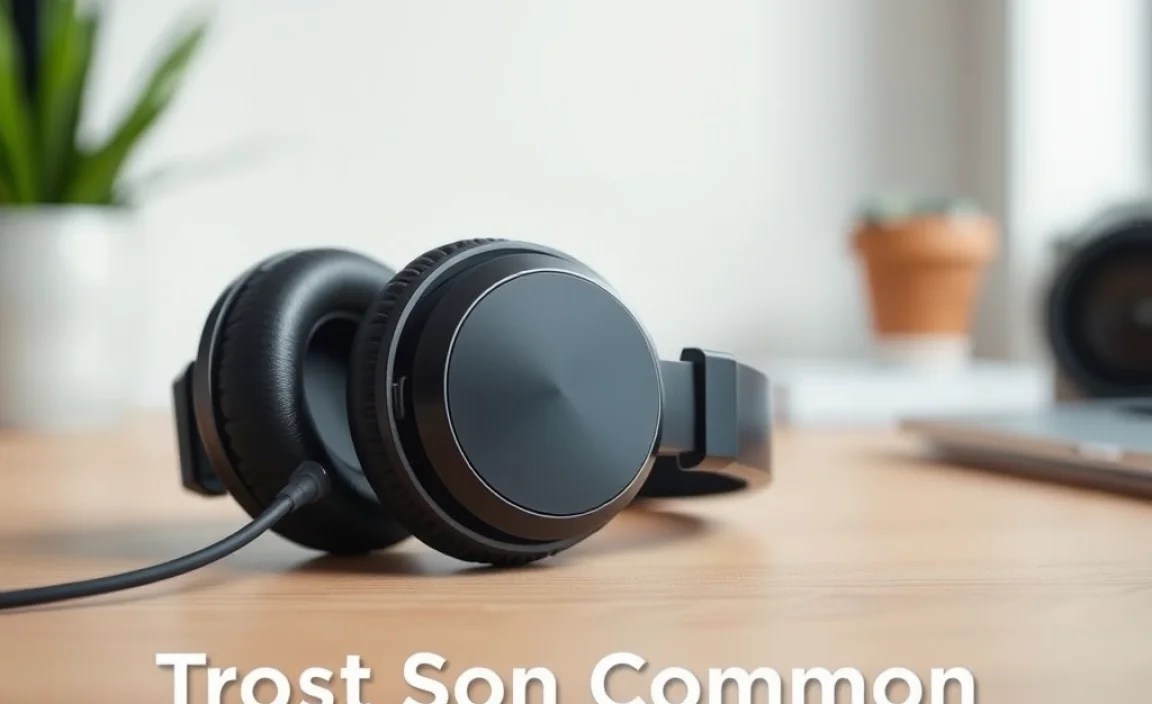
Once you’ve got your hands on a great pair of best sub $100 headphones, there are a few simple things you can do to ensure you’re enjoying them to their fullest:
1. Proper Fit is Key
- For In-ear: Experiment with different eartip sizes. A good seal is critical for bass response and noise isolation. If they don’t feel snug, try a different size.
- For Over-ear/On-ear: Ensure the headband is adjusted correctly, and the earcups are positioned to cover your ears completely without too much pressure.
2. Source Matters (But Not Too Much for Beginners)
The device you connect your headphones to (your phone, computer, MP3 player) is the “source.” Modern smartphones and laptops produce perfectly good audio for most purposes. You don’t necessarily need a fancy DAC (Digital-to-Analog Converter) or amplifier to enjoy headphones under $100. However, if you notice distortion at higher volumes or a generally weak sound, you could look into affordable DAC/amp combos later on, but it’s not essential to start.
3. Equalization (EQ) to Taste
Most smartphones and many music apps have built-in Equalizers (EQ). This allows you to adjust the bass, mids, and treble. If a headphone sounds a little too bassy for you, you can dial it back. If the vocals are a bit soft, you can boost the mids. Experimenting with EQ can help you fine-tune the sound to your exact preference. For example, iOS devices have a robust EQ in Settings, and Android devices often have it within music apps like Spotify or Google Play Music. For more advanced control on your computer, you might look into software like EqualizerAPO (a free, powerful option for Windows).
4. Keep Them Clean!
Dirt and earwax can clog speaker grilles and affect sound quality over time. Regularly clean your eartips (especially for in-ears) and gently wipe down earcups and the headband with a slightly damp cloth (not wet!). For in-ear tips, a quick wash with mild soap and water and thorough drying can restore their feel and hygiene.
A great resource for understanding audio basics, including frequency response and how it affects what you hear, can be found through educational materials from organizations like the Audio Engineering Society, though much of their content is for professionals, the fundamental concepts can be very insightful.
Troubleshooting Common Headphone Issues
Even the best sub $100 headphones can sometimes act up. Here are some quick fixes for common problems:
1. No Sound in One Earbud/Headphone
- Wired: Check the cable connection at both the headphone end (if detachable) and the source device. Try gently wiggling the plug; if the sound cuts in and out, the cable might be damaged internally. Inspect the cable for any visible creases or breaks.
- Wireless:
- Ensure both earbuds are charged.
- Make sure they are properly paired with your device. Try “forgetting” the device in your Bluetooth settings and re-pairing.
- Check if one earbud has disconnected from the other (some true wireless buds require the left to connect to the right, or vice-versa).
- Clean the charging contacts on both the earbuds and the case.
- General: Test your headphones with a different audio source (phone, computer) to rule out a problem with your primary device.
2. Sound is Squeaky, Distorted, or Low Quality
- Volume Too High: Your source device or headphones might be clipping (distorting) if the volume is maxed out. Try lowering the volume on your source device.
- Bad Audio File: Try playing a different song or podcast. Very low-quality or corrupted audio files can sound bad.
- Bluetooth Codec Issues: On some Android phones, you can go into Developer Options to check and change the Bluetooth audio codec. If it’s set to
