
Quick Summary: Discover why wired headphones remain a top choice for audiophiles and everyday listeners. This guide breaks down the essential benefits of wired connections for superior sound quality, reliability, and value, helping you find the perfect pair for your needs.
Hey everyone, Edward Cavitt here from Headphone Horizon! In a world buzzing with wireless wonders, you might be wondering about the good old wired headphone. Are they still relevant? The short answer is a resounding YES! For anyone who truly values pristine audio quality, unwavering reliability, and a fantastic listening experience without worrying about battery life or Bluetooth hiccups, wired headphones are an absolute essential. They offer a direct connection to your music, movies, and games, delivering sound the way the creators intended. Let’s dive into what makes them so special and how you can choose the best wire headphone for your audio adventures.
Why Wired Headphones Still Reign Supreme

It’s easy to get swept up in the convenience of wireless. However, when it comes to pure audio performance and a consistent, hassle-free experience, wired headphones often have the edge. They bypass the complexities and potential limitations of wireless transmission, offering a more direct and often superior path to your ears. Think of it like this: wireless is like sending a letter via a courier, while wired is like having a direct phone line. The direct connection often means less interference and a more faithful reproduction of sound.
Unleashing Unparalleled Sound Quality
The biggest draw for many audiophiles and casual listeners alike is the superior sound quality that wired headphones can provide. Wireless technology, while improving rapidly, still has inherent limitations in data transmission bandwidth. This can lead to compression, which subtly (or not so subtly) degrades the audio signal. Wired connections, on the other hand, offer a much higher bandwidth, allowing for the full, uncompressed audio signal to reach your ears. This translates to:
- Richer Detail: Hear nuances in your music you might have missed before – the subtle strum of a guitar, the breath before a vocalist sings.
- Wider Soundstage: Experience audio that feels more spacious and immersive, as if you’re in the room with the musicians.
- Deeper Bass and Clearer Highs: Wired headphones are less prone to signal degradation, ensuring that the full dynamic range of your audio is reproduced accurately.
- No Latency: For gamers and video editors, latency (the delay between an action and the sound) can be a deal-breaker. Wired headphones offer virtually zero latency, ensuring perfect synchronization.
The Pillars of Reliability and Simplicity
Beyond sound, wired headphones offer a level of reliability that’s hard to beat. Forget about battery levels, pairing issues, or firmware updates. With wired headphones, you plug them in, and they just work. This simplicity is incredibly appealing for those who want a dependable audio solution for everyday tasks.
- No Batteries Needed: This is a huge advantage. Your wired headphones will never die on you mid-commute or during an important call because the battery ran out.
- Instant Connectivity: No fumbling with Bluetooth menus. Just plug them into your device’s headphone jack (or via an adapter), and you’re good to go.
- Less Interference: While wireless signals can be disrupted by other devices or physical obstructions, a wired connection is generally free from such interference.
- Durability (Often): While build quality varies, many wired headphones are built to last, with robust cables and sturdy construction, often outlasting their wireless counterparts.
Cost-Effectiveness
Generally, you get more audio bang for your buck with wired headphones. The absence of wireless transmitters, batteries, and complex Bluetooth chips often means that manufacturers can invest more in the core sound-producing components. This can lead to significantly better sound quality at similar price points compared to wireless alternatives.
Choosing Your Best Wire Headphone: A Step-by-Step Guide
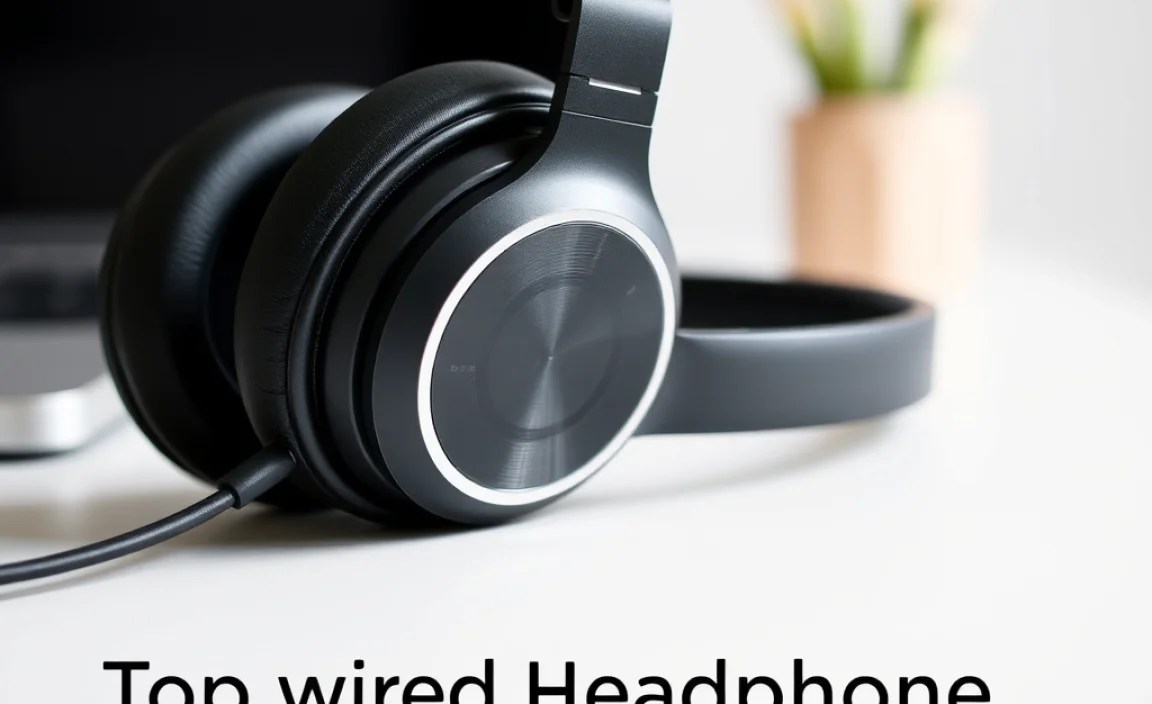
Selecting the right wired headphone involves considering a few key factors. It’s not just about picking the most expensive pair; it’s about finding the one that best fits your listening style, your devices, and your budget. Let’s walk through the process.
Step 1: Define Your Listening Needs and Style
Before you even look at specific models, think about how and where you’ll be using your headphones. This will narrow down your options considerably.
What will you be using them for?
- Casual Listening (Music, Podcasts): Comfort and decent sound quality are key.
- Commuting/Travel: Noise isolation or active noise cancellation (ANC) might be important. Open-back headphones are generally not ideal here due to sound leakage.
- Gaming: Accurate positional audio, comfort for long sessions, and a good microphone (if applicable) are crucial.
- Critical Listening/Studio Work: Accurate, flat frequency response (neutral sound) is paramount.
- Exercise: Secure fit, sweat resistance, and a durable cable are important.
What kind of sound signature do you prefer?
Sound signature refers to how a headphone emphasizes different frequencies (bass, mids, treble).:
- Bass-Heavy: For those who love a thumping low end, often popular for EDM, hip-hop, and pop.
- Neutral/Balanced: All frequencies are reproduced evenly, ideal for critical listening and a true-to-source sound.
- V-Shaped: Bass and treble are boosted, with mids slightly recessed. This is a popular signature for enjoyable, engaging listening for many genres.
- Warm: Emphasis on lower mids and bass, giving a smooth, relaxed sound.
Step 2: Understand Headphone Types
Headphones come in different designs, each with its own characteristics. The primary distinction is between open-back and closed-back.
- Closed-Back Headphones: These have a solid, sealed ear cup.
- Pros: Excellent sound isolation (they block out external noise), and they prevent sound from leaking out, making them great for public use or noisy environments.
- Cons: The soundstage can feel more “in your head” compared to open-back models.
- Open-Back Headphones: These have perforated or vented ear cups.
- Pros: Offer a more natural, spacious, and airy soundstage. They are less fatiguing for long listening sessions and are preferred by many for critical listening.
- Cons: They provide little to no sound isolation, so external noise will be heard, and sound will leak out, making them unsuitable for quiet environments or public spaces.
- On-Ear Headphones: These rest on your ears. They can be a compromise between portability and sound.
- Over-Ear Headphones: These encircle your ears. They are generally the most comfortable for long periods and offer the best passive noise isolation among their types.
Step 3: Consider Connectivity and Adapters
Most modern smartphones and laptops are phasing out the traditional 3.5mm headphone jack. This means you might need an adapter. Most wired headphones use a standard 3.5mm (1/8-inch) connector, but some professional or higher-end models might use a 1/4-inch (6.35mm) plug or even balanced connectors like XLR or 4.4mm Pentaconn for specific audio setups.
- 3.5mm Jack: The most common connector.
- USB-C: Increasingly found on Android phones and newer laptops. Many headphones offer a USB-C plug, or you can use a USB-C to 3.5mm adapter.
- Lightning Connector: For Apple devices (iPhones, iPads). You’ll need headphones with a Lightning connector or a Lightning to 3.5mm adapter.
- Bluetooth Receivers: While these are technically wireless, they connect to your wired headphones and a device wirelessly, offering a hybrid solution.
Recommendation: If your primary device lacks a headphone jack, look for headphones that come with the necessary adapter, or factor the cost of a reputable adapter into your budget. A good quality adapter can make a surprising difference in sound quality compared to cheap, unshielded ones. For example, Apple’s official Lightning to 3.5mm Headphone Jack Adapter is a reliable choice for iPhone users.
Step 4: Driver Size and Type
Drivers are the small speakers within your headphones that produce sound. While not the only factor in sound quality, larger drivers (typically 40mm or 50mm for over-ear headphones) often have the potential to produce a wider frequency response and more powerful sound.
- Dynamic Drivers: The most common type. They use a magnet and a diaphragm to create sound. Versatile and can be found in most headphones at all price points.
- Planar Magnetic Drivers: These have a flat, thin diaphragm with a voice coil etched onto it, suspended between strong magnets. They are known for their detailed sound, fast response, and linear distortion. Often found in higher-end headphones.
- Balanced Armature Drivers: Smaller and more efficient, often found in in-ear monitors (IEMs). Can produce very clear and detailed treble but sometimes lack the low-end punch of dynamic or planar drivers.
For beginners, focusing on the overall reputation and reviews of the headphones is often more practical than getting too deep into driver specifics, but it’s good knowledge to have!
Step 5: Comfort and Fit
You’ll be wearing these for extended periods, so comfort is paramount. Consider:
- Earcup Material: Leather, pleather, velour, or fabric – each offers a different feel and isolation level. Velour is often praised for long-term comfort and breathability.
- Headband Padding: A well-padded headband distributes weight evenly.
- Clamping Force: How tightly the headphones grip your head. Too tight is uncomfortable; too loose and they might slip off.
- Weight: Lighter headphones are generally more comfortable for long sessions.
Step 6: Noise Isolation vs. Noise Cancellation
This is crucial for commuters or anyone in a noisy environment.
- Passive Noise Isolation: Achieved through the physical design of the headphones, particularly closed-back earcups. It’s like creating a seal around your ears to block out ambient sound.
- Active Noise Cancellation (ANC): Uses microphones to detect external noise and generates an opposing sound wave to cancel it out. While some wired headphones offer ANC (often powered by their own battery), it’s more common in wireless headphones. For wired, passive isolation is the primary method.
Step 7: Budget and Brand Reputation
Wired headphones span all price ranges, from very affordable options for everyday use to high-end audiophile gear.
Budget Categories:
- Under $50: Good for casual listeners, students, or as a backup pair. Brands like JLab, Anker Soundcore, and some Sony/Audio-Technica models offer decent value.
- $50 – $150: This is a sweet spot for excellent performance. You can find some of the best wire headphone options here from brands like Audio-Technica, Sennheiser, Beyerdynamic (entry-level), and Grado.
- $150 – $300: High-fidelity sound becomes more accessible. Look for models lauded for their detailed audio and build quality.
- $300+: Audiophile territory. Expect superb materials, exceptional sound reproduction, and often specialized designs.
Reputable Brands to Consider:
- Sennheiser: Known for balanced sound and comfort across various price points.
- Audio-Technica: Offers a wide range, often with a slightly brighter, detailed sound. Excellent value.
- Beyerdynamic: Professional-grade headphones with a reputation for durability and clarity, often with a brighter signature.
- Grado: Iconic for their open-back, energetic sound, often favored for rock and jazz.
- Sony: Offers a broad range from consumer-friendly to professional, often with a warmer sound signature.
- AKG (by Harman): Known for great detail and a relatively neutral sound.
Top Wired Headphone Recommendations for Beginners

To help you get started, here are a few types of wired headphones that are consistently well-regarded, catering to different needs and budgets. These are fantastic starting points for anyone looking for their next great pair of wired cans.
1. For Everyday Versatility & Value: Audio-Technica ATH-M30x
Type: Closed-Back, Over-Ear
Price Range: $70 – $100
This model is a consistent favorite for its remarkable balance of price and performance. They offer a relatively neutral sound profile that’s pleasing for a wide variety of music genres and content. The build is solid for the price, and they provide good passive noise isolation, making them suitable for home, office, or even casual commutes. They are durable and comfortable enough for extended listening sessions.
2. For Open, Natural Sound (Home Listening): Sennheiser HD 599
Type: Open-Back, Over-Ear
Price Range: $150 – $200
If you listen primarily in a quiet environment and crave an expansive, natural soundstage, the HD 599 is a gem. Sennheiser is renowned for its comfortable products, and these are no exception. They deliver an airy, detailed listening experience that makes music feel more alive and less confined. They are perfect for enjoying classical, jazz, or any genre where you want to feel immersed in the sound.
3. For Punchy Bass & Engaging Sound: Sony MDR-XB550AP (Extra Bass Series)
Type: Closed-Back, On-Ear/Over-Ear (depends on ear size)
Price Range: $50 – $70
For those who love a bit of extra thump in their music, Sony’s “Extra Bass” series delivers. The MDR-XB550AP offers a fun, energetic sound signature with boosted bass that’s great for pop, electronic, and hip-hop. They are also relatively lightweight and comfortable for on-the-go use, and the built-in microphone makes them functional for calls. They offer decent isolation for their class.
4. For Critical Listening & Pro-Audio Feel: Beyerdynamic DT 770 PRO (80 Ohm)
Type: Closed-Back, Over-Ear
Price Range: $150 – $170
While considered “pro” gear, the DT 770 PRO is incredibly popular among enthusiasts for a reason. The 80-ohm version is a great balance for most source devices. They offer a detailed, analytical sound with excellent clarity and a robust build that’s practically legendary. They provide superb passive isolation and are built to withstand heavy use. The velour earpads are incredibly comfortable for marathon sessions. These are fantastic for understanding every layer of your music.
Maintaining Your Wired Headphones for Longevity
Even the best wire headphone can benefit from a little care. Proper maintenance ensures they sound great and last for years. Here are some simple tips from my own experience:
Daily & Weekly Care
- Wipe Down: Use a soft, dry microfiber cloth to wipe down the earcups and headband after each use, especially if you’ve been sweating.
- Cable Management: Avoid tightly coiling the cable. Instead, use a loose “figure-eight” or “over-under” wrap. Tightly coiled cables can stress the internal wires, leading to premature failure. Many headphones come with a small strap for tidy storage – use it!
- Earpad Cleaning: For velour earpads, a gentle brushing with a soft brush can remove dust. For leather/pleather, a slightly damp cloth (never wet!) is usually sufficient, followed by drying and possibly a leather conditioner for pleather/leather.
- Storage: When not in use, store your headphones in a cool, dry place, away from direct sunlight. A headphone stand or their original box is ideal for preventing damage and cable tangles.
Troubleshooting Common Issues
Despite their simplicity, sometimes issues can arise. Here’s how to tackle them:
- One Earbud/Side Not Working:
- Check the connection: Ensure the plug is fully inserted into the device and that there’s no debris in the port itself. Try plugging it into a different device to see if the problem persists.
- Inspect the cable: Look for any visible nicks, kinks, or damage, especially near the plug and where the cable meets the earcup.
- Test the source: Play audio from a different pair of headphones on the same device to rule out an issue with your device’s audio port.
- Crackling or Static Sound:
