
Quick Summary: Discover top-rated wired over-ear headphones for immersive sound and comfort. This guide helps beginners choose models offering excellent audio quality, durability, and value, ensuring you find the perfect pair for music, gaming, or everyday listening without the complexity.
Hey there, headphone enthusiasts and curious newcomers! Edward Cavitt here, your guide from Headphone Horizon. If you’ve ever felt overwhelmed by the sheer number of headphones out there, especially when looking for that perfect wired, over-ear experience, you’re in the right place. Today, we’re cutting through the noise to bring you some truly “genius” picks for the best wired over-ear headphones. Think of this as your friendly kickoff to incredible sound without the headache. We’ll explore what makes a great pair, how to choose one that fits your life, and highlight some fantastic options that deliver exceptional audio and comfort. Let’s dive in and find your next favorite listening companion!
Why Wired Over-Ear Headphones Still Reign Supreme

In a world buzzing with wireless convenience, why am I, Edward Cavitt, still championing wired over-ear headphones? It’s simple: they often offer a superior listening experience, reliability, and value for your money. Wired connections mean no battery anxiety, no Bluetooth pairing frustrations, and often, a cleaner, more robust audio signal. Over-ear designs, also known as circumaural headphones, envelop your ears, providing excellent passive noise isolation and a comfortable fit for extended listening sessions. For audiophiles, gamers, or anyone who truly appreciates deep, rich sound, going wired over-ear is a smart, no-compromise choice.
The core advantages of wired over-ear headphones are:
- Uncompromised Audio Quality: A direct wired connection generally delivers a more stable and higher-fidelity audio signal compared to compressed wireless codecs.
- No Lag Time: Crucial for gaming and watching movies, wired headphones ensure audio is perfectly synchronized with video.
- No Batteries Needed: Forget charging; these are always ready to go as long as your device has a headphone jack.
- Passive Noise Isolation: The earcups physically block out a good amount of ambient sound, letting you focus on your audio.
- Comfort for Long Sessions: Well-padded earcups and adjustable headbands are designed for hours of comfortable wear.
- Generally More Affordable: For comparable sound quality, wired models often come at a lower price point than their wireless counterparts.
What Makes a “Genius” Wired Over-Ear Headphone?

Choosing the “best” is subjective, but certain qualities consistently point towards a brilliant pair of wired over-ear headphones. As we navigate this landscape, keep these key elements in mind:
1. Sound Signature: Finding Your Audio Flavor
This is the heart of the matter. Sound signature refers to how a headphone emphasizes different frequencies (bass, mids, treble). There isn’t a single “best,” but rather what’s best for you.
- Balanced/Neutral: Excellent for purists and those who want to hear music as the artist intended. All frequencies are represented equally. Ideal for a wide range of genres.
- Bass-Heavy: If you love booming lows for electronic music, hip-hop, or movies, you’ll appreciate a boosted bass response. Be careful not to overpower the mids and highs.
- V-Shaped: A popular choice for general listening, with boosted bass and treble, and slightly recessed mids. Can make music sound exciting and energetic.
- Warm: Emphasis on lower mids and bass, creating a smooth, rich, and forgiving sound. Great for relaxing listening or older recordings.
When reading reviews or looking at specs, terms like “frequency response” are mentioned. A wider frequency response (e.g., 20Hz – 20kHz) is standard for human hearing, but how that range is delivered is what matters.
2. Comfort and Fit: The Unsung Hero
You can have the best sound in the world, but if your headphones are uncomfortable, you’ll never wear them. Look for:
- Earcup Material: Plush velour, soft leatherette, or genuine leather all offer different levels of comfort and breathability.
- Clamping Force: How tightly the headphones grip your head. Too much, and they’ll cause headaches; too little, and they might slip.
- Weight: Lighter headphones are generally more comfortable for long wear.
- Adjustability: A good headband with multiple adjustment points ensures a secure and comfortable fit for different head sizes.
3. Build Quality and Durability: Built to Last
These headphones will be your daily companions. They should feel sturdy and be made from materials that can withstand regular use. Metal components (like in the headband or yokes) often indicate better durability than all-plastic constructions. Detachable cables are also a huge plus, as they are more easily replaceable if damaged.
4. Impedance and Sensitivity: Technical Bits Made Easy
Don’t let these terms scare you! In essence:
- Impedance (Ohms): This measures a headphone’s resistance to electrical current. Lower impedance (under 32 Ohms) means they are easier to drive and will sound good directly from most smartphones, laptops, and portable devices. Higher impedance (above 100 Ohms) often indicates better sound quality potential but may require a headphone amplifier for optimal volume and performance.
- Sensitivity (dB): This indicates how loud the headphones can get with a given amount of power. Higher sensitivity means they are more efficient and will play louder with less power.
For beginners, sticking to headphones with lower impedance (under 50 Ohms) and decent sensitivity is generally the easiest way to ensure they’ll sound great straight out of the box with your everyday devices.
5. The Cable: Often Overlooked, Always Important
A good cable is essential. Key features include:
- Length: Is it long enough for your intended use (e.g., desk use, moving around)?
- Detachable: As mentioned, this is a major durability and convenience feature.
- Braided vs. Rubber: Braided cables tend to be more tangle-resistant but can sometimes transfer cable noise (microphonics) more readily.
- Connector: Most use a standard 3.5mm jack. Some might include a 1/4-inch adapter for audio interfaces or amplifiers.
Our Genius Picks: The Best Wired Over-Ear Headphones for Every Listener

Alright, let’s get to the exciting part! I’ve curated a list of some stellar wired over-ear headphones that consistently impress. These aren’t necessarily the most expensive, but they represent fantastic value and performance for their price point and category. We’ll cover a few different needs to ensure there’s a “genius” pick for you.
Best Overall: Sennheiser HD 560S
The Sennheiser HD 560S has rapidly become a favorite for its superb neutrality and detailed sound. If you crave accuracy and an expansive soundstage, these are hard to beat for the price.
- Sound: Exceptionally flat and analytical, making them ideal for critical listening, mixing, and enjoying your music with pristine clarity.
- Comfort: Lightweight with velour earpads that feel great even after hours of wear.
- Build: Solid, with durable plastic construction and a detachable cable.
- Impedance: 120 Ohms. While higher, they are fairly sensitive and can perform well directly from many devices, though an amplifier will unlock their full potential.
Why it’s genius: It offers professional-level sound accuracy at a consumer-friendly price, perfect for those wanting to truly hear everything in their music.
Best for Bass Lovers: Audio-Technica ATH-M50x
A long-standing favorite in studios and among music lovers, the ATH-M50x delivers a powerful, punchy bass response without sacrificing too much clarity in the mids and highs. They’re also commendably durable.
- Sound: Dynamic and energetic with a noticeable boost in the low-end. Excels with electronic, hip-hop, and rock genres.
- Comfort: Earpads are well-cushioned, though some users find them a bit warm over extended periods.
- Build: Extremely robust construction with metal components. They swivel and fold for easy portability, and the cable is detachable.
- Impedance: 38 Ohms. Easily driven by any device.
Why it’s genius: It strikes a fantastic balance between exciting, powerful sound and professional-grade build quality, making it a versatile workhorse.
Best Budget-Friendly Option: Samson SR850
For an incredibly low price, the Samson SR850 punches way above its weight. These semi-open back headphones offer a surprisingly spacious sound and good detail, making them a fantastic entry point into better audio.
- Sound: Open and natural-sounding with good clarity. Bass is present but not overwhelming, and the mids and highs are clear.
- Comfort: While the velour pads are decent, the headband can sometimes be a bit firm for some.
- Build: For the price, the build is acceptable, though less premium than higher-end options.
- Impedance: 32 Ohms. Ideal for portable use.
Why it’s genius: It offers an immersive, airy sound experience that belies its incredibly affordable price tag, making good audio accessible to everyone.
Best for Gaming & Immersion: Beyerdynamic DT 770 PRO (80 Ohm version)
While often used in studios, the DT 770 PRO (specifically the 80 Ohm model for balanced compatibility) provides an engaging, detailed sound with a satisfying bass presence that makes games come alive. Its closed-back design offers good isolation.
- Sound: Detailed and analytical with a powerful bass impact and sparkling treble. Excellent for pinpointing in-game audio cues.
- Comfort: Velour earpads are exceptionally soft and comfortable for long gaming marathons.
- Build: Legendary for its durability. These are built like tanks and can last for years. The cable is permanently attached, which is a downside for some, but adds to the robustness.
- Impedance: 80 Ohms. Works well with most PCs, consoles, and audio interfaces.
Why it’s genius: Its combination of comfort, durability, and an exciting, detailed sound profile makes it a champion for immersive gaming and extensive listening sessions.
Best for Studio Monitoring & Flat Response: AKG K240 Studio
A semi-open back classic, the AKG K240 Studio is celebrated for its incredibly flat and accurate frequency response, making it a go-to for musicians and producers who need to hear precise details. They also offer a wide soundstage.
- Sound: Exceptionally neutral, allowing for an uncolored reproduction of sound. Excellent for mixing, mastering, and hearing subtle nuances.
- Comfort: Lightweight with a self-adjusting headband and velour earcups. They are very comfortable for long work sessions.
- Build: A good balance of plastic and metal for its price point. The cable is detachable.
- Impedance: 55 Ohms. Easily driven by most devices, though an amplifier can enhance performance.
Why it’s genius: It provides an industry-standard, accurate sound reproduction at a price point that democratizes professional audio monitoring.
Comparison Table: Our Top Wired Over-Ear Picks
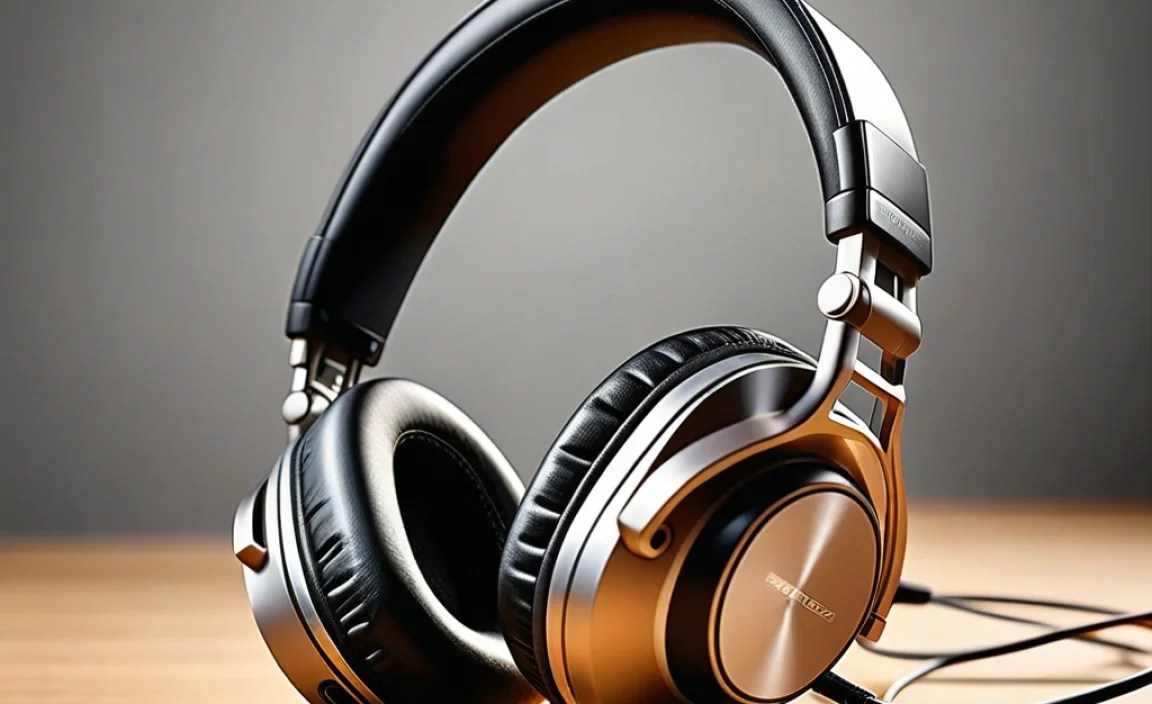
Here’s a quick glance at how our top picks stack up:
| Headphone Model | Best For | Sound Signature | Impedance (Ohms) | Key Feature |
|---|---|---|---|---|
| Sennheiser HD 560S | Overall, Critical Listening | Neutral, Analytical | 120 | Exceptional Detail & Soundstage |
| Audio-Technica ATH-M50x | Bass Lovers, Versatile Use | V-Shaped, Bass-Forward | 38 | Robust Build, Punchy Bass |
| Samson SR850 | Budget Audiophiles | Balanced, Open | 32 | Incredible Value, Airy Sound |
| Beyerdynamic DT 770 PRO (80 Ohm) | Gaming, Immersion, Isolation | Dynamic, Bass Impact, Detailed Treble | 80 | Legendary Comfort & Durability |
| AKG K240 Studio | Studio Monitoring, Accuracy | Flat, Neutral | 55 | Precise Sound Reproduction |
How to Connect Your Wired Over-Ear Headphones

Connecting your new wired over-ear headphones is usually as simple as plug-and-play, but let’s cover the most common scenarios to ensure a smooth experience.
1. Standard 3.5mm Jack
This is the most common connection. You’ll find a 3.5mm headphone jack on:
- Smartphones (though increasingly less common on newer models)
- Laptops and Computers
- Tablets
- Portable Music Players
- Most Audio Interfaces and Mixers
Steps:
- Locate the headphone jack on your device. It’s usually marked with a headphone icon or labeled “Audio Out.”
- Gently insert the 3.5mm plug of your headphone cable into the jack.
- Your device should automatically detect the headphones. If not, you may need to select them as the audio output device in your system’s sound settings. For example, on Windows, right-click the speaker icon in the taskbar and choose your headphones. On macOS, go to System Settings > Sound > Output.
2. Using an Adapter: USB-C or Lightning to 3.5mm
Many modern smartphones and some laptops have ditched the 3.5mm jack. To connect your wired headphones, you’ll likely need an adapter.
- USB-C to 3.5mm Adapter: Connects to USB-C ports on phones, tablets, and laptops.
- Lightning to 3.5mm Adapter: For iPhones and iPads with a Lightning port.
These adapters essentially convert the digital audio signal from your device into an analog signal your headphones can understand. Some adapters have a built-in Digital-to-Analog Converter (DAC), which can potentially improve sound quality. It’s worth noting Apple’s official Lightning to 3.5mm adapter is well-regarded.
Steps:
- Plug the USB-C or Lightning end of the adapter into your device.
- Plug your headphone’s 3.5mm cable into the adapter’s 3.5mm port.
- Your device should automatically recognize the adapter and headphones.
3. Connecting to Amplifiers or Audio Interfaces (1/4-inch Jack)
If you’re using headphones with a higher impedance (like the Sennheiser HD 560S or Beyerdynamic DT 770 PRO 80 Ohm) or connecting to professional audio gear, you might encounter a 1/4-inch (6.35mm) headphone jack. Many headphones come with a 3.5mm to 1/4-inch adapter that screws onto the end of the 3.5mm plug.
Steps:
- If your headphone cable has a 3.5mm plug and your device has a 1/4-inch jack, screw the adapter onto the 3.5mm plug.
- Insert the combined plug into the 1/4-inch jack.
- If using a dedicated headphone amplifier, connect your audio source to the amplifier’s input, and then plug your headphones into the amplifier’s output.
Where to find more info on headphone connections: For a deeper dive into audio signals and connections, resources like those from the Audio Engineering Society (AES) can provide in-depth technical details, though we’re keeping it simple here!
Maintaining Your Genius Headphones
To keep your trusty wired over-ear headphones sounding great and comfortable for years, a little maintenance goes a long way. These are simple, practical tips:
