
Discover the perfect wireless over-ear headphones for immersive sound and ultimate comfort. This guide breaks down essential features, popular brands, and simple maintenance tips to help you find your ideal audio companion, ensuring a fantastic listening experience without the wires.
The Best Wireless Over-Ear Headphones: Your Essential Guide to Unwired Bliss

Finding the right pair of headphones can feel like searching for a hidden gem. With so many options out there, it’s easy to get lost in the technical jargon and dazzling features. But what if you could cut through the noise and pinpoint exactly what makes a wireless over-ear headphone truly “essential”? We’re here to guide you, everyday listener, through the exciting world of untethered audio.
Whether you’re a music aficionado, a podcast devotee, a gamer seeking deep immersion, or just someone who enjoys their favorite tunes without a tangle of wires, this article is your roadmap. We’ll explore what to look for, the brands that consistently impress, and how to keep your new audio treasure in top shape. Get ready to discover the headphones that will become your indispensable audio companion.
Why Wireless Over-Ear Headphones Are a Game-Changer
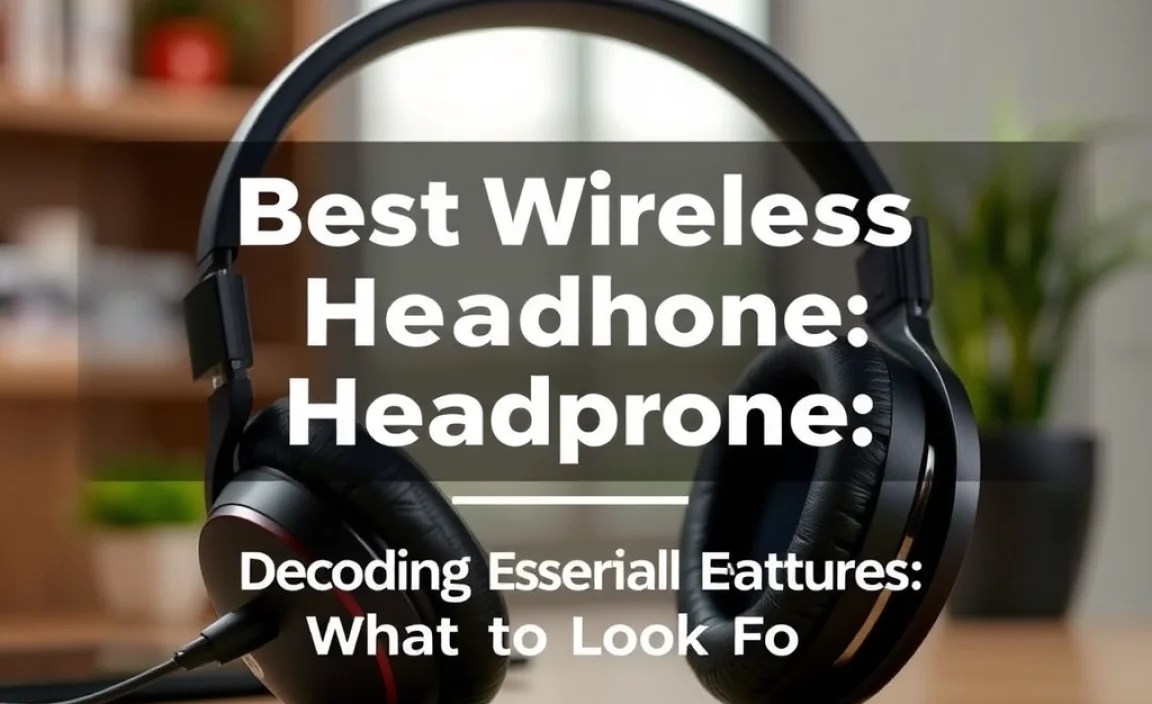
Wireless over-ear headphones have revolutionized the way we listen. They offer a powerful combination of comfort, sound quality, and freedom that wired alternatives often can’t match. Unlike earbuds that can become uncomfortable after prolonged use or on-ear models that press directly on your ears, over-ear headphones envelop your entire ear.
This design not only provides superior comfort for long listening sessions but also creates a natural seal that helps to passively block out ambient noise. This means you can enjoy your audio without distractions, whether you’re on a busy commute, in a bustling office, or simply relaxing at home. The “wireless” aspect, of course, is a significant draw. It liberates you from the constraints of cables, allowing you to move freely, get up and grab a drink, or even dance to your music without fear of yanking your device off a table.
The technology packed into modern wireless over-ear headphones is truly remarkable. We’re talking about advanced noise-cancellation that can silence the world around you, long-lasting battery life that keeps the music going for days, and seamless Bluetooth connectivity that makes pairing with your devices a breeze. Plus, many models now support high-resolution audio codecs, ensuring that the sound quality is as rich and detailed as the artist intended. For anyone looking to upgrade their listening experience, wireless over-ear headphones are an investment that pays dividends in comfort, convenience, and pure audio enjoyment.
Decoding Essential Features: What to Look For

When you’re shopping for the best wireless over-ear headphones, it’s important to understand the key features that will impact your listening experience. Don’t get overwhelmed by technical specs; let’s break down the essentials into simple terms.
1. Sound Quality: The Heart of the Matter
This is arguably the most important aspect. What makes headphones sound good? It’s a combination of drivers, tuning, and supported audio codecs. For over-ear headphones, drivers (the small speakers inside) are typically larger, allowing for a wider frequency response and deeper bass. Look for descriptions that mention balanced sound, clear highs, and rich mids. While specific frequency response numbers can be technical, trust your ears and reviews that highlight a pleasing, natural sound profile rather than overly bass-heavy or tinny audio.
Audio Codecs: These are like digital translators for your audio signal. The most common is SBC (Subband Coding), which is universally compatible but basic. AAC (Advanced Audio Coding) is better and is widely used by Apple devices. For the best quality, look for support for LDAC (developed by Sony) or aptX HD/aptX Adaptive (Qualcomm). These offer much higher bitrates, meaning more audio data can be transmitted wirelessly, resulting in sound closer to a wired connection. You can find more about Bluetooth audio codecs on resources like Bluetooth’s official audio guide.
2. Active Noise Cancellation (ANC): Your Personal Oasis
ANC is a technology that uses microphones to detect ambient noise and generates an opposite sound wave to cancel it out. This is a game-changer for noisy environments. Not all ANC is created equal, though. Premium ANC can create an almost silent backdrop, allowing you to focus on your music at lower, safer volumes. Some headphones offer adjustable ANC levels or “transparency modes” that let in external sounds when you need to be aware of your surroundings, like when crossing a street or needing to hear announcements.
3. Comfort and Fit: Wear Them for Hours
Over-ear headphones should feel comfortable, not like a vise on your head! Look for plush earcups made of soft materials like memory foam covered in faux leather or breathable fabric. The headband should have adequate padding and be adjustable to fit different head sizes without causing pressure points. Weight is also a factor; lighter headphones tend to be more comfortable over long periods. Ensure the earcups fully enclose your ears without pressing on them.
4. Battery Life: Power Through Your Day (and Beyond)
Wireless headphones are only as good as their battery. For over-ear models, aim for headphones that offer at least 20-30 hours of playback with ANC on. Many high-end models can easily exceed 40 hours. Quick charging is also a valuable feature, allowing you to get several hours of listening time from just a few minutes on the charger. USB-C charging is the modern standard and is convenient as it’s the same port used by many other devices.
5. Connectivity: Seamless Pairing and Stability
Bluetooth version is important. Bluetooth 5.0 and later offer more stable connections, better power efficiency, and a longer range. Multipoint connectivity is a real lifesaver; it allows you to connect your headphones to two devices simultaneously (e.g., your phone and laptop). This means you can be listening to music on your laptop and seamlessly switch to taking a call on your phone without re-pairing. Check for reliable Bluetooth range, often cited as around 10-15 meters (30-50 feet) in open spaces.
6. Controls and Smart Features: Convenience at Your Fingertips
Consider how you’ll control your headphones. Many use physical buttons, while others opt for touch controls on the earcups. Both have pros and cons. Buttons are tactile and less prone to accidental activation, while touch controls can offer a sleeker look and more intuitive gestures. Look for features like voice assistant integration (Google Assistant, Siri, Alexa), wear detection (pausing music when you take them off), and companion apps that allow customization of EQ, ANC, and other settings.
Top Brands Leading the Pack
While personal preference plays a huge role, certain brands consistently deliver exceptional wireless over-ear headphones, balancing innovation, sound quality, and user experience. Here are a few you can almost always count on:
1. Sony: The ANC Masters
Sony has become synonymous with top-tier active noise cancellation. Their WH-1000X series (currently the WH-1000XM5) is legendary for its ability to silence the outside world while delivering rich, detailed audio. They excel in features like LDAC support, long battery life, multipoint connectivity, and intuitive app control. If your top priority is blocking out distractions, Sony is a benchmark.
2. Bose: The Comfort and Clarity Champions
Bose has always focused on comfort and a balanced, pleasing sound signature. Their QuietComfort series (e.g., QuietComfort Ultra Headphones) is renowned for its lightweight design, supremely comfortable earcups, and effective, yet natural-sounding noise cancellation. Bose also offers excellent audio quality suitable for a wide range of music genres, making them a fantastic all-rounder.
3. Sennheiser: Audiophile-Grade Wireless
Known for their dedication to pure sound fidelity, Sennheiser offers wireless over-ear options that appeal to those who prioritize audio accuracy. Models like the Momentum series deliver excellent dynamic range and a detailed soundstage. They often feature premium build materials and a sophisticated aesthetic, making them a great choice for discerning listeners who don’t want to compromise on sound.
4. Apple: Seamless Integration for Ecosystem Users
For users heavily invested in the Apple ecosystem, the AirPods Max offer a premium wireless audio experience. They boast exceptional build quality, Apple’s signature computational audio for immersive sound, and industry-leading ANC and transparency modes. Their integration with iPhones, iPads, and Macs is unparalleled, with instant pairing and seamless device switching. While pricier, they offer a unique, albeit ecosystem-specific, user experience.
5. Bowers & Wilkins: Premium Sound and Design
Bowers & Wilkins (B&W) operates in the premium audio space, and their wireless over-ear headphones (like the Px8) reflect this. They offer exquisite build quality, often using fine materials like leather and aluminum, and deliver a refined, expansive sound profile that audiophiles will appreciate. Their ANC is also highly effective, making them a luxurious choice for immersive listening.
A Quick Look: Popular Models and Their Strengths
To help you visualize your options, here’s a table highlighting some well-regarded wireless over-ear headphones and their standout features. Keep in mind that models are frequently updated, so always check the latest versions!
| Model (Example) | Key Strengths | Best For |
|---|---|---|
| Sony WH-1000XM5 | Industry-leading ANC, excellent sound quality, long battery life, multipoint connectivity, advanced features via app. | Frequent travelers, commuters, those prioritizing noise cancellation. |
| Bose QuietComfort Ultra | Superb comfort, natural-sounding ANC, balanced audio, intuitive controls, lightweight design. | All-day listening, comfort-focused users, those who dislike feeling “pressure” from ANC. |
| Sennheiser Momentum 4 Wireless | Exceptional battery life (up to 60 hours), detailed and accurate sound, comfortable fit, good ANC. | Long-haul travelers, music purists, power users who need extended playback. |
| Apple AirPods Max | Immersive spatial audio, excellent ANC/Transparency, premium build, seamless Apple device integration. | Dedicated Apple users, those seeking a high-fidelity, integrated experience. |
| Bowers & Wilkins Px8 | Luxurious materials, outstanding sound clarity and detail, sophisticated design, effective ANC. | Design-conscious users, audiophiles seeking premium wireless sound. |
Getting Started: Connecting and Using Your New Headphones
You’ve picked out your perfect pair; now it’s time to get listening! Connecting and using your wireless over-ear headphones is usually straightforward.
Step 1: Charge Them Up
Before you do anything, plug your headphones in. Most come with a partial charge, but a full charge ensures uninterrupted initial setup and use. Use the provided USB-C cable and a compatible power adapter. A full charge typically takes 2-4 hours, depending on the model.
Step 2: Power Them On and Enter Pairing Mode
Locate the power button (usually on one of the earcups). Press and hold it until you hear a tone or see an indicator light. For first-time use, they should automatically enter pairing mode. If not, there’s usually a dedicated Bluetooth button or a combination of buttons to press to activate pairing mode.
Step 3: Connect to Your Device
- On your smartphone or tablet (iOS/Android): Go to Settings > Bluetooth. Ensure Bluetooth is turned on. Your headphones should appear in the list of available devices. Tap their name to connect.
- On your computer (Windows/macOS/Linux): Go to your Bluetooth settings (usually found in System Preferences or Settings > Devices). Click “Add Bluetooth or other device” and select your headphones when they appear.
You’ll usually hear a confirmation sound in the headphones once connected to your device. Refer to your headphone’s manual for specific pairing instructions if you encounter difficulties.
Step 4: Explore Your Companion App (Optional but Recommended)
Most premium wireless headphones have a companion app (e.g., Sony Headphones Connect, Bose Music, Sennheiser Smart Control). Download this from your device’s app store. These apps are invaluable for:
- Updating firmware for improvements and bug fixes.
- Customizing EQ settings to tailor the sound to your preference.
- Adjusting ANC levels or transparency modes.
- Managing multipoint connections.
- Remapping button functions.
Step 5: Enjoy Your Music!
Once paired and connected, open your favorite music app, podcast player, or video. The audio should now play through your headphones. Use the controls on the earcups (buttons or touch gestures) to play, pause, skip tracks, adjust volume, and answer calls.
Basic Maintenance: Keeping Your Headphones Sounding Great
Treating your headphones with a little care will significantly extend their lifespan and keep them performing and sounding their best. Here’s how to maintain them:
1. Cleaning the Earcups and Headband
- Frequency: Weekly, or as needed if visibly dirty.
- What to use: A soft, dry microfiber cloth is usually sufficient for daily dusting. For light grime or sweat, slightly dampen the cloth with water (do not spray water directly on the headphones). For tougher marks, a mild, diluted solution of soap and water, or an electronics-specific cleaning wipe, can be used. Ensure the cloth is wrung out well.
- What to avoid: Harsh chemicals, abrasive materials, solvents, or excessive moisture. Do not submerge any part of the headphones in water.
2. Cleaning the Speaker Grilles
- Frequency: Monthly, or if you notice muffled sound.
- What to use: A dry, soft brush (like a clean makeup brush or a toothbrush reserved for this purpose) can gently lift away dust and earwax. You can also use a can of compressed air held at a distance to blow out debris from the grilles.
- What to avoid: Poking sharp objects into the grilles, using liquids directly on the grilles, or applying high-pressure air.
3. Storing Your Headphones
When not in use, store your headphones in their protective case. This shields them from dust, scratches, and accidental damage. If they didn’t come with a case, consider purchasing one. Avoid leaving them exposed in direct sunlight or in extreme temperatures, as this can degrade the materials.
4. Battery Care
Most modern lithium-ion batteries in headphones don’t require special conditioning. However, to maximize battery health:
- Avoid leaving them fully discharged for extended periods.
- While it’s generally fine to charge them overnight, it’s also good practice to unplug them once fully charged if you’re concerned about long-term battery degradation.
- Don’t expose them to extreme heat while charging.
5. Protecting Against Moisture
While some headphones are rated for sweat resistance (check your manual!), they are generally not waterproof. Avoid wearing them in heavy rain or submerging them. If they get damp from sweat, wipe them down with a dry cloth immediately after use.
Troubleshooting Common Issues
Even the best headphones can sometimes throw a curveball. Here are solutions to common problems:
Issue: Headphones won’t turn on.
Solution: Ensure they are fully charged by plugging them into a known working charger for at least an hour. Try a different USB cable and power adapter. If they still don’t power on, contact the manufacturer’s support.
Issue: Cannot pair headphones with a device.
Solution:
- Make sure your headphones are in pairing mode (check your manual).
- Ensure Bluetooth is enabled on your device.
- Turn off Bluetooth on other devices nearby that might be trying to connect.
- Restart both your headphones and your device.
- “Forget” the headphones in your device’s Bluetooth settings and try pairing again.
Issue: Sound is distorted or intermittent.
Solution:
- Check the battery level; low batteries can sometimes cause performance issues.
- Ensure your device is within the Bluetooth range and there are no obstructions (e.g., thick walls).
- Close unnecessary apps on your device.
- Try connecting to a different device to see if the problem persists.
- Update the headphone firmware via the companion app.
Issue: Active Noise Cancellation isn’t working effectively.
Solution:
- Ensure ANC is properly enabled in the headphones’ settings or app.
- Check that the earcups are creating a good seal around your ears.
- Clean the ANC microphones (small holes on the earcups); they can get blocked by debris.
- Firmware updates often improve ANC performance.
