
Quick Summary: A Bluetooth adapter for headphones is a clever and affordable way to add wireless functionality to your existing wired headphones. This guide explains what they are, how they work, and the simple steps to get yours up and running, transforming your listening experience without buying new gear.
Bluetooth Adapter for Headphones: Your Genius Save for Wireless Freedom

Hey everyone, Edward Cavitt here from headphonehorizon! Ever found yourself tangled in headphone cords, wishing for the freedom of wireless but hesitant to buy brand-new Bluetooth headphones? You’re not alone. Many of us have a favorite pair of wired headphones that deliver amazing sound. What if I told you there’s a small, inexpensive gadget that can turn those beloved cans into wireless wonders? Enter the humble, yet brilliant, Bluetooth adapter for headphones. In this guide, we’ll break down exactly what these adapters are, how they work, and walk you through the super simple steps to start enjoying your music wirelessly. Get ready to say goodbye to cords and hello to hassle-free listening!
What Exactly is a Bluetooth Adapter for Headphones?
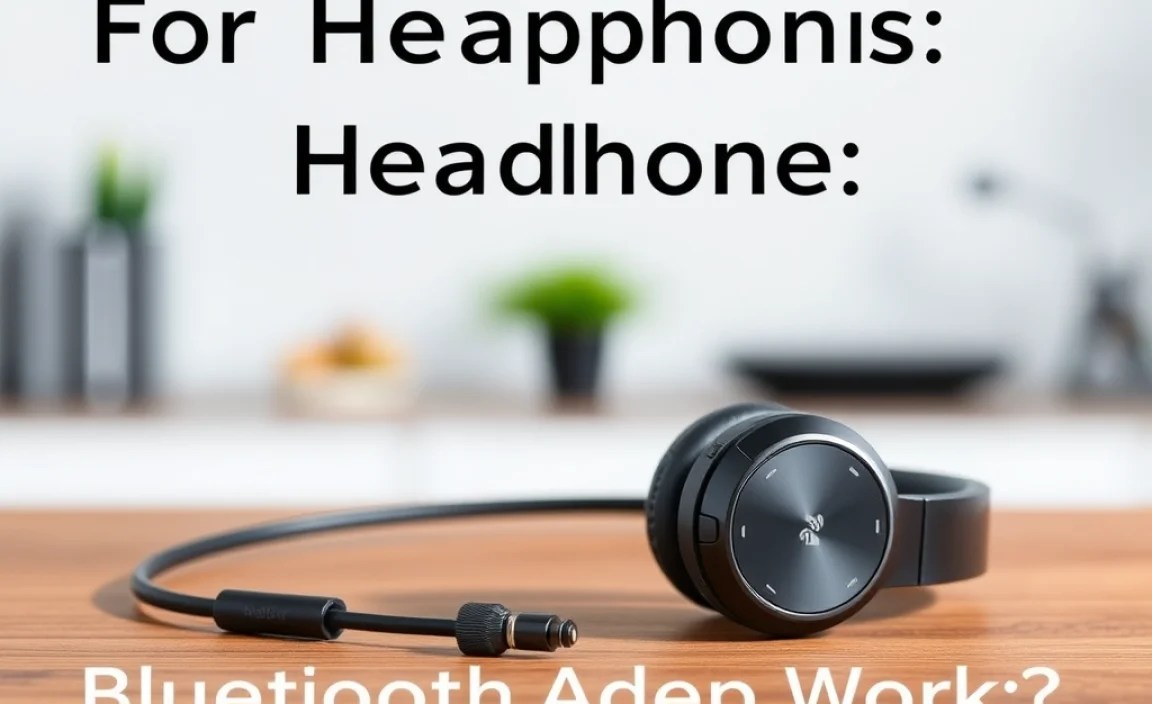
At its core, a Bluetooth adapter for headphones is a small device that bridges the gap between your wired headphones and a Bluetooth-enabled audio source, like your smartphone (that might not have a headphone jack anymore!), tablet, or laptop. Think of it as a translator. Your wired headphones speak the language of electrical signals through a cable, while your modern devices increasingly speak the language of Bluetooth radio waves. The adapter takes the audio signal from your device via Bluetooth and converts it into a signal that your wired headphones can understand and play. It’s a simple, effective solution that breathes new life into older or cherished audio gear.
Different Types of Bluetooth Adapters
Bluetooth adapters for headphones aren’t a one-size-fits-all deal. They come in a few variations, each designed for slightly different uses:
- 3.5mm Jack Adapters: These are the most common and versatile. They look like a small dongle, often no bigger than a USB stick, with a 3.5mm male plug on one end to go into your headphones and a female port (or sometimes directly Bluetooth transmitting) for the audio source. Some are receivers only (connect to your wired headphones to receive Bluetooth from your phone), while others can transmit (connect to a non-Bluetooth TV and send audio to Bluetooth headphones). We’ll focus on the receiver kind for this guide, as it’s the most popular for turning existing headphones wireless.
- Clip-on Adapters: These are typically small units with a built-in microphone and controls. They have a short cable with a 3.5mm plug that goes into your headphones, and the main body clips onto your shirt or pocket. This keeps the connection neat and your controls easily accessible.
- Dedicated Bluetooth Receivers: These are often a bit larger and might have their own internal battery. They usually connect to your headphones via a standard 3.5mm cable, and then receive the Bluetooth signal from your phone wirelessly. Many of these offer higher fidelity audio codecs, like aptX, and better battery life.
Why Use a Bluetooth Adapter? The “Genius Save” Unpacked

The appeal of a Bluetooth adapter is immense, especially when you consider it a “genius save.” Let’s dive into why:
- Cost-Effectiveness: This is the big one. A decent Bluetooth adapter can cost anywhere from $20 to $80, while a good pair of wireless headphones can run from $100 to $300 or more. You get the wireless experience for a fraction of the price.
- Extend the Life of Your Favorite Headphones: Got a pair of headphones you absolutely love the sound of, but their wired nature is holding you back? Don’t throw them out! An adapter lets you keep that familiar, comfortable, and great-sounding audio experience.
- Future-Proofing Older Devices: Newer smartphones are ditching the 3.5mm headphone jack. If you have older, high-quality wired headphones, a Bluetooth adapter ensures you can still use them with your latest phone without needing an expensive adapter for the phone itself (like a USB-C to 3.5mm dongle) and then trying to connect wirelessly.
- Convenience and Freedom: No more snagging cords on door handles, desk chairs, or getting tangled when you’re walking around. The freedom of movement is liberating.
- Adding Wireless to Non-Wireless Earbuds/Headphones: Even some newer truly wireless earbuds have decent sound but lack advanced features. An adapter can give your beloved wired set Bluetooth, often with better controls and battery life.
- Simplicity: For many users, especially those not steeped in audio tech, the idea of complex wireless audio protocols can be daunting. Adapters offer a straightforward solution.
How Do Bluetooth Adapters Work? A Simple Explanation
Bluetooth technology uses radio waves to transmit data between devices over short distances. For audio, this means your audio source (like your phone) sends a digital audio stream over Bluetooth to the adapter. The adapter then:
- Receives the Bluetooth Signal: It picks up the wireless audio data from your phone or other source.
- Decodes the Signal: It translates the digital Bluetooth data into an analog audio signal. This process often involves a Digital-to-Analog Converter (DAC) chip within the adapter.
- Outputs the Analog Signal: This analog signal is then sent via a 3.5mm jack (or a built-in cable) to your wired headphones.
- Powered by a Battery (Usually): Most adapters have a small internal rechargeable battery that powers the Bluetooth receiver and DAC.
The quality of the DAC inside the adapter and the Bluetooth codecs supported play a significant role in sound quality. For a more technical dive into Bluetooth audio codecs, you can check out resources like the official Bluetooth Technology website.
Step-by-Step: Setting Up Your Bluetooth Adapter for Headphones
Getting your pair of wired headphones connected wirelessly with an adapter is remarkably simple. Let’s walk through it:
Step 1: Choose Your Bluetooth Adapter
Based on our earlier discussion, decide which type best suits your needs. For turning existing headphones wireless, a 3.5mm jack receiver or a clip-on style is usually the go-to. Consider factors like:
- Battery Life: How long do you need it to last on a single charge?
- Features: Do you need a microphone for calls? Volume and track controls?
- Sound Codec Support: If you’re an audiophile, look for support for aptX, aptX HD, or LDAC for potentially better sound quality (your source device also needs to support it). For most casual listeners, standard SBC or AAC is perfectly fine.
- Portability: Do you want something tiny or a clip-on with more controls?
Step 2: Charge the Adapter
Most Bluetooth adapters come with a USB cable for charging. Before you start, plug it into a power source (like a USB wall adapter, computer USB port, or power bank) and let it charge fully. The adapter usually has an indicator light that changes color or turns off when charging is complete. This might take 1-3 hours depending on the model.
Step 3: Place Your Adapter and Connect Headphones
This is where different styles vary slightly:
- For 3.5mm Jack Adapters: Plug the male 3.5mm connector (if it’s a dongle style) into the headphone jack of your wired headphones. If it’s a separate receiver unit, plug one end of your headphone cable into the adapter’s 3.5mm port.
- For Clip-on Adapters: Connect your headphones to the adapter’s 3.5mm jack. Then, clip the main unit of the adapter to your shirt collar, pocket, or waistband for easy access and to manage the headphone cable.
Ensure the connection is snug. You don’t want your headphones cutting out because of a loose wire.
Step 4: Power On and Pair the Adapter
Most adapters have a power button. Press and hold it for a few seconds until an indicator light starts flashing (often blue and red, or blue and green, alternating) – this signifies it’s in pairing mode. If it doesn’t automatically enter pairing mode, check the adapter’s manual for specific instructions (sometimes a quick double-press of a button works).
Now, grab your phone, tablet, or computer. Go to your Bluetooth settings:
- On iOS: Settings > Bluetooth.
- On Android: Settings > Connected devices > Bluetooth.
- On Windows: Settings > Devices > Bluetooth & other devices.
- On macOS: System Preferences > Bluetooth.
Make sure Bluetooth is turned on. Your device will start scanning for nearby Bluetooth devices. Look for the name of your adapter in the list of available devices. It might be something like “BT-Audio,” “A2DP-XXXX,” or the manufacturer’s name. Tap on it to connect.
Step 5: Confirm Connection and Play Audio
Once paired, the indicator light on your adapter will usually change to a solid color or a slow, steady blink, indicating it’s successfully connected. Your phone or device should also show the adapter as “Connected.”
Now, simply play some music, a podcast, or a video. The audio should stream wirelessly from your device directly to your headphones via the Bluetooth adapter. If you don’t hear anything, double-check that the volume is up on both your device and the adapter (if it has volume controls) and that you selected the adapter as the audio output device on your source if prompted.
Table: Key Features to Look for in a Bluetooth Adapter
To help you make the best choice, here’s a quick rundown of features and what they mean:
| Feature | What It Does | Why It Matters |
|---|---|---|
| Bluetooth Version (e.g., 5.0, 5.1, 5.2) | Determines connection stability, range, and power efficiency. | Newer versions offer better range, lower latency, and more stable connections. |
| Supported Audio Codecs (SBC, AAC, aptX, aptX HD, LDAC) | How audio data is compressed and transmitted wirelessly. | SBC is standard. AAC is good for Apple devices. aptX and aptX HD offer higher quality, especially for Android users. LDAC is for highest fidelity. |
| Battery Life (in hours) | How long the adapter can operate on a single charge. | Crucial for long listening sessions, commutes, or travel. |
| Built-in Microphone | Allows you to take calls while using the adapter. | Adds communication functionality if needed. |
| On-device Controls (Volume, Play/Pause, Track Skip) | Buttons on the adapter itself to control playback. | Convenience – no need to pull out your phone for basic controls. |
| Low Latency Technology (e.g., aptX Low Latency) | Minimizes the delay between audio and video. | Essential for watching videos or gaming to avoid lip-sync issues. |
Troubleshooting Common Issues
While setup is usually a breeze, you might occasionally run into a snag. Here are a few common problems and how to fix them:
- No Sound:
- Check volume levels on both your device and the adapter.
- Ensure the adapter is still paired and connected (look at the indicator light).
- Try unpairing and re-pairing the adapter with your device.
- Make sure your device is set to output audio to the Bluetooth adapter.
- Test your headphones directly with another device to ensure they are working.
- Intermittent/Choppy Sound:
- Ensure the adapter and your source device are within range (Bluetooth range is typically around 30 feet/10 meters but can be affected by walls and interference).
- Minimize interference from other wireless devices (microwaves, Wi-Fi routers, other Bluetooth devices).
- Check the adapter’s battery level. Low battery can sometimes affect performance.
- Try restarting both the adapter and your audio source.
- Connection Fails:
- Verify Bluetooth is enabled on your source device.
- Make sure the adapter is in pairing mode (flashing lights).
- Restart both devices and try pairing again.
- Check the adapter’s manual to ensure it’s compatible with your device’s Bluetooth version.
- If you have many devices paired to your phone, try “forgetting” some less-used ones to free up space.
- Poor Sound Quality:
- Ensure you’re not too far from your source device.
- Check the supported audio codecs. If your adapter and phone support higher-quality codecs (like aptX HD), ensure they are enabled. You might need to adjust settings on your Android device in Developer Options.
- A wired connection is inherently capable of higher fidelity than compressed Bluetooth signals, so manage expectations – this is about convenience!
Keeping Your Adapter Charged and Maintained
Most adapters have internal rechargeable batteries. To maximize battery health:
- Avoid leaving the adapter plugged in to charge for excessively long periods after it’s full.
- Store it in a cool, dry place when not in use.
- If you won’t be using it for a while, charge it to about 50% before storing to help maintain battery longevity.
For detailed maintenance, always refer to the manufacturer’s instructions. For example, the TrustedReviews guide on Bluetooth codecs can help you understand how these features impact sound quality.
Bluetooth Adapters vs. True Wireless Headphones: What’s the Difference?
It’s important to distinguish between a Bluetooth adapter and a pair of true wireless headphones (like AirPods, Galaxy Buds, etc.).
| Feature | Bluetooth Adapter + Wired Headphones | True Wireless Headphones |
|---|---|---|
| Core Concept | Adds wireless to existing wired headphones. | Completely wireless earbuds, no physical connection between earpieces. |
| Sound Quality | Relies on the quality of your wired headphones and adapter’s DAC/codecs. Can be very high. | Integrated drivers, DACs, and Bluetooth chip. Varies greatly by model. |
| Convenience | Wireless from source to adapter; wired to headphones. | Completely wireless, no wires at all. |
| Cost | Generally much lower for a quality setup. | Can be expensive, though budget options exist. |
| Isolation/Fit | Uses your existing headphones, so fit and isolation are familiar. | Fit can be crucial for sound and comfort; often uses silicone tips. |
| Battery Life | Adapter battery + original headphone cable (no power draw from headphones). | Earpiece battery life often shorter; relies on charging case. |
| Microphone | May or may not have one, depending on adapter model. | Almost always includes microphones for calls/voice assistants. |
The Bluetooth adapter route is fantastic if you already own excellent wired headphones and prioritize sound quality and comfort over absolute freedom from cables.
Frequently Asked Questions (FAQ)
Q1: Will a Bluetooth adapter work with any headphones?
Yes, provided your headphones have a standard 3.5mm audio jack. The adapter essentially acts as a receiver for the Bluetooth signal and converts it to a standard audio signal that any wired headphones can interpret. Ensure the adapter you choose is compatible with the audio source you’ll be connecting it to (e.g., your phone, laptop).
Q2: How long does the battery on a Bluetooth adapter usually last?
Battery life varies significantly by model, but many common 3.5mm Bluetooth adapters offer anywhere from 6 to 20 hours of playback on a single charge. Higher-end models or those with larger batteries tend to last longer. Always check the product specifications for an estimated duration.
