
Quick Summary: Over-ear headphones can be a gentler choice for your ears due to their design, distributing pressure and offering better noise isolation. This guide explores how they protect hearing, their advantages over other headphone types, and tips for safe listening, making them a great option for everyday comfort and ear health.
Are Over Ear Headphones Better For Your Ears? An Essential Guide
Hello and welcome to Headphone Horizon! As an audio enthusiast, I know how overwhelming it can be to navigate the world of headphones, especially when you’re just starting out. You’ve probably seen all sorts of headphones – the tiny earbuds that slip into your ear canal, the sleek on-ear models that sit on your outer ear, and the substantial over-ear headphones that completely surround your ears. Today, we’re diving deep into a question many of you might be asking: “Are over-ear headphones better for your ears?” The answer, as with most things in audio, isn’t a simple yes or no, but it’s certainly a topic worth exploring. We’ll break down why over-ear designs can be a fantastic choice for ear comfort and safety, compare them to their counterparts, and give you practical tips for enjoying your music without any worries. Let’s get started on this journey to clearer sound and healthier hearing!
Understanding How Headphones Affect Our Ears
Before we talk about over-ear headphones specifically, it’s helpful to understand the general ways headphones interact with our ears, and why ear health is so important. Our ears are incredibly delicate sensory organs. The eardrum, a thin membrane, vibrates when sound waves hit it. These vibrations are then transmitted through tiny bones to the inner ear, where they are converted into signals our brain interprets as sound. Loud noises or prolonged exposure to even moderately loud sounds can damage the sensitive hair cells in the inner ear, leading to temporary or permanent hearing loss. This is why safe listening practices are paramount, regardless of the type of headphones you use.
According to the National Institute on Deafness and Other Communication Disorders (NIDCD), a part of the National Institutes of Health, noise-induced hearing loss is a serious and preventable condition. They emphasize that listening to music or other sounds at a moderate volume for a limited time is safer for our hearing.
The way headphones deliver sound and isolate us from external noise plays a significant role in how we perceive volume and how much we might unconsciously push the volume higher to compensate for background noise. Different headphone designs create different experiences and have varying impacts on our ears.
What Are Over Ear Headphones?

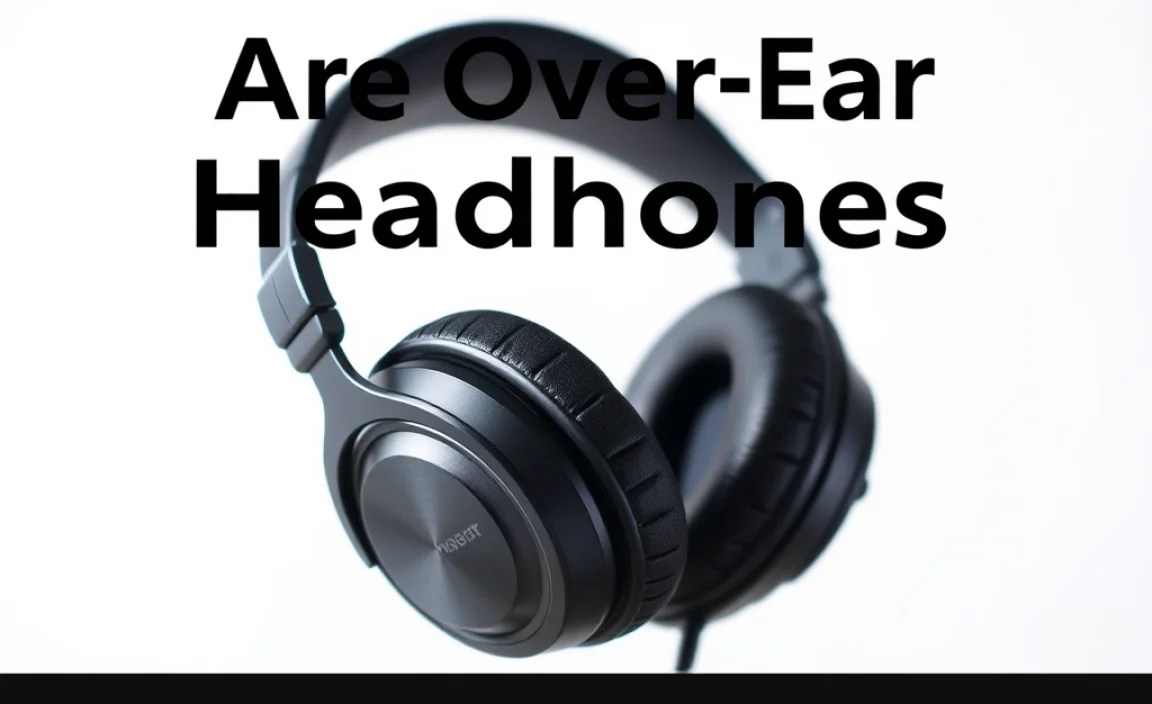
Over-ear headphones, often called circumaural headphones, are characterized by their large earcups that completely enclose your ears. They feature a headband that rests on top of your head, with the earcups extending downwards to cover your entire ear. This design is popular for its comfort and its ability to create an immersive listening experience.
The earcups are typically padded with plush materials like memory foam, leather, or velour, designed to provide a comfortable seal. This seal is crucial for both sound quality and passive noise isolation. Because they surround the ear, over-ear headphones tend to have a larger driver (the speaker unit) compared to other headphone types, which can contribute to richer, more detailed sound reproduction.
How Over Ear Headphones Can Be Better For Your Ears: Key Advantages

So, why might over-ear headphones be a preferable choice for your ears? It boils down to their design and how they interact with your hearing. Let’s break down the key advantages:
1. Superior Passive Noise Isolation
One of the biggest advantages of over-ear headphones is their natural ability to block out external noise. The large, sealed earcups create a physical barrier between your ears and the surrounding environment. This is known as passive noise isolation.
Why is this good for your ears? When you’re in a noisy environment, like a bustling office, a busy commute, or even just a noisy home, you tend to turn up the volume on your headphones significantly to hear your music or podcast clearly over the ambient sounds. This high volume is where the damage can occur. With good passive noise isolation, over-ear headphones reduce the need to crank up the volume, allowing you to listen at safer, more comfortable levels. This is a huge win for hearing preservation.
2. Even Pressure Distribution
Unlike on-ear headphones that press directly against your outer ear, over-ear headphones distribute the pressure around your ears. The clamping force of the headband and the weight of the earcups are spread out, reducing localized pressure points. This can prevent discomfort, ear fatigue, and even headaches that some people experience with other headphone types after extended wear.
For people with sensitive ears or those who wear headphones for long periods, this even distribution of pressure can make a significant difference in overall comfort and reduce the physical strain on your ears and head.
3. Reduced Risk of Ear Canal Irritation
In-ear headphones (earbuds) make direct contact with your ear canal. While convenient, this can sometimes lead to issues like earwax buildup, irritation, or even minor infections if not kept clean. Over-ear headphones bypass the ear canal entirely, resting on the outside. This physical separation can be a more hygienic and comfortable option for many users, reducing the risk of internal ear irritation.
4. Potential for Better Sound Quality and Immersive Experience
While not directly related to ear health, the superior sound quality often offered by over-ear headphones can contribute to a more enjoyable listening experience at lower volumes. Larger drivers and better acoustic properties mean you can often hear more detail and nuance at safe listening levels, making the music more engaging. This can reduce the temptation to push the volume higher just to discern subtle sounds.
Comparing Over Ear Headphones to Other Types

To fully appreciate why over-ear headphones might be a better choice for your ears, let’s compare them to their main competitors: on-ear and in-ear headphones.
| Headphone Type | Description | Pros for Ears | Cons for Ears |
|---|---|---|---|
| Over Ear (Circumaural) | Earcups fully surround the ear. | Excellent noise isolation (reduces need for high volume), even pressure distribution (comfortable for long wear), none of the ear canal irritation associated with earbuds. | Can be bulky, may cause ear sweat in warm environments, can be more expensive. |
| On Ear (Supra-aural) | Earcups rest directly on the outer ear. | Less isolating than over-ear but more than earbuds; can be more breathable than over-ear. | Can cause pressure on the ears, less effective noise isolation (may lead to higher volume), can cause ear discomfort over time. |
| In Ear (Earbuds/IEMs) | Insert into the ear canal. | Excellent portability, can offer good noise isolation (if a proper seal is achieved), some models allow ambient sound to be heard for awareness. | Direct ear canal contact (risk of irritation/infection), lower volumes are crucial as they are very close to the eardrum, can cause earwax issues, pressure on the ear canal can be uncomfortable for some. |
As you can see from the table, over-ear headphones offer distinct advantages for ear comfort and safe listening by minimizing the need for high volumes and avoiding direct ear canal contact and pressure.
Tips for Safe Listening with Any Headphone Type
While over-ear headphones have inherent benefits for ear health, it’s crucial to remember that the most important factor for protecting your hearing is responsible listening habits. Here are essential tips that apply to all headphone types:
- The 60/60 Rule: Aim to listen at no more than 60% of the maximum volume for no more than 60 minutes at a time. Take breaks in between.
- Be Mindful of Your Environment: If you’re in a noisy place, resist the urge to simply turn up the volume. Instead, try to move to a quieter spot or use headphones with better noise isolation.
- Take Regular Breaks: Give your ears a rest from any sound input. Short breaks every hour can make a big difference in preventing listening fatigue.
- Invest in Noise-Canceling Features: Active Noise Cancellation (ANC) can be a great addition, especially for over-ear headphones. It uses microphones to detect ambient noise and generates opposing sound waves to cancel it out, further reducing the need to increase volume.
- Listen to the Volume Limiter: Many smartphones and devices have built-in volume limiters. Familiarize yourself with these settings and use them to set a maximum safe listening level.
- Pay Attention to Your Body: If you experience ringing in your ears (tinnitus), muffled hearing, or discomfort after listening, it’s a sign that the volume was too high or you listened for too long. Reduce your volume and listening time.
- Keep Headphones Clean: For all types, but especially in-ear models, regular cleaning is important to prevent earwax buildup and potential infections.
The Centers for Disease Control and Prevention (CDC) also offers valuable resources on preventing noise-induced hearing loss, reinforcing the importance of these practices.
Are Over Ear Headphones Better For Your Ears? Putting It Into Practice
When considering the question, “Are over ear headphones better for your ears?”, the answer leans towards yes, primarily due to their design that promotes safer listening habits and increased comfort.
When to Choose Over Ear Headphones:
- You wear headphones for extended periods (work, study, gaming, travel).
- You’re often in noisy environments and want to reduce external distractions without blasting your music.
- You prioritize comfort and want to avoid pressure on your ears or ear canal.
- You enjoy a more immersive and detailed audio experience.
- You have experienced discomfort or ear fatigue with other headphone types.
Considerations for Other Types:
- On-ear headphones can be a good compromise if you want something less bulky than over-ear but more comfortable and isolating than earbuds.
- In-ear headphones are unbeatable for portability and for use during rigorous activities like exercise where they stay put better. However, they require the most discipline regarding volume levels.
Ultimately, the “best” headphones for your ears are those that allow you to listen comfortably and safely. Over-ear headphones provide a solid foundation for this by inherently offering better noise isolation and comfort, paving the way for reduced volume and a more enjoyable, healthier listening experience.
Frequently Asked Questions (FAQ) About Over Ear Headphones and Ear Health
Q1: Can wearing over ear headphones for too long damage my hearing?
The design of over-ear headphones themselves is unlikely to damage your hearing. The primary risk to hearing comes from listening to any type of headphone at excessive volumes for prolonged periods. Because over-ear headphones offer good noise isolation, they can help protect your hearing by reducing the need to turn up the volume in noisy environments. Always practice safe listening habits.
Q2: Do over ear headphones cause ear infections?
Over-ear headphones do not typically cause ear infections because they do not enter the ear canal. Unlike earbuds, which can sometimes harbor bacteria or contribute to a moist environment in the ear canal, over-ear headphones sit on the outside. However, maintaining good hygiene by cleaning the earcup pads regularly is still recommended.
Q3: Are noise-canceling over ear headphones better for my ears?
Yes, active noise-canceling (ANC) over-ear headphones can be excellent for ear health. ANC technology significantly reduces ambient noise, allowing you to listen at much lower, safer volumes. This is especially beneficial for commuters, travelers, or anyone frequently in noisy environments, as it directly combats the temptation to increase volume.
Q4: How can I tell if my listening volume is too high, especially with over ear headphones?
If you experience ringing or buzzing in your ears (tinnitus) after listening, or if sounds seem muffled, your volume is likely too high. Also, if you have to raise your voice to talk to someone nearby while wearing headphones, it’s a strong indicator that your volume is too loud. A good practice is to set your device’s volume to about 60% and keep listening sessions limited.
Q5: I have a small head and my over ear headphones feel too big. Can they still be comfortable and safe?
Many over-ear headphones have adjustable headbands and swiveling earcups designed to fit a variety of head shapes and sizes. Look for models with good padding and a headband that doesn’t exert excessive clamping force. If a pair feels too heavy or exerts too much pressure, it might not be the best fit for you, even if it’s an over-ear design. Comfort is key to safe, extended listening.
Q6: Can over ear headphones cause headaches?
Some people may experience headaches from over-ear headphones if the clamping force is too strong, the headphones are too heavy, or if they cause discomfort over long periods. This is usually more about the physical fit and weight rather than the ear health aspect. Trying on different models and looking for lightweight designs with plush padding and adjustable headbands can help prevent this.
Conclusion: Your Ears Will Thank You for Choosing Wisely
So, to circle back to our main question: “Are over-ear headphones better for your ears?” Based on their design, the answer is a resounding advantage for over-ear headphones when it comes to comfort and promoting safer listening habits. Their ability to create a seal around your ears minimizes the need to constantly turn up the volume to drown out distractions. This passive isolation, combined with even pressure distribution and avoidance of direct ear canal contact, makes them a gentler and often more comfortable choice for extended listening sessions than their on-ear or in-ear counterparts.
However, it’s crucial to reiterate that no matter which type of headphone you choose, the most vital element in preserving your hearing is responsible listening. By adhering to safe listening practices like the 60/60 rule, taking regular breaks, and being mindful of your volume levels, you can enjoy your music, podcasts, and more for years to come without compromising your auditory health.
If you’re in the market for new headphones and prioritize ear comfort and a great listening experience, over-ear models are definitely worth considering. They offer a robust combination of audio fidelity, comfort, and, most importantly, features that support the well-being of your precious hearing. Invest in a good pair, practice safe listening, and let your ears enjoy the journey.
