
Is your gaming headset on the fritz? Don’t let audio issues cut into your gameplay! This essential guide will walk you through common gaming headset problems and provide easy, step-by-step solutions. From crackling audio to a silent microphone, learn how to get your headset working perfectly again and reclaim your immersive gaming experience without needing to buy a new one.
Hey there, fellow gamers and audio lovers! Edward Cavitt here from headphonehorizon. We’ve all been there: you’re in the middle of an epic quest, coordinating with your squad, or just chilling with your favorite tunes, and suddenly, your gaming headset decides to throw a tantrum. No sound, a buzzing annoyance, or a mic that refuses to transmit your battle cries – it’s incredibly frustrating! But before you despair and reach for your wallet, know that most common gaming headset issues are surprisingly fixable with a little bit of know-how and patience. This guide is designed to be your go-to resource, breaking down those technical hiccups into simple, actionable steps. Let’s get your audio gear back in prime condition so you can focus on what truly matters: enjoying your game!
Common Gaming Headset Problems & Their Solutions
Gaming headsets are complex pieces of tech, and like any device, they can encounter issues. Understanding the common culprits is the first step to a quick fix. We’ll cover everything from connection problems to audio driver glitches.
1. No Sound or Intermittent Sound

This is arguably the most common and frustrating problem. You expect to hear every footstep, every explosion, but all you get is silence or an annoying stutter. Let’s troubleshoot this systematically.
Check the Basics First: The “Is It Plugged In?” Moment

It sounds simple, but many issues are resolved with a quick physical check. Ensure your headset is properly connected to the correct port on your PC, console, or mobile device. For wired headsets, try unplugging and replugging both ends of the cable, including any extension cables or Y-splitters.
Volume Controls: The Hidden Culprit
Many gaming headsets have their own physical volume controls on the ear cup or inline. Make sure these aren’t turned all the way down or muted. Also, check your operating system’s volume mixer. Sometimes, a specific application (like your game) can be muted independently.
- On PC: Right-click the speaker icon in your system tray and select “Open Volume Mixer.” Ensure your game and headset are not muted and have adequate volume.
- On Console: Navigate to your audio settings in the console’s dashboard. There are typically settings for headset volume and general game/chat balance.
Test on Another Device
To rule out your PC or console as the source of the problem, try plugging your headset into a different device – a smartphone, tablet, or another computer. If it works elsewhere, the issue likely lies with your original device’s audio output or settings.
Driver Issues (PC Specific)
Outdated or corrupted audio drivers can cause a host of problems, including no sound. Keeping your drivers up to date is good practice for all your hardware.
- Identify your audio device: In Windows, search for “Device Manager.” Expand “Sound, video and game controllers.” Find your headset or its audio chipset.
- Update driver: Right-click on your audio device and select “Update driver.” Choose “Search automatically for drivers.” If Windows can’t find anything new, you might need to go to the manufacturer’s website for your headset or motherboard (if the headset uses integrated audio) to download the latest drivers.
- Roll back driver: If the problem started after a driver update, you can try rolling back. Right-click the device, select “Properties,” go to the “Driver” tab, and click “Roll Back Driver” if the option is available.
- Uninstall and reinstall: As a last resort for drivers, uninstall the device from Device Manager, then restart your PC. Windows will attempt to reinstall the generic driver, or you can then manually install the latest drivers from the manufacturer.
Windows Sound Settings
Ensure your headset is set as the default playback device in Windows. This is crucial if you have multiple audio output devices connected.
- Right-click the speaker icon in the system tray and select “Sound settings.”
- Under “Output,” make sure your gaming headset is selected as the “Choose your output device.”
- Click “Sound Control Panel” on the right side.
- In the “Playback” tab, find your headset. If it’s disabled, right-click and select “Enable.” If it’s not the default, right-click and select “Set as Default Device” and “Set as Default Communication Device.”
Check Game-Specific Audio Settings
Some games have their own detailed audio configuration menus. Make sure your headset is selected as the audio output device within the game’s settings, and that the in-game volume isn’t set to zero.
2. Microphone Not Working or Poor Quality
Your team needs to hear you clearly! If your mic is picking up static, is too quiet, or completely silent, let’s get it broadcasting your voice again.
Physical Checks for the Mic
- Is it muted? Many headsets have a physical mute switch on the boom mic or inline controller. Flip it!
- Is it positioned correctly? Ensure the microphone boom is properly extended and positioned near your mouth. Some mics have optimal pickup zones.
- Is it connected securely? If your headset has a detachable mic, ensure it’s firmly plugged into the headset.
Windows Microphone Settings
Just like with playback devices, your microphone needs to be set up correctly in your operating system.
- Right-click the speaker icon in the system tray and select “Sound settings.”
- Under “Input,” ensure your gaming headset microphone is selected as the “Choose your input device.”
- Click “Device properties” below the input device selection. Here you can adjust the volume of your microphone. Try increasing this slider.
- Click “Sound Control Panel” on the right side of the main Sound settings page.
- Go to the “Recording” tab. Find your headset microphone. If it’s disabled, right-click and select “Enable.”
- Right-click your headset microphone and select “Set as Default Device” and “Set as Default Communication Device.”
- Go to “Properties” for your microphone, then the “Levels” tab. Ensure the microphone volume is up and that the microphone boost is not set too high (which can cause distortion) or too low. Click “OK.”
Test Your Microphone
Use Windows’ built-in tools or online mic testers to see if the hardware itself is functioning.
- Windows Voice Recorder: Search for “Voice Recorder” in the Windows search bar. Open it, click “Record,” and speak into your mic. Play it back to hear how you sound.
- Online Testers: Websites like Vocaroo or Online Mic Test allow you to record and play back directly in your browser. This helps differentiate between a PC/software issue and a headset hardware issue.
Application-Specific Mic Settings
In-game communication software (like Discord, TeamSpeak) and games themselves often have their own audio settings. Make sure your headset microphone is selected within these applications, and check their specific input volume or sensitivity settings.
Troubleshooting Static or Buzzing
A common complaint is a constant buzz or static interfering with your voice or game audio. This can often be caused by interference or grounding issues.
- Move Away from Interference: Wi-Fi routers, microwaves, and even other USB devices can sometimes cause electromagnetic interference. Try moving your computer or headset cable away from these sources.
- Try a Different USB Port: If you’re using a USB headset, try plugging it into a different USB port, preferably one directly on your motherboard (rear ports on a desktop PC), as these can sometimes offer cleaner power.
- Ground Loop Isolator: If you’re experiencing buzzing specifically with the analog 3.5mm jack and it’s tied to your PC’s power, a ground loop isolator might help. This small adapter breaks the ground loop that can cause buzzing.
- Update Audio Drivers: As mentioned before, driver issues can also manifest as static.
3. One Ear Cup Has No Sound

This can be particularly jarring when trying to pinpoint enemy locations in games. This issue often points to a cable problem or a connection issue within the headset itself.
Inspect the Cable and Connectors
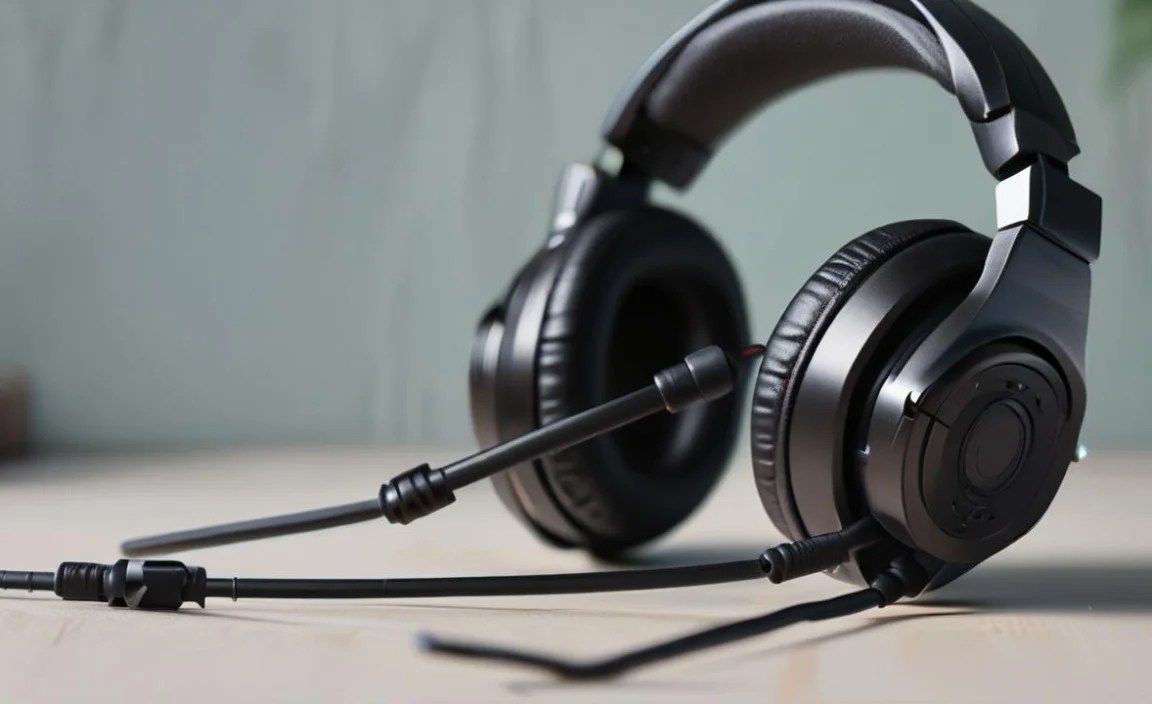
Look closely at the cable, especially near the headset and the plug. Fraying, kinks, or exposed wires can indicate damage. If your headset has a detachable cable, try swapping it with a known working cable if possible, or ensure it’s seated firmly in both ends.
Check Audio Balance Settings
Operating systems and sound cards often have a balance control for left and right audio channels. Ensure this is centered.
- On PC: Go to Sound settings > Sound Control Panel > Playback tab. Right-click your headset, select “Properties,” then the “Levels” tab. You should see a slider for L (Left) and R (Right) channels. Ensure they are set equally or centered.
Test Stereo Functionality
Play various audio files or YouTube videos that are known to have distinct left and right channel sounds. This helps confirm if it’s a true stereo issue or if only one side of the headset is affected.
Loose Internal Wiring (Advanced)
If the cable and software settings are fine, the problem might be internal. This could involve a loose wire connecting the audio driver in one ear cup to the main cable. This often requires opening the headset, which can void warranties and requires delicate handling. If you’re comfortable with electronics, you might find guides specific to your headset model online. Otherwise, this is a strong indicator that professional repair or replacement might be necessary.
4. Headset Not Detected by PC/Console

Your gaming rig simply doesn’t see your headset. This is a connectivity or driver issue that prevents the system from recognizing the device.
Connect to the Right Port

Ensure you’re using the correct port. For USB headsets, avoid unpowered USB hubs if possible, as they might not provide enough power. For analog headsets, make sure you’re plugging into the dedicated headset jack (often pink for mic, green for audio) and not just a line-in or line-out port.
Restart Your Device
A simple reboot can often resolve temporary glitches that prevent devices from being detected.
Try a Different USB Port or Connection Type

If it’s a USB headset, try a different USB port. If it’s a wireless headset, ensure the dongle or Bluetooth connection is re-established properly. For Bluetooth, forget the device in your Bluetooth settings and re-pair it.
Check USB Hubs and Dongles

If you’re using a USB hub or an adapter, try connecting the headset directly to your PC. Faulty hubs or adapters are a common cause of detection issues. For wireless headsets, try a different USB port for the receiver dongle.
Reinstall USB Drivers (PC Specific)
Corrupted USB drivers or conflicts can prevent devices from being recognized.
- Open Device Manager.
- Expand “Universal Serial Bus controllers.”
- Right-click on each “USB Root Hub” and “USB Host Controller,” and select “Uninstall device.”
- Do NOT uninstall the “Generic USB Hub” unless you are sure what it is.
- Restart your PC. Windows will automatically reinstall the USB controllers.
Check for Physical Damage
Inspect the USB connector on your headset and the port on your PC for any bent pins or debris. Clean gently with compressed air if necessary.
5. Poor Connection / Disconnects (Wireless Headsets)
If your wireless headset is constantly dropping connection or experiencing lag, it’s definitely impacting your game. This is usually related to signal interference or battery issues.
Check Battery Levels
A dying battery is the most straightforward cause of connection problems. Ensure your headset is fully charged. Many wireless headsets will indicate low battery via an LED or audio cue.
Minimize Interference
Wireless signals are susceptible to interference from other devices and physical obstructions.
- Other Wireless Devices: Wi-Fi routers, microwaves, Bluetooth devices, and even other wireless peripherals can interfere. Try turning off other non-essential wireless devices temporarily.
- Physical Barriers: Walls, large metal objects, and even your own body can weaken the signal. Ensure you are within the recommended range of your dongle or transmitter, and that there aren’t significant obstacles in the way.
- USB 3.0 Interference: USB 3.0 ports and devices can sometimes emit radio frequencies that interfere with 2.4GHz wireless signals used by many gaming headsets. If you have a USB 3.0 wireless dongle, try using a short USB extension cable to move the dongle away from the USB 3.0 ports on your PC, or use a USB 2.0 port if available.
Re-pair the Headset
Sometimes, the wireless connection simply needs to be re-established.
- Dongle-Based: Unplug the USB dongle, wait a few seconds, and plug it back in. Some headsets may have a re-pairing button – consult your headset’s manual.
- Bluetooth: Go to your device’s Bluetooth settings, “forget” the headset, and then put the headset back into pairing mode and re-connect.
Update Firmware
Manufacturers sometimes release firmware updates for their wireless headsets that can improve connectivity and performance. Check the manufacturer’s support website for your specific model to see if any updates are available and follow their instructions carefully.
Test the Dongle/Receiver
Try plugging the wireless dongle into a different USB port. If the problem persists, the dongle itself might be faulty.
Troubleshooting Table Summary
Here’s a quick reference for some common issues and initial steps:
| Problem | Quick Checks & Solutions |
|---|---|
| No Sound | Check physical connections, volume knobs, OS volume mixer, test on another device, ensure headset is default playback device. |
| Mic Not Working | Check physical mute switch, mic position, OS recording settings, ensure mic is default recording device, test mic with Voice Recorder. |
| Buzzing/Static | Move away from interference, try different USB port, check cable integrity. |
| One Ear Cup Silent | Inspect cable, check audio balance in OS settings, test stereo content. |
| Not Detected | Check physical connection, try different port, restart device, reinstall USB drivers. |
| Wireless Disconnects | Check battery, minimize interference, re-pair device, update firmware. |
When to Consider Professional Help or Replacement
While this guide covers many common fixes, sometimes the issue is beyond a simple DIY solution, especially if you’re not comfortable with electronics repair. Here are some indicators:
- Physical Damage: If the headset has been dropped, stepped on, or has visible cracks, internal connectors may be broken.
- Water Damage: Any liquid exposure can cause irreversible damage to the electronics.
- Intermittent Internal Issues: If sound cuts in and out even when the cable is perfectly still, it suggests a problem with internal wiring or solder points that’s difficult to access.
- Out of Warranty: If your headset is relatively new, check the manufacturer’s warranty. Attempting DIY repairs yourself can void it. Contacting support for a repair or replacement is often the best first step if still under warranty.
- Persistent Issues: After trying all the troubleshooting steps, if the problem remains unsolved, it might be time to consider professional repair services (though these can sometimes cost as much as a new budget headset) or invest in a new unit.
Resources like iFixit can provide guides for specific headset models if you’re technically inclined and comfortable with the risks involved in opening electronics. They offer detailed teardowns and repair guides that can sometimes illuminate internal issues, but proceed with caution!
