
Choosing the right headphones for your digital piano enhances practice and enjoyment. This guide explains key features like comfort, sound quality, and isolation, helping beginners select the best pair without jargon, ensuring a rich, immersive playing experience.
Hey there! Edward Cavitt here from headphonehorizon, and I’m super excited to dive into a topic that can really transform your digital piano experience: finding the right headphones.
Whether you’re just starting out or have been playing for a while, using headphones is a fantastic way to practice without disturbing others, immerse yourself in the sound, and really hear every nuance of your playing. But with so many options out there, it can feel a bit overwhelming. Don’t worry, though! I’m here to break it all down in a way that’s easy to understand, so you can make a confident choice and get back to making beautiful music.
Why Headphones Are Your Digital Piano’s Best Friend

Playing a digital piano without headphones is great for performance or when you have the house to yourself. But for practice, especially at home, headphones are a total game-changer. They offer a private listening space, allowing you to focus intensely on your technique and the instrument’s sound without any distractions from your surroundings.
Plus, they let you play at any hour without bothering family, neighbors, or roommates. A good pair of headphones can actually make your digital piano sound better by providing a clearer, more detailed audio experience than built-in speakers might.
Key Features to Look For: What Makes Headphones “Good” for Digital Pianos?

When you’re looking for “good headphones for digital piano” playing, a few specific features stand out. It’s not just about loudness; it’s about comfort for long practice sessions, accuracy in sound reproduction, and keeping your playing sound private. Let’s break down what really matters for pianists:
1. Comfort: The Pianist’s Priority
You might be sitting at your piano for extended periods, so comfort is non-negotiable. Uncomfortable headphones can lead to distractions, headaches, and a generally unpleasant practice session. Here’s what to consider:
- Earcup Design:
- Over-ear (Circumaural): These cups completely enclose your ears. They are generally the most comfortable for long wear and provide excellent passive noise isolation.
- On-ear (Supra-aural): These rest on your ears. They can be lighter but might become uncomfortable or press on glasses after a while.
- Ear Pad Material: Look for plush materials like velour or soft faux leather. They feel nice against the skin and breathe better, reducing heat buildup.
- Headband Adjustability and Padding: A good headband distributes weight evenly and has soft padding on top to prevent pressure on your head.
- Weight: Lighter headphones are naturally more comfortable for long sessions.
2. Sound Quality: Hearing Every Note
This is where you’ll experience the real magic. For digital pianos, you want headphones that are accurate and balanced, not overly bass-heavy or tinny. This helps you get a true sense of the piano’s sound and identify any subtle issues in your playing.
- Frequency Response: Look for a relatively flat frequency response. This means the headphones reproduce sound across the entire range of hearing (typically 20Hz to 20kHz) without emphasizing certain frequencies too much. This is crucial for hearing the subtle dynamics and tonal variations of a piano.
- Clarity and Detail: Good headphones will let you hear the distinct attack of each note, the sustain, and any subtle resonance. This helps in fine-tuning your touch and dynamics.
- Stereo Imaging: This refers to how well the headphones create a sense of space and separation between instruments or notes. While less critical for solo piano practice than for listening to complex mixes, good imaging still contributes to a more immersive experience.
- Distortion: At higher volumes, good headphones should remain clear without introducing unpleasant distortion.
3. Isolation: Keeping Your Practice Private
Noise isolation is how well the headphones block out external sound and, importantly, how much sound leaks out. For digital piano practice:
- Passive Noise Isolation: This is achieved through the physical design of the headphones, particularly snug-fitting earcups. Over-ear designs are excellent for this. This prevents ambient noises (ticking clocks, talking, traffic) from creeping in and allows you to focus.
- Active Noise Cancellation (ANC): While great for commutes, ANC is generally not necessary or even ideal for piano practice. It can sometimes alter the sound quality, and the primary goal for piano is blocking sound, which passive isolation does well.
- Sound Leakage: You want headphones that don’t let your piano playing leak out and disturb others. Closed-back headphones are designed to minimize sound leakage compared to open-back models.
4. Type of Headphones: Open-Back vs. Closed-Back
This is a significant distinction that affects both sound and isolation. For digital piano practice, one usually trumps the other.
- Closed-Back Headphones:
- How they work: They have a solid, sealed housing around the earcups.
- Pros for Pianos: Excellent at blocking external noise. They also prevent your piano sound from leaking out, making them ideal for practice in shared spaces or quiet environments. They tend to have more present bass frequencies, which can add a nice richness to the piano sound.
- Cons: Some audiophiles find their soundstage (the feeling of spaciousness) to be more “in your head” compared to open-back.
- Open-Back Headphones:
- How they work: They have perforations or grilles on the outside of the earcups, allowing air and sound to pass through.
- Pros: Often praised for a more natural, spacious soundstage and better sound clarity because there’s no ‘pressure’ buildup.
- Cons for Pianos: They leak sound significantly, both in and out. This means others can hear what you’re playing, and you can hear ambient noise. They are generally not recommended for typical digital piano practice sessions where isolation is key.
Verdict for Digital Pianos: For most digital piano players, especially beginners, closed-back headphones are the way to go. They offer the best balance of sound quality, comfort, and much-needed isolation.
5. Impedance and Sensitivity: The Technical Bits Explained Simply
These terms tell you how much power headphones need to perform well. Don’t let them scare you!
- Impedance (Ohms, Ω): This basically measures the electrical resistance of the headphones.
- Low Impedance (e.g., 32Ω – 64Ω): These are easier to drive, meaning they don’t need much power. They work perfectly fine with most digital pianos, smartphones, and laptops without needing an amplifier.
- High Impedance (e.g., 250Ω+): These require more power to reach adequate volume and sound their best. While they often offer superior sound quality and dynamics, they might sound too quiet or lack punch when plugged directly into a standard digital piano or other portable devices. You’d typically need a dedicated headphone amplifier for these.
- Sensitivity (dB): This indicates how loud the headphones can get for a given amount of power. Higher sensitivity means they’ll get louder more easily.
Recommendation for Digital Pianos: For direct connection to your digital piano, aim for headphones with low to moderate impedance (under 80Ω). This ensures you get sufficient volume and good sound without needing extra equipment. Most consumer-grade headphones fall into this category.
You can often find impedance listed in the product specifications. For example, a common and excellent pairing for digital pianos are headphones with around 32Ω or 50Ω impedance.
6. Wired vs. Wireless: Convenience Meets Quality
The choice between wired and wireless headphones depends on your priorities.
- Wired Headphones:
- Pros: Generally offer superior audio quality without any compression or latency (delay). They never need charging.
- Cons: The cable can sometimes get in the way, potentially snagging on things or limiting movement.
- Wireless Headphones:
- Pros: Offer freedom of movement and a clutter-free setup.
- Cons: Audio quality can be affected by Bluetooth compression (though codecs are improving). There’s a slight delay (latency) which, while often imperceptible for casual listening, can be noticeable and disruptive for playing a musical instrument like a piano where timing is critical. They also need to be charged.
Recommendation for Digital Pianos: For the most accurate sound reproduction and to avoid any timing issues, wired headphones are usually preferred for playing a digital piano. If you opt for wireless, look for models that specifically advertise low-latency performance, often using proprietary wireless technologies or high-quality codecs like aptX Low Latency. However, even then, a slight delay might persist for some players.
7. Connection Type: What Plug Will It Be?
Digital pianos typically have a headphone jack that accepts a standard 1/4-inch (6.35mm) plug. Many headphones come with a 1/8-inch (3.5mm) plug, which is common for portable devices. Fortunately, adapters are readily available and inexpensive.
- Check Your Piano’s Output: Most digital pianos have a headphone jack labeled “PHONES,” “HEADPHONES,” or with a headphone icon. It’s almost always 1/4-inch.
- Check Your Headphones’ Plug: Note the size of the plug on the headphone cable.
- The Adapter Solution: If the sizes don’t match, get a 1/4-inch to 3.5mm adapter (or vice-versa). These are small, portable, and ensure compatibility. Many decent headphones actually come with one included.
Top Categories of Headphones for Digital Piano Beginners

Here’s a look at some types of headphones that are generally great for digital pianos, keeping our beginner-friendly criteria in mind:
1. Studio Monitor Headphones
These are designed for accuracy and detail, making them incredibly well-suited for practicing musical instruments. They aim to provide a neutral, uncolored sound.
- Why they’re great for pianos: Their flat frequency response means you hear the piano sound as it’s truly meant to be heard, helping you develop a better ear for tone and touch. They are typically closed-back for good isolation and comfortable for long sessions.
- What to look for: Closed-back, around 32-80Ω impedance, comfortable earcups, and a durable build.
- Example brands to research: Audio-Technica, Sennheiser, Beyerdynamic, AKG.
2. Hi-Fi (High-Fidelity) Headphones
These headphones are built for enjoyable listening experiences with excellent sound reproduction. While some can be very detailed and accurate, others might have a slightly more “fun” sound signature (like a bit more bass). For piano, it’s best to lean towards models known for clarity.
- Why they’re great for pianos: They offer a rich, detailed sound that can make playing feel more immersive and rewarding. Many are open-back for a wide soundstage, but closed-back Hi-Fi options also exist and are excellent for piano.
- What to look for: Comfort is paramount. For piano, prioritize closed-back designs or models known for clarity and detail over heavy bass emphasis. Check impedance to ensure compatibility.
- Example brands to research: Sony, Beyerdynamic, Grado (though Grado is mostly open-back), Philips.
3. General Purpose Closed-Back Headphones
These are often the most common type you’ll find. They are versatile and strike a good balance between sound quality, comfort, and isolation.
- Why they’re great for pianos: Their primary benefit is the isolation they provide, crucial for practice without disturbing others or being disturbed. Many offer a pleasing, balanced sound that’s enjoyable for an instrument like the piano.
- What to look for: Focus on comfortable earcups, a secure but not too tight fit, and reviews that commend their balanced sound profile rather than booming bass.
- Example brands to research: Sennheiser, Audio-Technica, Sony, outward.
Putting It All Together: A Step-by-Step Buying Guide

Ready to find your perfect pair? Follow these simple steps:
-
Assess Your Budget:
Headphones range from under $50 to over $1000. For a beginner on a digital piano, you can find excellent options in the $70-$200 range. Define how much you’re comfortable spending.
-
Prioritize Closed-Back:
Unless you have a dedicated, sound-proofed practice space and want the most expansive soundstage (which is rare for beginners), stick with closed-back headphones for their isolation benefits.
-
Focus on Comfort for Long Sessions:
Read reviews specifically mentioning comfort, earcup material (plush is good!), and headband padding. If possible, try them on!
-
Check Impedance:
Ensure the headphones have a low to moderate impedance (ideally under 80Ω) so your digital piano can drive them to a good volume without a separate amplifier.
-
Read Reviews for Sound Quality:
Look for descriptions that highlight “balanced sound,” “clarity,” “detail,” or “neutral tonality.” Avoid descriptions that heavily emphasize “deep bass” or “v-shaped” sound (which means boosted bass and treble) if accuracy is your goal.
-
Consider Durability:
Headphones can get a lot of use. Look for brands known for good build quality, especially in the hinges and cable.
-
Check for Included Accessories:
Does it come with a 1/4-inch adapter? This is a common and appreciated inclusion.
-
Make Your Purchase and Test:
Once you buy them, plug them into your digital piano and play! See how they feel during a practice session and if the sound meets your expectations. Most reputable retailers have good return policies if they’re not the right fit.
Recommended Features at Different Price Points
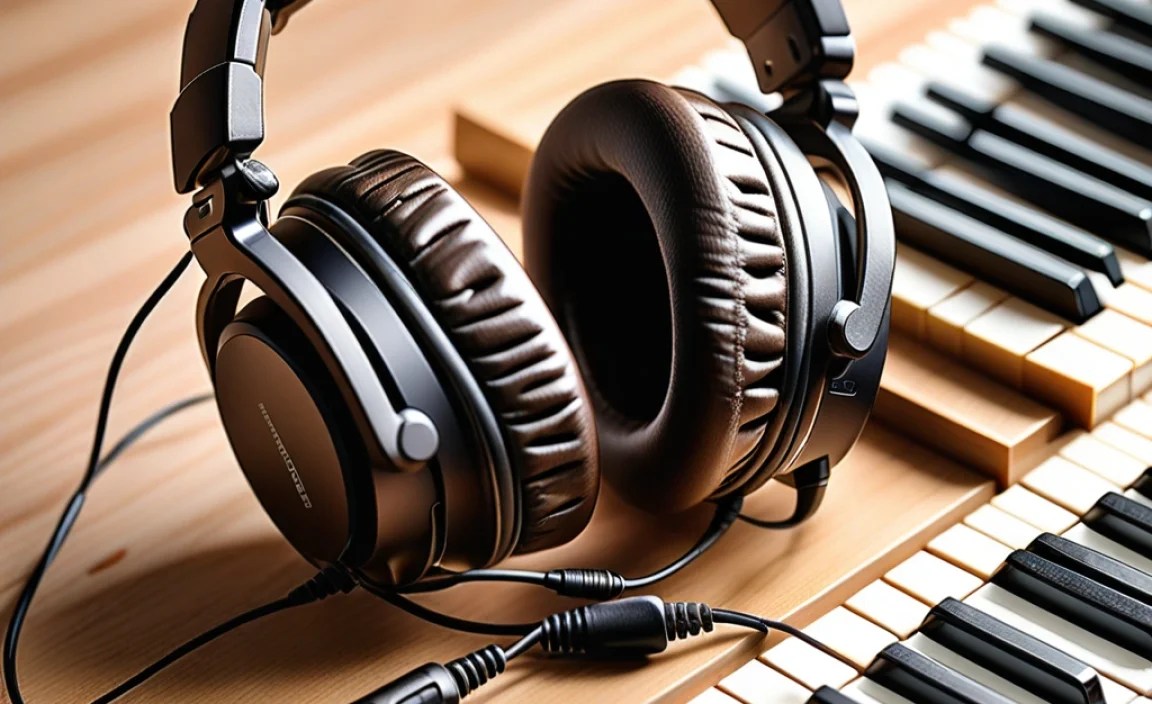
Here’s a rough guide to what you might expect:
| Price Range | Key Features to Expect | Best For |
|---|---|---|
| Under $75 | Decent comfort, adequate isolation, functional sound quality. Might have slightly less refined detail or durability. Often come with 3.5mm plug and a 1/4″ adapter. | Absolute beginners on a tight budget, occasional practice. |
| $75 – $150 | Significantly improved comfort and build quality, much better sound clarity and detail. Good passive isolation. Often durable materials. | Serious beginners and intermediate players. Excellent value for balanced performance. |
| $150 – $300 | Premium comfort, professional-grade sound reproduction with excellent detail and balance. Superior build quality and more robust materials. | Dedicated students, aspiring musicians focusing on practice fidelity. |
Understanding Sound Leakage in Practice
Sound leakage is a really important concept for digital piano players. Here’s why:
- What it is: It’s when sound escapes from the headphone earcups and can be heard by people nearby. It also works in reverse: external sounds can leak into the earcups and disturb your playing.
- Why it matters for pianos: Many digital pianos have a nice, full sound. If you’re playing late at night and your headphones leak sound, you might disturb your family or roommates. Conversely, if you’re trying to focus on a quiet passage and can hear the TV or street noise, your practice suffers.
- Achieving good isolation:
- Choose Closed-Back: As discussed, this is the most effective way to minimize sound leakage. The sealed earcups act as a barrier.
- Ensure a Good Seal: The earcups should create a snug seal around your ears. If you wear glasses, this can sometimes break the seal. Some headphones have softer, thicker pads that can conform better even with glasses.
- Avoid Open-Back: While beautiful for critical listening in private
