
Quick Summary: A headphone with a microphone is a mobile essential, transforming your phone into a communication hub. Essential for clear calls, hands-free convenience, and enhanced productivity, these devices offer a seamless link between your digital life and real-world interactions. Discover why it’s a must-have accessory for everyone.
Headphone with Microphone for Mobile: Why It’s a Proven Essential in Your Digital Life
Hey there, fellow audio adventurers! Edward Cavitt here from headphonehorizon. Today, we’re diving into something that often gets overlooked but makes a massive difference in our daily digital interactions: the humble headphone with a microphone for your mobile device. Think about it. Your smartphone is your connection to work, friends, family, and information. What if you could make those connections crystal clear, totally hands-free, and with a significant boost to your productivity? That’s where the right headset with a mic shines. Forget fumbling with your phone during calls or struggling to hear in noisy environments. Let’s explore why a quality headphone with a built-in microphone isn’t just a convenience – it’s a proven essential for navigating our connected world with ease.
The Everyday Superpowers of a Headphone with Microphone for Mobile

In today’s fast-paced world, our mobile phones are more than just communication devices; they’re our portable offices, entertainment centers, and lifelines. A headphone with a microphone amplifies this capability significantly, offering a range of benefits that make it an indispensable accessory. It’s about making your mobile experience smoother, clearer, and more efficient.
Crystal-Clear Conversations, Anywhere
The most obvious benefit is improved call quality. Standard phone microphones can pick up background noise, wind, and echo, leading to frustrating misunderstandings. A good headset with a microphone is designed to isolate your voice, ensuring the person on the other end hears you clearly, even when you’re on a busy street or in a bustling cafe. This is crucial for both personal and professional calls.
Hands-Free Freedom and Multitasking Mastery
Imagine being able to take a call while simultaneously grocery shopping, typing notes, or even preparing a meal. A headphone with a microphone liberates your hands, allowing you to multitask effectively without sacrificing communication quality. This convenience is a game-changer for busy professionals, students, and anyone who juggles multiple tasks throughout the day.
Enhanced Productivity and Focus
For remote workers and students, the ability to join video conferences or online classes without constantly holding your phone or worrying about background distractions is invaluable. A headset minimizes distractions, helping you stay focused on the speaker and the content. This leads to better comprehension, more productive meetings, and a more engaging learning experience. Resources from institutions like the Norwegian University of Science and Technology (NTNU) highlight the importance of clear communication in professional settings, a goal directly supported by good audio equipment.
Immersive Audio Experiences
Beyond calls, headphones with microphones excel at delivering rich audio for music, podcasts, and videos. Many models offer noise-canceling features or superior sound quality that rivals dedicated audio headphones, providing an all-around superior listening experience. When you’re not on a call, you still get to enjoy your audio content with clarity and depth.
Accessibility and Comfort
For individuals with certain physical limitations, holding a phone can be challenging. A headset provides a comfortable and accessible alternative. Furthermore, the ability to adjust and position the microphone for optimal voice pickup offers a personalized and comfortable communication setup.
Choosing Your Perfect Mobile Headset: Key Features to Consider

Not all headphones with microphones are created equal. To ensure you get the best experience, consider these crucial features when making your purchase:
Microphone Quality and Placement
Look for microphones that offer noise cancellation or voice isolation technology. The placement is also key; boom microphones or those with adjustable arms often provide better voice capture than small, in-line mics. Some advanced headsets feature beamforming microphones that focus on your voice.
Connection Type: Wired vs. Wireless
Wired Options:
- Pros: Generally more affordable, no charging required, no latency (delay), often robust build quality.
- Cons: Can be restrictive due to the cable, requires a headphone jack (or adapter) on your phone, which is becoming less common.
Wireless Options (Bluetooth):
- Pros: Ultimate freedom of movement, clutter-free experience, wide compatibility with modern smartphones.
- Cons: Requires charging, potential for audio latency (though minimal in good quality models), can be more expensive.
Comfort and Fit
You’ll be wearing these for extended periods, so comfort is paramount. Consider:
- Ear Cup Material: Soft padding (memory foam, plush leatherette) is crucial for long-term comfort.
- Adjustable Headband: For a secure and comfortable fit on different head sizes.
- Weight: Lighter headphones are generally more comfortable for extended wear.
- Eartip Options (for earbuds): Multiple sizes ensure a snug, comfortable fit and good passive noise isolation.
Sound Quality
While microphone performance is key, don’t neglect audio playback. Look for headphones that offer balanced sound, clear highs, and decent bass for an enjoyable listening experience whether you’re on a call or enjoying music.
Noise Cancellation (Active vs. Passive)
Passive Noise Cancellation: Achieved through the physical design of the headphones, like well-fitting earcups or eartips, to block out external sound.
Active Noise Cancellation (ANC): Uses microphones and electronics to actively cancel out ambient noise. This is highly effective for noisy environments like airplanes or open-plan offices.
Battery Life (for Wireless)
If you opt for wireless, check the advertised battery life. Aim for headphones that can last you through your typical workday or longest calls. Rapid charging features can also be a lifesaver.
Controls and Features
Convenient on-ear controls for volume, play/pause, answering calls, and activating voice assistants are a big plus. Some models also offer companion apps for EQ adjustments and firmware updates.
Step-by-Step Guide: Connecting and Using Your Headphone with Microphone for Mobile

Getting your new headset up and running is usually straightforward. Here’s a general guide, covering both wired and wireless connections:
Connecting Wired Headphones
- Locate the Headphone Jack: Find the 3.5mm audio jack on your smartphone. Note that many newer phones omit this port, requiring an adapter.
- Plug In: Insert the headphone jack firmly into the port.
- Audio Recognition: Your phone should automatically detect the headphones and switch audio output to them. You’ll typically see a headphone icon in your status bar.
- Test Microphone: Make a test call or use a voice recording app to ensure the microphone is working.
Connecting Wireless (Bluetooth) Headphones
- Turn on Headphones: Ensure your Bluetooth headphones are charged and powered on. Most have a dedicated power button.
- Enter Pairing Mode: Press and hold a specific button (often the power button or a dedicated Bluetooth button) until an indicator light flashes, signaling it’s in pairing mode. Consult your headphone’s manual if unsure.
- Open Bluetooth Settings on Mobile: On your phone, go to Settings > Bluetooth. Make sure Bluetooth is turned on.
- Scan for Devices: Your phone will scan for available Bluetooth devices.
- Select Your Headphones: Find your headphone’s name in the list of available devices and tap to connect. You might need to confirm a pairing request.
- Connection Confirmation: Once connected, your phone will usually show the headphone’s name as “Connected” in the Bluetooth menu, and a Bluetooth icon will appear in your status bar.
- Test Microphone: Make a test call or use a voice recording app to confirm both audio playback and microphone input are functioning correctly.
Optimizing Microphone Performance
Regardless of your connection type, a few tips can ensure your voice is heard loud and clear:
- Positioning is Key: For headphones with boom mics, position the microphone close to your mouth but slightly off to the side to avoid plosives (popping sounds from ‘p’ and ‘b’ sounds).
- Speak Naturally: Avoid shouting or whispering. A normal speaking volume is usually best for most microphones.
- Minimize Background Noise: While noise-canceling mics help, reducing ambient noise as much as possible will always improve clarity.
- Check Phone Settings: Ensure your phone’s audio input settings are set to the external microphone and not the internal phone mic, especially if you experience issues.
Troubleshooting Common Headphone with Microphone Issues
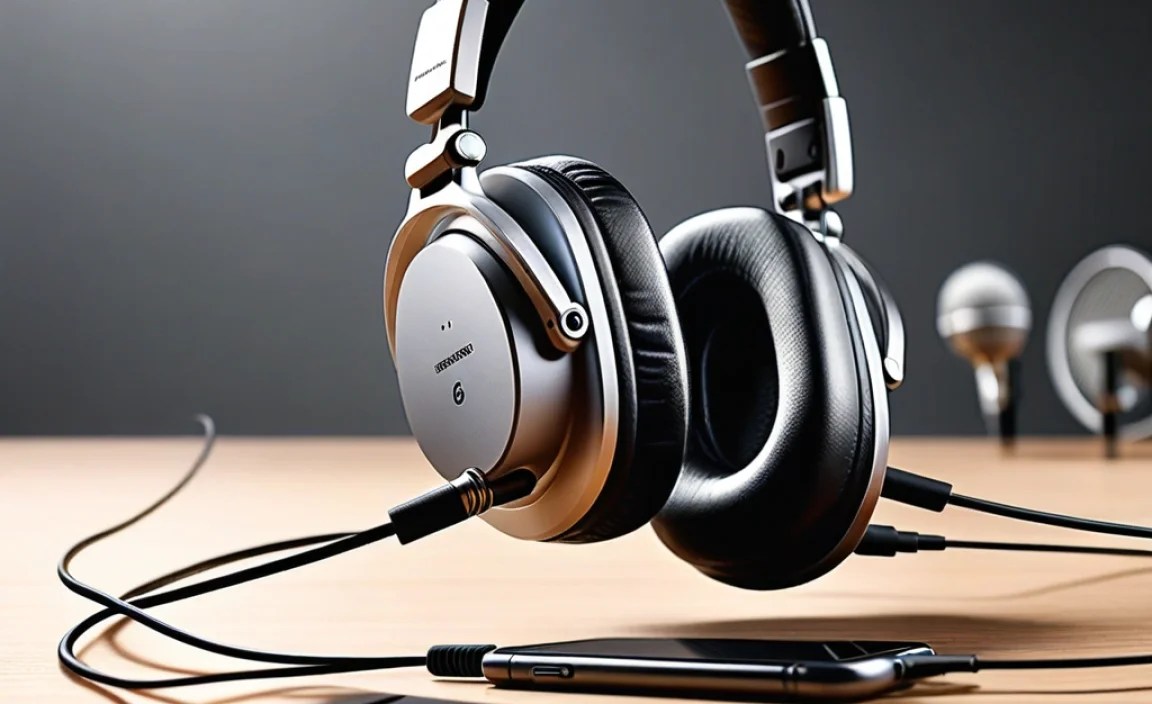
Even the best gadgets can hit a snag now and then. Here are solutions to common problems:
Problem: No Sound from Headphones
- Wired: Ensure the jack is fully plugged in. Try a different port if available (e.g., on a computer). Check if the volume on your phone or the headphone itself is turned down.
- Wireless: Make sure the headphones are charged and powered on. Verify they are connected via Bluetooth in your phone’s settings. Try “forgetting” the device in Bluetooth settings and re-pairing.
Problem: Microphone Not Working
- Wired: Confirm the headphone’s plug is fully inserted. Check your phone’s app permissions to ensure the app you’re using (like a calling app) has access to the microphone. Sometimes, unplugging and replugging fixes this.
- Wireless: Ensure the microphone isn’t muted (some headphones have mute buttons). Check Bluetooth settings to confirm microphone access is granted. Restart both your phone and the headphones.
- General: Test the microphone using a different app. If it works in one app but not another, the issue lies with the app’s settings.
Problem: Poor Audio Quality/Distorted Sound
- Wired: Check the headphone jack for debris or damage. Ensure the cable isn’t frayed.
- Wireless: Ensure you are within Bluetooth range of your phone. Minimize interference from other wireless devices. If using a Bluetooth adapter, ensure it’s updated. Try adjusting EQ settings on your phone or in a headphone app.
- Volume Levels: Overdriving the volume can cause distortion. Try lowering the volume slightly.
Problem: Bluetooth Connection Drops Frequently
- Distance: You might be too far from your phone. Stay within the optimal Bluetooth range (usually around 30 feet or 10 meters).
- Interference: Microwaves, Wi-Fi routers, and other Bluetooth devices can interfere. Try moving away from potential sources of interference.
- Battery: Low battery on either the headphones or the phone can cause unstable connections.
- Software Glitches: Restarting both devices and re-pairing can often resolve persistent connection issues. Check for firmware updates for your headphones.
Headphone with Microphone: Essential for Modern Mobile Use Cases
Let’s look at some specific scenarios where a headphone with a microphone truly proves its worth:
For the Remote Professional
Juggling client calls, team meetings, and focused work from home? A comfortable headset with a clear microphone is non-negotiable. It ensures you sound professional on every call, allows you to take notes simultaneously, and helps you block out household distractions. Features like ANC can be particularly beneficial for maintaining concentration in a busy home environment.
For the Digital Student
Online lectures, virtual study groups, and quick calls to classmates become far more manageable. Clear audio ensures you don’t miss crucial information from professors, and a good microphone means your questions are heard by everyone in virtual discussions. Explore resources on online learning effectiveness, like those found at EDUCAUSE, which often emphasize the role of effective communication tools.
For the Mobile Entertainer
While primarily for calls, many modern headsets offer superb audio fidelity for music, podcasts, and gaming. The microphone allows you to communicate with teammates in multiplayer games or even take quick voice notes on the go without pulling out your phone.
For the On-the-Go Communicator
Navigating public transport, walking outdoors, or running errands? A well-fitting headset with a noise-canceling microphone lets you have clear conversations without shouting over ambient noise, keeping you connected wherever life takes you.
FAQ: Your Questions About Mobile Headsets Answered
Q1: Do I really need a separate headphone with a microphone if my phone already has one?
Yes! While your phone has a built-in mic, headphones with microphones are specifically designed to offer superior voice clarity by reducing background noise and centering the mic closer to your mouth. They also free up your hands for multitasking and provide better personal audio quality.
Q2: How do I know if a wireless headset is compatible with my phone?
Most wireless headphones use Bluetooth technology, which is standard on virtually all modern smartphones (iOS and Android). As long as both your phone and the headset support a common Bluetooth version (e.g., Bluetooth 4.0 or higher), they should be compatible.
Q3: What’s the difference between a headset for calls and one for music?
Headsets optimized for calls often prioritize microphone clarity and noise cancellation for voice. While many also offer good music playback, dedicated music headphones might focus more on audio fidelity, bass response, and soundstage. However, high-quality headsets often strike an excellent balance, serving both purposes well.
Q4: I have trouble finding earbuds that fit well. Does this affect microphone performance?
Absolutely. For earbuds, a proper seal in your ear canal is crucial not only for comfort and passive noise isolation but also for ensuring the microphone (if it’s an earbud-style mic) is correctly positioned to pick up your voice clearly. Most good earbuds come with multiple eartip sizes to help you find the perfect fit.
Q5: Are expensive headphones with microphones worth the investment?
It depends on your needs. For casual users, a budget-friendly option might suffice. However, if you rely heavily on your phone for work calls, virtual meetings, or need to block out significant background noise, investing in a higher-quality headset with features like ANC, superior microphone technology, and enhanced comfort can significantly improve your experience and productivity, making it well worth the cost.
Q6: How do I clean my headphone with a microphone?
For wired jacks, use a dry cotton swab or compressed air to gently clean debris. For earpads and headbands, use a damp cloth with mild soap and water, then dry thoroughly. Avoid submerging any electronic components. For ear tips, remove them and wash with mild soap and water, ensuring they are completely dry before reattaching. Always refer to the manufacturer’s cleaning instructions.
Conclusion: Elevate Your Mobile Experience Today
So there you have it! The headphone with a microphone for mobile is far more than just an accessory; it’s a powerful tool that enhances communication, boosts productivity, and enriches your overall mobile experience. Whether you’re a remote professional dialing into important meetings, a student navigating online classes, or simply someone who values clear conversations on the go, the right headset makes an undeniable difference. By understanding the key features, connection methods, and a few troubleshooting tips, you’re well-equipped to choose and use a mobile headset that truly serves you. Don’t underestimate the power of clear audio and hands-free convenience – it’s time to make a headphone with a microphone your mobile essential.
