
Quick Summary: A headphone preamp for your turntable is a simple device that boosts your turntable’s weak signal to a level your headphones can use. It’s essential for hearing your vinyl clearly and can significantly improve sound quality, making it an affordable upgrade for any vinyl enthusiast looking to enjoy their records with headphones.
Headphone Preamp for Turntable: Your Essential Guide to Better Vinyl Sound

Welcome to another exciting dive into the world of audio! If you’re a vinyl lover who enjoys the warm, rich sound of your turntable, you might have noticed something a little… quiet when you plug your headphones directly in.
That’s a common hiccup, and thankfully, there’s an easy fix: a headphone preamp for your turntable. Think of it as a translator and amplifier, taking the faint signal from your record player and making it loud and clear enough for your headphones to reproduce faithfully. This guide will walk you through why you need one, how they work, and how to choose the perfect one to elevate your listening experience.
Why Your Turntable Needs a Little Help
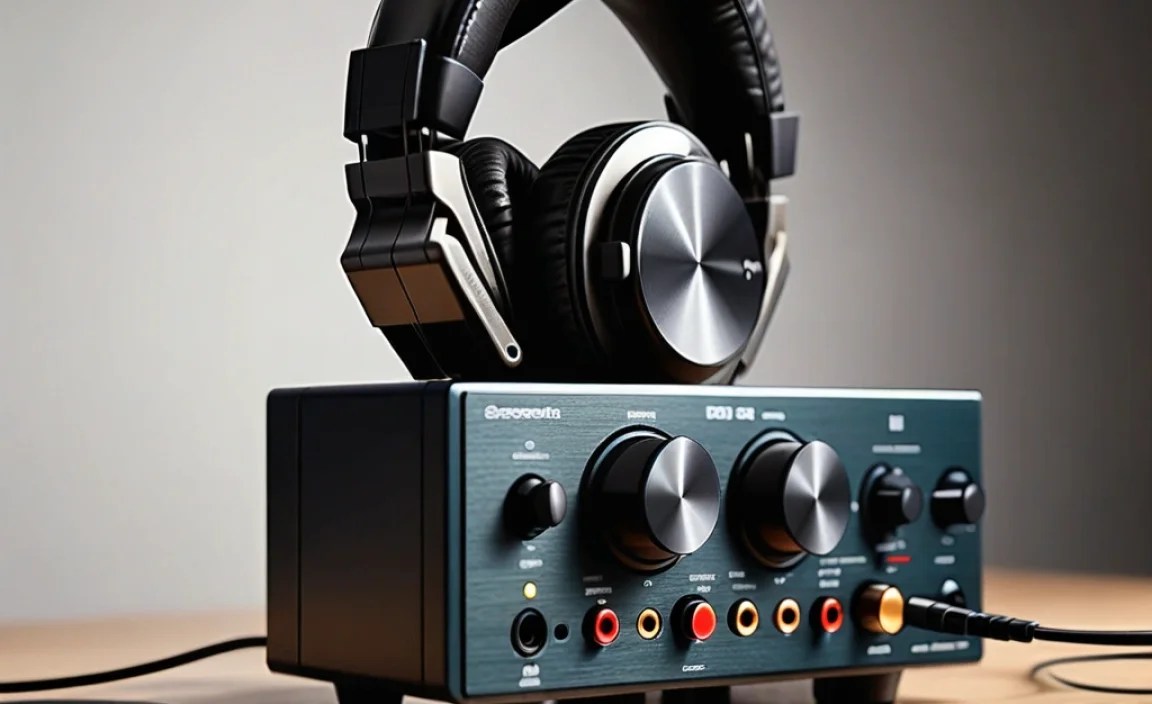
So, why can’t your headphones just plug straight into your turntable? It all comes down to signal levels. Turntables produce a very low-level signal called a “phono signal.” This signal is designed to be amplified much, much more than a standard “line-level” signal that most amplifiers and active speakers expect. Headphones, on the other hand, require a stronger signal to produce audible sound at a comfortable listening volume.
When you try to connect your turntable directly to your headphones (assuming you could even do that physically, which is usually not the case without an adapter), the volume would be incredibly low, and the sound quality would likely be poor, lacking dynamics and clarity. This is where the magic of a phono preamp, often combined with a headphone amplifier, comes in.
What Exactly is a Headphone Preamp for a Turntable?

A headphone preamp for a turntable, more accurately termed a phono preamp with a headphone output, serves two crucial functions:
- Phono Pre-amplification: This is the primary job. It takes the weak phono signal from your turntable’s cartridge and amplifies it to a standard line-level signal. This amplification isn’t just about making it louder; it also applies RIAA equalization.
- Headphone Amplification: Once the signal is at line level, a headphone amplifier section within the same unit takes this signal and boosts it further to the appropriate level needed to drive your headphones at a listening volume.
Without this device, the nuances and depth of your vinyl recordings would likely be lost, leaving you with a dissatisfyingly quiet and thin sound.
The Science Behind the Sound: RIAA Equalization
You might wonder why phono preamps are so specific. It’s largely due to RIAA equalization. When vinyl records are cut, the bass frequencies are attenuated (reduced) and the treble frequencies are boosted. This is done to fit more music onto the record and to reduce surface noise. The phono preamp’s job is to reverse this process, boosting the bass and cutting the treble back to their original levels. This correction is essential for accurate sound reproduction and is why a standard amplifier won’t work correctly with a turntable’s raw output.
According to the Audio Engineering Society, understanding these equalization curves is fundamental to appreciating how audio mastering and playback systems interact. For more on the technical aspects of vinyl playback, resources like their publications can offer deeper insights.
Types of Setups Requiring a Headphone Preamp

Not all turntables and audio setups are the same. Understanding your current configuration will help you determine exactly what kind of preamp you need.
1. Turntable with No Built-in Preamp
This is the most common scenario for audiophile-grade turntables. They output a pure phono signal. In this case, you absolutely need an external phono preamp with a headphone output. The signal flow would be:
Turntable -> Phono Preamp (with headphone out) -> Headphones
2. Turntable with Built-in Preamp (Line-Out)
Many modern, more budget-friendly turntables come with a built-in phono preamp and offer a switchable output. You can often set it to “Phono” (outputting a weak phono signal) or “Line” (outputting a stronger line-level signal). If your turntable has a built-in preamp and outputs a line-level signal:
- If it has a dedicated headphone jack: You can plug your headphones directly into the turntable. The quality might be basic, but it will work.
- If it does not have a headphone jack, but outputs line-level: You’ll need a separate headphone amplifier. The signal flow would be:Turntable (Line Out) -> Headphone Amplifier -> Headphones
- If you’re unhappy with the sound quality of the built-in preamp: You can often bypass it by setting your turntable to “Phono” output and using an external phono preamp with a headphone output.Turntable (Phono Out) -> External Phono Preamp (with headphone out) -> Headphones
3. Turntable Connected to an AV Receiver or Integrated Amplifier with a “Phono” Input
If your receiver or amplifier has a dedicated “Phono” input, it means it has a built-in phono preamp. You would connect your turntable directly to this input. If this receiver/amplifier also has a headphone jack, you can plug your headphones directly into it. The receiver/amplifier handles the phono pre-amplification, and its own headphone amplifier drives your headphones.
Turntable -> Receiver/Amplifier (Phono In) -> Receiver/Amplifier (Headphone Out) -> Headphones
In this setup, you generally don’t need a separate external phono preamp unless you’re looking to upgrade the sound quality significantly beyond what the receiver’s built-in preamp offers.
Key Features to Look for in a Headphone Preamp for Your Turntable

When browsing for a headphone preamp for your turntable, consider these important features:
1. Phono Input Compatibility
Ensure the preamp is designed for turntables. It needs to accept the low-level phono signal and have the correct RIAA equalization curve. Most dedicated phono preamps will also have a grounding screw to connect the ground wire from your turntable, which helps eliminate humming noise.
2. Headphone Output Quality
This is crucial! A good headphone output will be able to drive a wide range of headphones, from sensitive in-ear monitors to demanding over-ear headphones that require more power. Look for specifications like output impedance and power output (though these can get technical, reviews often provide practical insights).
3. Connectivity Options
- Analog Inputs/Outputs: Most will have RCA inputs for your turntable and RCA outputs if you want to connect to other audio gear (like speakers or an amplifier).
- USB Output: Some units offer a USB output, allowing you to digitize your vinyl or connect to a computer for recording or playback.
- Bypass Switch: A useful feature if you have a turntable with a built-in preamp. It lets you choose whether to use the turntable’s internal preamp or the external one.
4. Power Supply
A clean and stable power supply can significantly impact sound quality. Some preamps use external wall-wart adapters, while others have more robust internal or linear power supplies. For budget-friendly options, a good quality adapter is usually sufficient.
5. Build Quality and Design
While sound is paramount, the physical unit should feel sturdy and well-made. Consider its size and how it will fit into your setup.
How to Connect Your Headphone Preamp to Your Turntable
Connecting everything is usually straightforward. Follow these steps:
- Power Off Everything: Before making any connections, ensure your turntable, preamp, and any other connected audio equipment are turned off and unplugged. This protects your gear from electrical surges.
- Connect Turntable to Preamp:
- Locate the RCA cables coming from your turntable (usually red and white plugs).
- Connect these to the “Phono In” RCA jacks on your preamp. Match the colors (red to red, white to white) if possible.
- Find the thin ground wire (often with a spade connector) extending from your turntable. Connect this to the grounding terminal (usually marked “GND” or with a ground symbol) on the preamp. This step is very important for preventing hum.
- Connect Preamp to Headphones:
- Plug your headphones into the headphone jack on the preamp.
- Ensure your headphone cable is fully inserted.
- Power On Sequence:
- Turn on your preamp first.
- Then, turn on your turntable.
- Finally, turn on any other audio equipment if applicable.
- Adjust Volume:
- Start with the volume knob on the preamp turned all the way down.
- Gently play a record.
- Gradually increase the volume on the preamp to a comfortable listening level.
Choosing the Right Preamp: Budget and Features
The world of phono preamps and headphone amps ranges from budget-friendly to high-end. Here’s a general breakdown:
Entry-Level Options (Under $100-$150)
These are perfect for beginners or those on a tight budget. They provide the essential functionality of phono pre-amplification and basic headphone amplification. Sound quality will be a significant upgrade from direct connection (if possible) or a turntable’s basic built-in preamp.
Pros: Affordable, simple to use, noticeable sound improvement.
Cons: May lack advanced features, sound quality can be basic, might struggle with demanding headphones.
Mid-Range Options ($150 – $500)
In this bracket, you’ll find units offering better build quality, more refined sound, and potentially additional features like USB output, adjustable gain, or multiple phono inputs. The headphone amplification is generally more robust.
Pros: Better sound fidelity, enhanced build quality, more features, capable of driving a wider range of headphones.
Cons: Higher cost, might still be out of reach for some beginners.
High-End Options ($500+)
These units focus on the absolute best in sound reproduction, often featuring premium components, superior power supplies, and specialized circuitry. They are for the serious audiophile looking for the ultimate vinyl listening experience through headphones.
Pros: Exceptional sound quality, superior componentry, drives even the most demanding headphones with ease.
Cons: Significant investment, overkill for casual listeners.
Popular Models to Consider (Examples)
While I can’t recommend specific products as they change rapidly, here are types of devices and brands known for good performance in these categories:
| Category | Typical Price Range | Key Features & Considerations | Example Brands/Types |
|---|---|---|---|
| Entry-Level | $50 – $150 | Basic phono preamplification, headphone jack, RCA outs. Simple and effective. | ART DJPRE II, UCA222 (behringer – often used with external phono pre), some all-in-one USB turntables’ external units. |
| Mid-Range | $150 – $500 | Improved sound, better headphone drive, USB options, adjustable gain sometimes. | Schiit Magni/Modi Stack (separate units but popular), Cambridge Audio CP1, NAD PP 2e, Pluto 2 (Audio-Technica). |
| High-End | $500+ | Premium components, superior power, exceptional detail and dynamics, often dedicated headphone amps. | Rega Fono MM, Pro-Ject Phono Box S2/DS2, Little Dot (headphone amp focus, but can pair with phono preamp). |
When researching, look for reviews that specifically mention headphone performance and its synergy with different types of headphones. Websites like Stereophile and What Hi-Fi? often have in-depth reviews of audio components.
Troubleshooting Common Hum and Noise Issues
Turntable setups can sometimes be prone to hum or noise. Here are a few common issues and their solutions:
- Humming:
- No Ground Connection: Ensure the ground wire from your turntable is securely connected to the ground terminal on your preamp.
- Ground Loop: This happens when there are multiple paths to ground. Try unplugging other audio components one by one to see if the hum disappears. Sometimes, a dedicated “ground loop isolator” can help, though they can sometimes affect sound quality.
- Proximity to Power Cables: Keep turntable tonearm cables and RCA cables away from power cords, as they can pick up interference.
- Static/Crackling:
- Dirty Stylus or Records: Clean your stylus regularly and clean your records. Static buildup on records can also be reduced with anti-static record cleaning brushes or inner sleeves.
- Loose Connections: Double-check all RCA and ground connections to ensure they are firm.
- Low Volume:
- Incorrect Input: Make sure your turntable is set to “Phono Out” (if it has that option) and not “Line Out” when connecting to a phono preamp.
- Preamp Set to Low: Ensure the volume on the preamp is turned up sufficiently.
A well-maintained turntable and a properly connected preamp will provide a quiet and enjoyable listening experience.
Frequently Asked Questions (FAQs)
Q1: Do I need a headphone amp if my turntable has a built-in preamp?
If your turntable has a built-in preamp and a headphone jack, you can plug your headphones directly into it. However, the quality of the built-in preamp and its headphone amplifier might be basic. If you’re looking for better sound or your turntable doesn’t have a headphone jack but outputs line-level, you might still benefit from an external headphone amplifier or a phono preamp with a headphone output.
Q2: What’s the difference between a phono preamp and a headphone amp?
A phono preamp specifically boosts the very low-level, RIAA-equalized signal from a turntable’s cartridge to line level. A headphone amp takes a line-level signal and amplifies it further to drive headphones. A “headphone preamp for a turntable” is usually a single unit that combines both functions: a phono preamp to process the turntable signal and a headphone amp to drive your headphones from that processed signal.
Q3: Can I use my computer’s sound card as a phono preamp?
No, you generally cannot use a standard computer sound card directly as a phono preamp. Computer sound cards expect line-level input, and turntable output is phono-level. Furthermore, computer sound cards lack the necessary RIAA equalization. You would need an external phono preamp (with or without a headphone output) to correctly process the turntable’s signal before feeding it to your computer’s line-in or microphone jack.
Q4: Will a headphone preamp improve the sound of my records through speakers?
If the phono preamp section of the unit is superior to your existing setup (e.g., a built-in preamp on your turntable or receiver), then yes, it can. Many phono preamps also have RCA outputs that you can connect to your amplifier or powered speakers, thus using its superior circuitry for your entire audio chain. However, the component’s primary function for headphone users is to enhance the signal for headphone listening.
Q5: How important is the ground wire?
The ground wire is crucial for preventing a persistent 50/60 Hz hum, often referred to as a “ground loop” or “earth hum.” This hum occurs when there’s an electrical potential difference between your turntable and the audio system. Connecting the ground wire from the turntable to the designated ground terminal on your phono preamp establishes a common ground point and usually eliminates this hum.
Q6: Can I use any headphones with a turntable headphone preamp?
Most headphone preamps designed for turntables will come with a standard 1/4-inch (6.35mm) or 1/8
