
Quick summary: High-quality, comfortable, and reliable headphones are crucial for interpreters to accurately capture nuances in speech and deliver clear translations. Wired, circumaural headphones with excellent noise isolation and a comfortable fit are generally recommended for professional interpreting environments.
Headphones for Interpreters: Your Essential Gear for Crystal Clear Communication

Hello there! Edward Cavitt here from headphonehorizon, your friendly guide to all things audio. If you’re an interpreter, you know that every word, every inflection, matters. In your line of work, clear communication isn’t just important; it’s your entire job! And the right pair of headphones can be your most powerful tool, transforming fuzzy audio into the precise sounds you need to do your magic. But with so many options out there, how do you choose the best headphones for interpreting? That’s where I come in. We’ll break down what makes a great interpreter headphone, explore key features, and help you find a pair that will become your trusted companion in delivering flawless interpretations.
Why the Right Headphones are Non-Negotiable for Interpreters

Imagine trying to translate a complex negotiation or a critical medical consultation when you can barely make out what’s being said. Frustrating, right? For interpreters, this isn’t just an inconvenience; it can lead to misunderstandings, errors, and ultimately, a compromised service. The right headphones act as your auditory shield and amplifier, allowing you to:
- Isolate and Focus: Block out distracting background noise common in conference rooms, event venues, or even busy offices.
- Hear Every Nuance: Accurately pick up subtle tones, emphasis, and the natural rhythm of speech, which are vital for conveying the full meaning.
- Reduce Ear Fatigue: Comfortable, well-fitting headphones designed for long wear can prevent discomfort and strain during extended interpreting sessions.
- Deliver Professional Quality: Ensure your voice (if you’re also using a microphone) is transmitted clearly to your audience, and that you can hear your source speaker without compromise.
In the world of professional interpreting, your headphones aren’t just an accessory; they are an extension of your sensory input, directly impacting your performance and professionalism. According to the American Translators Association (ATA), professional development often includes leveraging technology to enhance interpreting quality. While they don’t mandate specific headphones, the emphasis on accuracy and clarity underscores the importance of foundational tools like them.
Key Features to Look For in Interpreter Headphones

When on the hunt for the perfect interpreter headphones, a few key features stand out. These aren’t just buzzwords; they are critical components that will make a tangible difference in your daily work.
1. Superior Noise Isolation
This is arguably the most critical feature. Interpreters often work in environments with ambient noise – chatter, air conditioning, other presentations. Headphones that offer excellent passive noise isolation (physically blocking sound) or active noise cancellation (ANC, electronically reducing sound) are invaluable. For interpreting, passive isolation is often preferred as ANC can sometimes subtly alter sound frequencies, which might affect vocal clarity for some. Over-ear, closed-back designs typically provide the best passive isolation.
2. Uncompromised Sound Quality and Accuracy
You need to hear the original speech as it is, without artificial enhancements or coloration. Look for headphones praised for their neutral sound profile. This means they reproduce sound as faithfully as possible, without boosting bass or treble excessively. This helps you distinguish between similar-sounding words and catch the subtle nuances of the speaker’s delivery. A wide frequency response is also beneficial, ensuring you can hear the full range of human speech.
3. Comfortable and Secure Fit for Long Sessions
Interpreting gigs can last for hours. Discomfort from ill-fitting headphones can be a major distraction and lead to fatigue. Look for:
- Circumaural (Over-Ear) Design: These cups surround your entire ear, distributing pressure more evenly and generally offering better isolation.
- Plush, Breathable Earcups: Materials like memory foam and velour can enhance comfort during long periods.
- Adjustable, Padded Headband: Allows you to customize the fit and prevents pressure points on your head.
- Lightweight Construction: Less weight means less strain over extended use.
4. Durability and Build Quality
Professional gear needs to withstand regular use. Robust materials, sturdy hinges, and a well-constructed cable (if wired) are signs of a durable product. Interpreters are often on the move, so the ability to withstand being packed and unpacked is also a plus.
5. Wired vs. Wireless Considerations
While wireless technology has advanced significantly, many professional interpreters still prefer wired headphones for several reasons:
- Reliability: No concerns about battery life dying mid-session or wireless interference.
- Latency: Wired connections have virtually zero audio delay, which is crucial for split-second interpretation.
- Simplicity: Plug and play means no pairing issues or software glitches.
However, if you opt for wireless, ensure it uses a high-quality codec (like aptX HD or LDAC) and has low latency modes. For remote interpreting, a reliable wireless connection with a good microphone can be a lifesaver.
6. Detachable Cable
A detachable cable is a godsend. If the cable gets damaged (a common point of failure), you can simply replace it without needing to buy a whole new set of headphones. This significantly extends the lifespan of your gear.
Recommended Headphone Types for Interpreters
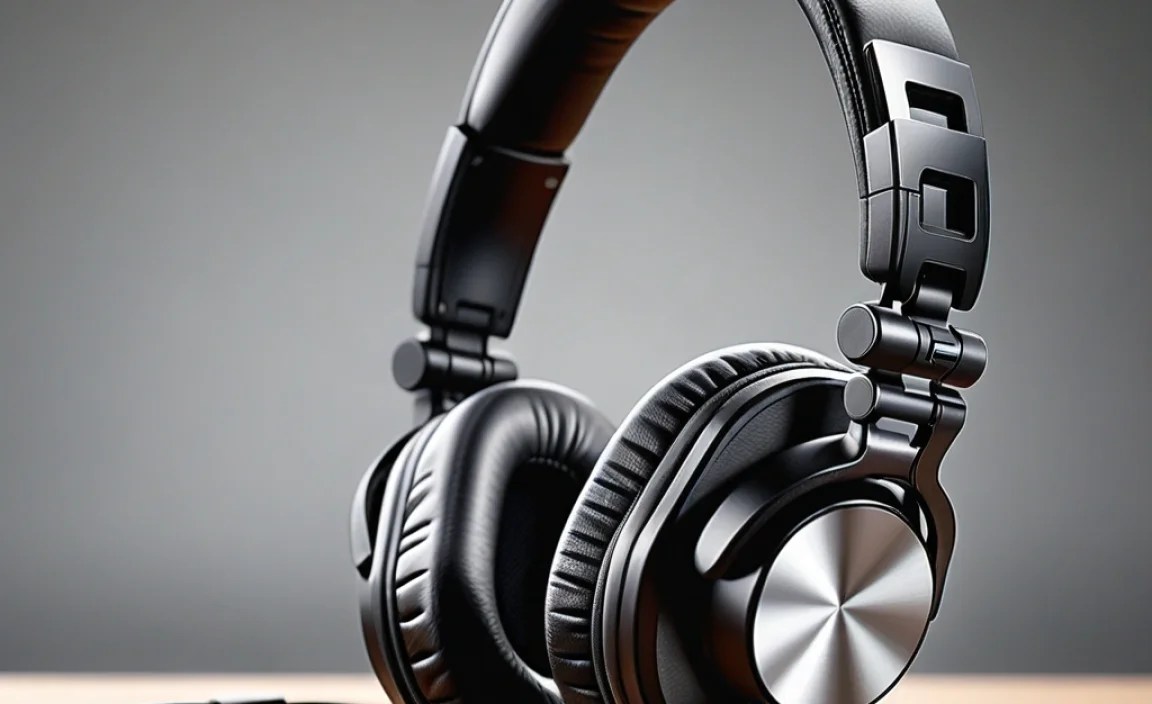
Based on these essential features, certain headphone categories rise to the top for professional interpreters. Here’s a breakdown:
Closed-Back, Over-Ear Headphones
This is the gold standard for most interpreting scenarios. Here’s why:
- Excellent Sound Isolation: The closed earcups create a seal around your ears, physically blocking out external noise. This is crucial for focusing on the source audio.
- Prevents Sound Leakage: In a booth or a quiet room, closed-back headphones prevent your audio from leaking out, which can be distracting to others and unprofessional.
- Clear, Focused Audio: The design tends to create a more intimate listening experience, allowing you to pick up finer details in speech.
Pros: Superior noise isolation, no sound leakage, great for loud environments.
Cons: Can sometimes feel warmer on the ears during very long sessions compared to open-back designs.
Dynamic vs. Planar Magnetic (A Deeper Dive for the Curious)
While most interpreters will find a high-quality dynamic driver headphone more than sufficient, understanding the driver technology can be helpful. Dynamic drivers are the most common and generally more affordable, offering a wide range of performance. Planar magnetic headphones, while often more expensive, are praised for their incredible detail, speed, and accuracy, which can be beneficial for discerning subtle speech patterns. However, they are often open-back, negating the isolation benefit.
Open-Back Headphones
While generally not recommended for professional, in-person interpreting due to their sound leakage and poor isolation, open-back headphones offer a more spacious and natural soundstage. They can be suitable for highly controlled environments where isolation is not an issue, or for specific post-editing or transcription work where the primary goal is an immersive listening experience without external distractions. They also tend to be more comfortable and less warm.
Pros: Natural soundstage, excellent comfort, less ear fatigue.
Cons: Poor sound isolation, sound leakage, not suitable for noisy environments or professional booths.
Top Features to Consider in Your Search

Let’s get a bit more granular. When you’re browsing, keep these specific features in mind:
| Feature | Importance for Interpreters | What to Look For |
|---|---|---|
| Driver Size & Type | High-quality drivers are key for accurate sound reproduction. Larger dynamic drivers or well-tuned smaller drivers generally perform well. | Look for detailed reviews mentioning sonic accuracy and clarity of vocals. Standard dynamic drivers are usually excellent. |
| Impedance (Ohms) | Lower impedance headphones are easier to drive (don’t need a powerful source). Higher impedance can offer better sound quality but may require an amplifier. | For direct connection to laptops, mixers, or standard audio interfaces, aim for 32-80 Ohms. For dedicated audio setups, 100+ Ohms can be great but check compatibility. |
| Sensitivity (dB/mW) | Higher sensitivity means the headphones produce more volume with less power. Important if you’re not using an amplifier. | Aim for headphones with sensitivity ratings above 95 dB/mW. |
| Frequency Response | A wide range ensures all frequencies of speech are captured accurately. For human voice, 20Hz – 20kHz is the general range, but detail within this is key. | Look for a “flat” or “neutral” frequency response curve in reviews. Avoid exaggerated bass or treble. |
| Earcup Material | Affects comfort, seal, and sound. | Breathable materials like velour or well-ventilated protein leather, memory foam padding for comfort. |
| Cable Length & Type | Needs to be long enough for movement but not unwieldy. Detachable is a huge plus. | A coiled cable (around 3m when extended) or a straight cable (around 2-3m) are common. Ensure it’s durable and preferably detachable. |
Step-by-Step Guide: Choosing Your Interpreter Headphones
Ready to find your perfect pair? Let’s break it down into manageable steps.
Step 1: Assess Your Primary Work Environment
Where will you be using these headphones most often?
- Busy conference rooms/events? Prioritize maximum noise isolation.
- Dedicated interpreting booths? Isolation is still key, but you might have a bit more leeway.
- Remote interpreting (online)? Focus on clarity, comfort, and potentially a good built-in microphone if it’s a headset.
This will guide you towards closed-back, over-ear designs for most situations.
Step 2: Set Your Budget
Quality audio gear can range from very affordable to quite expensive. For professional interpreters, investing in mid-range to high-end headphones is usually worthwhile. Think of it as an investment in your career.
- Entry-Level Professional: $100 – $200 (Look for well-regarded studio monitor headphones).
- Mid-Range Professional: $200 – $400 (Excellent balance of features, comfort, and sound quality).
- High-End Professional: $400+ (Top-tier clarity, comfort, and durability for demanding environments).
Remember, durability means they’ll last longer, potentially saving you money in the long run.
Step 3: Research Reputable Brands and Models
Certain brands have a long-standing reputation for producing excellent audio equipment suitable for professional use. Some popular choices that often come up in discussions for accurate sound and comfort include:
- Sennheiser: Known for their HD series (like the HD 280 Pro).
- Audio-Technica: ATH series (e.g., ATH-M50x).
- Beyerdynamic: DT series (e.g., DT 770 Pro).
- Sony: MDR series (e.g., MDR-7506, which is a studio standard).
Look for reviews specifically from audio professionals, broadcasters, and yes, fellow interpreters if possible!
Step 4: Prioritize Comfort
Don’t underestimate this! Try to find reviews that discuss long-term wearability. Pay attention to:
- Earcup padding material (memory foam is often a good bet).
- Clamping force (how tightly they grip your head – too tight is bad, too loose is also bad).
- Weight of the headphones.
If possible, try them on in a store, but be sure to check the return policy if ordering online.
Step 5: Check Connectivity and Cable
For most interpreting, a standard 3.5mm or 1/4 inch jack is what you’ll need. As mentioned, a detachable cable adds significant value and longevity.
Consider the length. A 3-meter (approx. 10 feet) cable often strikes a good balance, offering enough slack for movement without becoming a tripping hazard.
Step 6: Read Reviews and Watch Video Tests
Look for detailed reviews on professional audio sites or YouTube channels that focus on technical analysis and user experience. Pay attention to:
- Sound signature (neutrality, bass, mids, treble).
- Build quality and materials.
- Comfort during extended use.
- Isolation effectiveness.
Step 7: Make Your Purchase and Test Them Out
Once you’ve narrowed down your choices, make the purchase! When they arrive, dedicate some time to test them thoroughly.
- Listen to a variety of speech samples (podcasts, audiobooks, lectures).
- Wear them for an extended period (at least an hour) to gauge comfort.
- Simulate an interpreting environment if possible – play subtle background noise and see how well you can still focus on the primary audio source.
- Check if the headphones are compatible with all your usual devices.
Headphones as Part of Your Interpreter Toolkit
Think of your headphones as a critical piece of equipment, much like a surgeon’s scalpel or a writer’s keyboard. Maintaining them is also key to their longevity and performance.
Basic Maintenance for Longevity
To keep your interpreter headphones in top condition:
- Clean Earcups Regularly: Wipe them down with a soft, damp cloth. For deeper cleaning, check manufacturer guidelines.
- Store Safely: Use a protective case or original box when transporting them to prevent damage.
- Manage the Cable: Avoid tightly wrapping the cable; coil it loosely. Don’t stress the connection points.
- Keep Dry: Avoid exposure to excessive moisture or extreme temperatures.
Troubleshooting Common Issues
Even the best gear can have hiccups. Here are a few common fixes:
- No Sound from One Side: Often a loose cable connection at the headphone cup or the source. Unplug and replug firmly. If it’s a detachable cable, try a different compatible cable if possible.
- Crackling or Static: Can be a damaged cable, a dirty jack plug, or interference (if wireless). Clean the jack gently with a dry cloth or isopropyl alcohol on a swab. Inspect the cable for kinks or damage.
- Low Volume: Ensure the volume on your device is turned up and that the headphones aren’t unusually low sensitivity. Check if they are compatible with your source’s output power.
For more complex issue
