
Quick Summary: Get the best metal sound from your headphones by focusing on strong bass, clear mids for vocals and guitars, and crisp highs for cymbals. Look for headphones with good detail retrieval and a wide soundstage. This guide breaks down what matters most for a powerful, immersive metal listening experience.
Headphones for Metal: Essential Sound for the True Fan
Hey everyone, Edward Cavitt here from headphonehorizon. If you’re anything like me, metal isn’t just music – it’s an experience. The raw energy, the intricate guitar solos, the thunderous drums, and the powerful vocals all combine to create something truly special. But to truly capture that sonic intensity, you need the right gear. Using standard earbuds or generic headphones can leave you missing out on the nuances that make metal so compelling. We’re talking about that guttural growl, the razor-sharp guitar riff, and the cymbal crash that hits you right in the chest. Finding the right headphones can transform your listening from just hearing the music to feeling it. Let’s dive into what makes a pair of headphones perfect for metal, and how to find yours without getting lost in confusing jargon.
Why Metal Demands Specific Headphones

Metal music is incredibly dynamic. It’s a genre that thrives on contrast and precision. You’ve got lightning-fast double bass drumming, highly distorted guitars playing complex riffs, soaring vocals (or guttural growls), and intricate basslines. All these elements need to be reproduced faithfully to get the full impact. Generic headphones might make everything sound a bit muddy, or they might overemphasize certain frequencies, losing the clarity and aggression that metal fans crave.
Think of it this way: a thrash metal track isn’t just noise; it’s a carefully orchestrated barrage of sound. The kick drums need to punch with authority, the guitars need to cut through with their distortion without sounding harsh, the bass needs to provide a solid foundation without becoming a boomy mess, and the vocals need to be intelligible, whether they’re sung or screamed. High-frequency details like cymbal work are also crucial for conveying speed and intensity.
When choosing headphones for metal, we’re looking for a few key characteristics:
- Powerful and Defined Bass: The low-end in metal provides the foundation and the sheer weight of the music. You want bass that is impactful and has a good sense of texture, not just a vague rumble.
- Clear and Present Midrange: This is where guitars and vocals live. For metal, you need the mids to be forward enough to hear the grit of distorted guitars and the power of the vocals without them being drowned out by the bass or harshness in the treble.
- Sparkling and Detailed Treble: This range brings life to cymbals, hi-hats, and the higher harmonics of guitars and vocals. It adds critical air and detail, conveying speed and energy. You want it to be clear and energetic, not piercing or sibilant.
- Good Separation and Soundstage: Metal can be dense. Headphones that offer good separation allow you to distinguish individual instruments, and a decent soundstage gives the music a sense of space, making it feel less claustrophobic.
Understanding Key Headphone Features for Metal
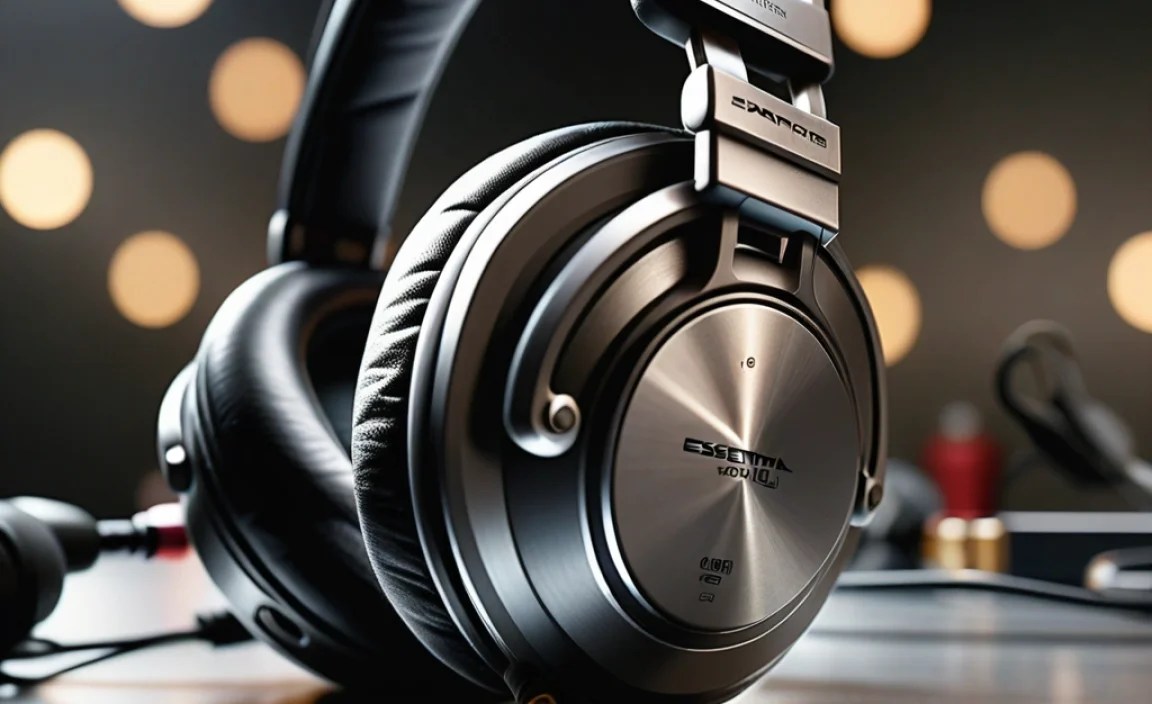
Before we get into specific recommendations, let’s break down some important terms. Don’t worry, we’ll keep it simple!
Frequency Response: What It Means for Metal
Frequency response describes the range of sound frequencies a headphone can reproduce, typically measured in Hertz (Hz). It’s often shown on a graph. For metal, you’re looking for headphones that can handle a wide range of frequencies well. While a flat response is often sought after for accuracy, metal often benefits from a slight boost in the bass and treble to emphasize its impactful and energetic nature.
- Low Frequencies (Bass): Aim for a headphone that reproduces frequencies from around 20Hz to 200Hz with authority. This is where the kick drums and bass guitars reside.
- Mid Frequencies (Mids): This is roughly 200Hz to 4kHz. It’s crucial for guitars and vocals. Clear mids mean you won’t miss that intricate guitar solo or the lyrical content.
- High Frequencies (Treble): From 4kHz upwards, this range brings clarity. Good treble reproduction will make cymbals shimmer and add air to the overall sound.
It’s not just about how wide the frequency response is, but how evenly it reproduces those frequencies. Some headphones might have a boost in the bass that can overpower the mids, while others might have a treble that’s too sharp and fatiguing for longer listening sessions.
Impedance and Sensitivity: Powering Your Cans
These two specs are important for understanding how loud your headphones can get and what kind of device you’ll need to drive them. You don’t need to be an electrical engineer to grasp the basics!
- Impedance (Ohms – Ω): This measures how much resistance a headphone has to electrical current.
- Low Impedance (under 50 Ω): These headphones are easier to drive and will generally get loud enough when plugged directly into your phone, laptop, or portable music player. Most consumer headphones fall into this category.
- High Impedance (50 Ω and above): These headphones require more power to reach their full potential. You might need a dedicated headphone amplifier to get sufficient volume and optimal sound quality, especially if you listen at higher volumes or have a source with a weak audio output. For metal, where impact is key, higher impedance models can offer better dynamics and control if you have the power to drive them.
- Sensitivity (dB/mW or dB/V): This tells you how loud a headphone will get with a specific amount of power. Higher sensitivity means the headphones will get louder with less power. Headphones with lower sensitivity (often higher impedance models) might require more power from your source.
For most beginner users, sticking with lower impedance headphones (under 50 Ω) is the easiest route, as they’ll work fine with virtually any device. If you’re considering higher impedance headphones, you might also need to consider an amplifier.
Open-Back vs. Closed-Back: Sound Leakage and Immersion
This is a crucial choice that affects both the sound you hear and what others hear. It relates to the physical design of the earcups.
- Closed-Back Headphones: These have solid earcups that block out external noise and prevent sound from leaking out.
- Pros for Metal: Great for noisy environments (commuting, office), provide better bass isolation and impact, and prevent your music from disturbing others. The isolation can help you feel more “in” the mix.
- Cons: Can sometimes sound a bit “boxy” or less spacious than open-back designs.
- Open-Back Headphones: These have vents or grilles on the earcups, allowing air and sound to pass through.
- Pros for Metal: Generally offer a more natural, spacious, and open soundstage. Instruments can feel more distinct, and the music feels less “in your head.” This can be amazing for appreciating the nuances of complex arrangements.
- Cons: They leak sound significantly (others will hear your music, and you’ll hear everything around you). Not suitable for noisy environments or situations where you need to be quiet.
My Advice for Metal: If you’re in a quiet listening environment (like at home), open-back headphones can offer a breathtakingly immersive experience for complex metal tracks. However, for everyday use, commuting, or if you live with others, closed-back headphones will be the more practical and often bass-impactful choice for metal.
What to Look For: Key Specs and Sound Signatures

Metal music is diverse, and different subgenres might benefit from slightly different sound profiles. However, there are some general characteristics to aim for.
The Ideal Frequency Balance for Metal
While audiophiles often chase a “flat” frequency response, metal fans usually benefit from a headphone that enhances its natural energy:
A V-Shaped or U-Shaped Profile: This means a slight boost in the bass and treble regions, with a dip in the mids. This is a common sound signature found in many consumer headphones and often works well for genres like rock and metal because it:
- Emphasizes Bass Impact: Makes kick drums and bass guitars feel more powerful and driving.
- Adds Excitement to Treble: Makes cymbal crashes crisp and adds sparkle to distorted guitars.
- Can Sometimes Recess Mids: This is the potential downside. If the dip is too large, vocals and guitars can get lost.
What to aim for: A more nuanced approach would be a headphone with a strong, well-controlled bass, a present and clear midrange that allows guitars and vocals to shine, and a treble that adds detail and air without being fatiguing. Some call this a “fun” or “energetic” sound signature. Avoid headphones that are overly bass-heavy to the point of being muddy, or those with an excessively sharp treble that causes listening fatigue.
Soundstage and Imaging: Hearing the Whole Picture
Soundstage: This is the perceived spatial presentation of the audio. A wider soundstage makes instruments sound like they’re coming from further away, creating a sense of space and dimension. For metal, a good soundstage helps untangle the often dense mix, allowing you to appreciate the position of different instruments.
Imaging: This refers to the ability of headphones to accurately place instruments within that soundstage. Good imaging allows you to pinpoint where a guitar solo is coming from, or the exact position of the drummer’s cymbals.
For Metal: Both open-back and some well-designed closed-back headphones can offer good soundstage and imaging. This is crucial for appreciating complex arrangements and the sheer scale of some metal productions.
Driver Type: What’s Under the Hood
The driver, the part inside the headphone that actually produces sound, comes in a few main types:
- Dynamic Drivers: The most common type. They use a diaphragm attached to a voice coil, which moves in a magnetic field to produce sound. They are generally good at producing bass and can be very effective for energetic music. Most metal-focused headphones use dynamic drivers.
- Planar Magnetic Drivers: These use a large, flat diaphragm with a voice coil etched onto it, suspended between magnets. They often excel at detail, speed, and a very even frequency response, with excellent bass extension. They can be fantastic for metal if you want extreme detail and clarity, but they are often more expensive and can be larger.
- Balanced Armature (BA) Drivers: More common in in-ear monitors (IEMs) and some high-end headphones. They use a precisely controlled armature moving a rod to produce sound. They are known for clarity and detail, especially in the mids and treble.
| Driver Type | Pros for Metal Listening | Cons for Metal Listening |
|---|---|---|
| Dynamic Drivers | Excellent bass impact, good for energetic genres, often more affordable. | Can sometimes lack the ultimate detail and speed of other types. |
| Planar Magnetic Drivers | Exceptional detail, speed, and bass extension. Great for complex mixes. | Often more expensive, can be larger/heavier, may require more power. Some can sound “too analytical” for some listeners. |
| Balanced Armature (BA) Drivers | Superb clarity, detail retrieval, precise sound. Excellent for intricate passages. | May lack the visceral bass impact of dynamic/planar drivers, can be more expensive, more common in IEMs. |
For beginners looking for a great metal experience without breaking the bank or getting too technical, well-tuned dynamic driver headphones are usually the way to go. Planar magnetic drivers offer a step up in performance if your budget allows and you want maximum detail.
Putting It All Together: Choosing Your Metal Headphones

So, how do you actually pick a pair? Here’s a step-by-step approach:
Step 1: Define Your Listening Environment
Where will you be listening most often? This is the biggest deciding factor between open-back and closed-back.
- Quiet room at home: Open-back or closed-back can work, but open-back offers a more immersive soundstage.
- Commute, office, public transport: Closed-back is essential for noise isolation.
- Shared living space: Closed-back is a must to avoid disturbing others.
Step 2: Set Your Budget
Headphones can range from $50 to $1000+. For a great beginner experience, you can find excellent options for $100-$250. If your budget is higher, you unlock more advanced technologies and premium build quality.
- Under $100: Good entry-level sound, often with a fun, bass-forward profile.
- $100 – $250: Excellent balance of price, performance, build, and comfort. Many top contenders for metal are in this range.
- $250+: Premium materials, advanced drivers (like planar magnetic), and superior sound detail and refinement.
Step 3: Consider Comfort
You’ll be wearing these for hours, so comfort is paramount. Factors include earcup padding, headband pressure, weight, and material. Over-ear (circumaural) headphones generally offer more comfort for long listening sessions than on-ear or in-ear types for many people.
Step 4: Research Sound Signatures
Read reviews specifically mentioning their suitability for rock and metal. Look for terms like “energetic,” “impactful bass,” “clear mids,” “sparkling treble,” “forward vocals,” and “good instrument separation.” Avoid descriptions that heavily emphasize neutrality if you want that “wow” factor for metal.
Step 5: Check User Reviews and Expert Opinions
Websites like Rtings.com, Head-Fi.org, and many audio review publications often have in-depth reviews that analyze frequency response graphs and listening impressions. User reviews on retail sites can also give you a good idea of real-world performance and durability.
Top Features to Prioritize for Metal Enthusiasts

When browsing, keep these features in mind:
- Punchy Bass: Not just loud, but tight and defined.
- Forward and Clear Mids: So you can hear those killer guitar riffs and vocals.
- Detailed Treble: To capture the speed and energy of drums and guitars.
- Good Separation: To prevent heavy mixes from sounding like a wall of noise.
- Durability: Metal music can be intense! You want headphones that feel robust.
Examples of What to Look For
While specific models change and new ones are released, certain brands and headphone types have a good track record for rock and metal. Some models known for their ability to handle energetic music include:
- Entry-Level (Under $100): Often, closed-back dynamic driver headphones that naturally have a bit of a bass and treble boost work well.
- Mid-Range ($100-$250): Look for popular models from Audio-Technica, Beyerdynamic, Sennheiser, and Philips that are known for their energetic sound. Brands like FiiO also offer great value.
- Higher-End ($250+): Planar magnetic headphones from brands like Hifiman or Audeze can be exceptional for detail and impact. Premium closed-back options from Beyerdynamic or Sennheiser also shine here.
Remember, personal preference is key! What one person finds perfect, another might not. Always try to demo if possible, or rely on detailed reviews that compare sound signatures.
Troubleshooting Common Headphone Issues for Metal
Even with the best headphones, you might run into minor issues. Here are a few common ones and simple fixes:
Issue 1: Bass Sounds Muddy or Boomy
This can happen if the headphones have too much overpowering bass, or if the source device’s EQ settings are set too high in the bass region.
- Solution A (EQ): Try reducing the bass frequencies slightly on your music player or device EQ. Often, a small adjustment can make a big difference. You can learn more about EQ basics from resources like this guide from National Center for Biotechnology Information (NCBI).
- Solution B (Source): Ensure your audio source isn’t applying its own bass boost or “loudness” effects.
- Solution C (Headphones): If it’s a consistent issue with
