
Quick Summary: Choosing the right headphones for your record player enhances your vinyl experience. This guide simplifies the process, covering essential factors like impedance, driver size, and comfort. Learn how to connect your headphones and discover the best options for clear, immersive analog sound without disturbing others.
Headphones for Record Player: Essential Sound for Every Spin
Welcome to the wonderful world of vinyl! If you’ve just set up your record player, you’re likely eager to dive into the warm, rich sound that only analog can provide. But how do you get that sound directly from your turntable to your ears? That’s where the right pair of headphones comes in. Connecting headphones to your record player is a fantastic way to enjoy your favorite albums in detail, whether you live in a shared space or simply want a private listening session. Fear not, even if audio tech seems a bit daunting, we’ll make it super simple to find the perfect headphones and get them hooked up. Let’s unlock that essential sound together!
Why Headphones Matter for Your Record Player

When you think about a record player, you often picture a big stereo system with speakers filling the room. And while that’s a classic setup, headphones offer a unique set of advantages that can elevate your listening experience, especially for beginners. They provide an intimate, detailed soundstage where you can truly appreciate the nuances of your vinyl collection.
Here’s why a good pair of headphones is essential for your record player:
- Immersive Detail: Headphones place the sound directly into your ears, allowing you to hear subtle details in the music that might get lost with speakers, especially in a less-than-perfect acoustic environment.
- Private Listening: Great for apartments, late-night listening sessions, or when you don’t want to disturb family or roommates.
- Uncolored Sound: Many headphones are designed to provide a more neutral or accurate reproduction of the audio signal, giving you a truer representation of what’s on the record.
- Cost-Effective: A good pair of headphones can be significantly cheaper than building a full stereo system with speakers and an amplifier, offering excellent value for money.
- Portability: Easily move your listening experience from room to room.
Understanding the Basics: What to Look For
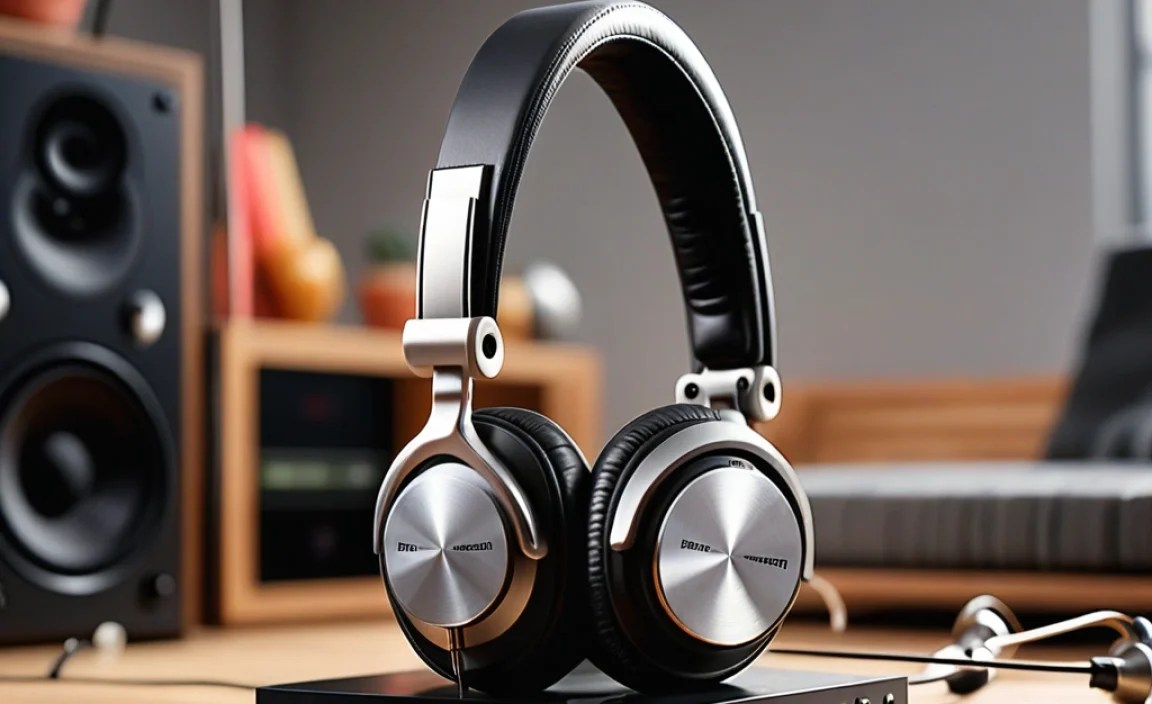
Before we dive into specific recommendations, let’s get a handle on a few technical terms that might pop up. Don’t worry, we’ll keep it simple!
1. Impedance (Ohms, Ω)
Impedance is a measure of electrical resistance. For headphones, it’s usually measured in Ohms (Ω). This is one of the most crucial specs when pairing headphones with a record player. Why? Because different turntables and phono preamps can only output so much power. If your headphones have a very high impedance and your record player’s built-in amplifier (if it has one) isn’t powerful enough, the sound might be too quiet, or even distorted.
Generally:
- Low Impedance (16-32 Ω): These are easy to drive and will work well with almost any device, including most modern direct headphone outputs.
- Medium Impedance (33-100 Ω): These might require a bit more power and could sound better with a dedicated headphone amplifier, though many still work fine directly connected.
- High Impedance (100+ Ω): These typically sound their best when paired with a more powerful source or a dedicated headphone amplifier. They can offer superior sound quality but need more juice to perform optimally.
Beginner Tip: For direct connection to most record players with a headphone jack, aim for headphones in the 32-80 Ω range. If your turntable doesn’t have a headphone jack, you’ll likely need a phono preamp or an integrated amplifier with a headphone output already built-in. Always check your record player or amplifier’s specifications for recommended headphone impedance.
2. Driver Size
The driver is the speaker component inside your headphones that produces sound. Larger drivers (usually measured in millimeters, mm) can often move more air, potentially leading to richer bass and a fuller sound. However, driver size isn’t the only factor in sound quality; the materials and engineering play a huge role.
Common driver sizes include 40mm, 50mm, and sometimes even larger. For general listening and a good balance of bass and clarity for vinyl, drivers around 40mm to 50mm are a great starting point.
3. Type of Headphones
There are two main types of headphones to consider for your record player setup:
- Open-Back Headphones:
- Pros: Offer a wider, more natural soundstage (the sense of space and distance in the music), which can be fantastic for appreciating the depth of analog recordings. They are often more comfortable for long listening sessions as they tend to be lighter and allow for better airflow.
- Cons: They leak sound significantly, meaning others can hear what you’re listening to, and external noise can easily enter. This makes them unsuitable for noisy environments or shared spaces.
- Closed-Back Headphones:
- Pros: Excellent at isolating sound, meaning less sound leakage to the outside and better blocking of ambient noise. This makes them ideal for quieter listening or when you need to focus on the music without distractions.
- Cons: The soundstage can feel more “in your head” compared to open-back designs. Long-term wear might feel warmer due to the lack of ventilation.
Recommendation for Record Players: Many vinyl enthusiasts prefer open-back headphones for their natural soundstage, which complements the analog character of vinyl. However, if you’re in a shared living space, closed-back headphones are your best bet to avoid disturbing others.
4. Comfort and Fit
You’ll be wearing these headphones, so comfort is paramount! Consider:
- Earcup Design: Over-ear (around the ear) are generally more comfortable for long periods than on-ear.
- Padding: Look for plush, breathable earpads.
- Headband: Ensure it’s adjustable and well-padded.
- Weight: Lighter headphones are less fatiguing.
5. Connector Type
Most headphones use a 3.5mm (1/8-inch) jack, which is standard for most modern devices. However, many higher-quality headphones come with a 6.35mm (1/4-inch) connector, or may have an adapter. Ensure your record player or amplifier has a compatible headphone jack. If your player has a 3.5mm jack, you might need a 3.5mm to 6.35mm adapter if your headphones come with a larger plug, or vice-versa if your player has a 6.35mm jack and your headphones a 3.5mm. Luckily, most headphones include a screw-on adapter for maximum compatibility.
Connecting Your Headphones: Step-by-Step

Connecting headphones to your record player is usually straightforward, but the exact method depends on your turntable model.
Method 1: Direct Connection (If Your Turntable Has a Headphone Jack)
Some modern record players come equipped with a built-in headphone jack, often located on the front or side of the unit. This is the simplest setup.
- Locate the Headphone Jack: Look for a small, circular port labeled “PHONES,” “HEADPHONES,” or with a headphone symbol (a circle with an arrow pointing into it).
- Check Impedance: Verify the recommended headphone impedance for your turntable’s headphone output. This information is usually in the user manual.
- Ensure Your Turntable is Powered On: Make sure your record player is plugged in and switched on.
- Insert the Headphone Plug: Take your headphones and gently insert the connector (usually 3.5mm or 6.35mm) into the headphone jack on your turntable.
- Adjust Volume: Slowly turn up the volume control on your turntable. If there isn’t a dedicated volume knob for headphones, it might use the main volume control or adjust automatically.
- Play a Record: Place a record on your turntable, lower the stylus, and enjoy!
Method 2: Connection via Phono Preamp or Integrated Amplifier
Many turntables, especially those without built-in speakers or Bluetooth, require external amplification. This is where a phono preamp and/or an integrated amplifier comes in. If your record player connects to one of these, those components will likely have the headphone jack.
- Connect Your Record Player:
- To a Phono Preamp: Connect the RCA cables (usually red and white plugs) from your turntable’s output to the “Phono In” ports on your phono preamp. Ensure your turntable is set to “Phono” output mode if it has a selector switch.
- To an Integrated Amplifier: Connect the RCA cables from your turntable directly to an appropriate input (often labeled “Phono” or “Aux”) on your integrated amplifier. If your amplifier doesn’t have a “Phono” input, you’ll need a separate phono preamp (as described above) connected to an “Aux” or “Line” input.
- Locate the Headphone Jack: Find the headphone jack (PHONES/HEADPHONES) on your phono preamp or integrated amplifier. This is usually on the front panel.
- Insert Headphone Plug: Plug your headphones into the jack.
- Power On Components: Turn on your phono preamp (if external) and your integrated amplifier.
- Adjust Volume: Use the volume knob on your integrated amplifier to control the headphone listening level. The phono preamp typically doesn’t have its own volume control.
- Play a Record: Go through the usual steps to play a record and enjoy your music.
Important Note: Always consult your record player, phono preamp, and amplifier manuals. They contain specific instructions and compatibility information. For instance, some phono preamps are designed purely to boost the signal and equalize it for a stereo system and may not have a headphone output themselves, relying entirely on an amplifier.
Essential Features for Vinyl Listening
While basic headphones will work, certain features can significantly enhance how your vinyl sounds.
1. Frequency Response
This refers to the range of frequencies (bass, mids, treble) that headphones can produce. For a rich vinyl experience, you’ll want headphones that offer a good balance across the spectrum. A wider frequency response often means a more detailed and natural sound.
2. Soundstage and Imaging
This is particularly important for vinyl.
- Soundstage: How “wide” or “spacious” the music sounds, like being in a concert hall vs. a small room. Open-back headphones excel here.
- Imaging: The ability to pinpoint where instruments are located within that soundstage. Good imaging makes the music feel more alive and layered.
These qualities are crucial for appreciating the depth and arrangement of instruments on a vinyl record. For a more “in your head” but very detailed experience, closed-back can be excellent for isolation.
3. Comfort for Long Listening Sessions
Vinyl is often a relaxed, contemplative listening experience. You might want to settle in for an entire album. Over-ear (circumaural) headphones with plush earcups and a comfortable headband are ideal for extended periods.
Recommended Headphone Types for Record Players
The “best” headphones are subjective, depending on your budget, listening environment, and personal preferences. However, here are some categories and examples that are generally well-regarded for turntable use.
| Headphone Type | Best For | Key Characteristics | Potential Drawbacks |
|---|---|---|---|
| Open-Back, Over-Ear Audiophile Headphones | Dedicated listening rooms, environments with no noise concerns, critical listening. | Natural, spacious soundstage; excellent detail and clarity; comfortable for long sessions. Great for appreciating nuance. | Significant sound leakage (not private); poor noise isolation. |
| Closed-Back, Over-Ear Versatile Headphones | Apartments, shared spaces, general listening, situations requiring noise isolation. | Good isolation, decent soundstage, often more punchy bass, durable. | Soundstage can be less expansive; may feel warmer after long use. |
| On-Ear Headphones | Portability, lighter weight preference. (Less common for dedicated vinyl setups) | Compact, can be good for casual listening. | Can be less comfortable long-term, sound leakage/isolation vary, may compress bass. |
What About Wireless/Bluetooth Headphones?
While convenient for many devices, Bluetooth can introduce a slight delay (latency) and potentially compress audio quality. For the purest analog experience from your record player, wired headphones are generally preferred. If your record player or amplifier has Bluetooth output, then Bluetooth headphones can work, but be aware of potential compromises. For the best sound, stick to wired connections.
Top Headphone Brands to Consider
These brands are well-regarded for quality and value across various price points:
- Audio-Technica: Known for excellent value, offering models like the ATH-M50x (closed-back, popular for studio monitoring and general use) and the ATH-AD series (open-back, warmer sound).
- Sennheiser: A leader in audio, with popular models like the HD 599 (open-back, great value for natural sound) and the HD 600/650 (high-end open-back for serious listeners).
- Beyerdynamic: Offers robust build quality. The DT 770 PRO (closed-back, very popular, consider impedance) and DT 990 PRO (open-back) are classics.
- Grado: Especially popular with vinyl enthusiasts for their lively, engaging sound. Their open-back designs are iconic, though some find them less comfortable.
- AKG: The K series headphones, like the K240 (semi-open) or K701 (open-back), are often praised for their clarity and soundstage.
Budget Tip: Don’t feel you need to spend a fortune! Many entry-level models from these brands offer a significant upgrade over basic earbuds. For instance, an Audio-Technica ATH-M20x or Sennheiser HD 280 PRO can be excellent starting points for closed-back listening.
When You Might Need a Headphone Amplifier
As mentioned with impedance, sometimes your record player or integrated amplifier just doesn’t have enough power to make higher-impedance headphones sing. This is where a headphone amplifier comes in handy. It’s a separate device that takes an audio signal and amplifies it specifically for your headphones.
You might need one if:
- Your headphones have high impedance (e.g., 100 Ω or more) and sound too quiet or weak when plugged directly into your source.
- You want to get the absolute best performance and detail out of your headphones.
- You want more control over headphone volume and sound characteristics (some amps offer EQ options).
A simple digital-to-analog converter (DAC) with a built-in headphone amp is a popular, convenient solution that can also improve sound quality by bypassing your computer’s or device’s internal sound card. For a more robust setup, desktop headphone amplifiers offer greater power and features.
Maintaining Your Headphones
To keep your headphones sounding great and lasting a long time, a little care goes a long way.
- Handle with Care: Avoid yanking on the cable when unplugging. Hold the plug itself.
- Store Properly: When not in use, store them in a safe place to avoid damage. A headphone stand or a carrying case is ideal.
- Keep Them Clean: Earpads can accumulate earwax and skin oils. Gently clean them with a slightly damp cloth (water or a mild soap solution). Avoid harsh chemicals. Many earpads are also replaceable, which is a great way to refresh old headphones. You can find detailed cleaning guides by consulting resources like the Environmental Protection Agency’s guidance on electronics care for general principles, or manufacturer-specific advice.
- Avoid Moisture: Keep headphones away from water or excessive humidity.
- Cable Management: Prevent tangling and strain on the cable.
Frequently Asked Questions (FAQ)
Q1: Can I plug headphones directly into any record player?
Not all record players have headphone jacks. Many entry-level or older models do not. If yours doesn’t have a headphone jack, you’ll
