
Quick Summary: Noise-canceling headphones dramatically improve airplane travel by reducing engine hum and cabin noise, leading to a more peaceful and enjoyable journey. This guide helps you choose the right pair by explaining key features, offering buying tips, and providing practical advice for use, ensuring you can relax, sleep, or enjoy your entertainment without distraction.
Noise Cancelling Headphones for Airplane Travel: Your Essential Guide
Welcome, fellow travelers and audio lovers! Edward Cavitt here, from headphonehorizon, ready to help you conquer the skies in comfort. Anyone who has flown knows the unique symphony of airplane travel: the persistent roar of the engines, the chatter of fellow passengers, and the unsettling hum that seems to permeate every corner of the cabin. It can turn what should be a relaxing transition into a taxing ordeal. But what if I told you there’s a way to significantly dial down that cabin chaos? That’s where noise cancelling headphones for airplane travel come in. They’re not just a luxury; for many, they’re an essential tool for a more serene and enjoyable flying experience. Let’s dive in and explore how to find the perfect pair to make your next flight a breeze.
Why Noise Cancelling Headphones Are a Must-Have for Flights

The cabin of an airplane is a surprisingly noisy environment. Constant exposure to that low-frequency drone can not only be irritating but can also contribute to fatigue and make it difficult to relax or sleep. Active Noise Cancellation (ANC) technology works by producing an anti-noise sound wave that effectively cancels out these ambient noises. This means less engine roar, less cabin chatter, and more peace for you. Imagine arriving at your destination feeling refreshed instead of frazzled – that’s the power of good ANC headphones.
According to the Centers for Disease Control and Prevention (CDC), prolonged exposure to noise levels above 70 decibels can potentially lead to hearing damage. While airplane cabin noise typically hovers around 75-85 decibels, ANC headphones can significantly reduce your exposure to this constant drone, offering both comfort and a degree of auditory protection over long journeys.
Understanding Noise Cancellation Technology
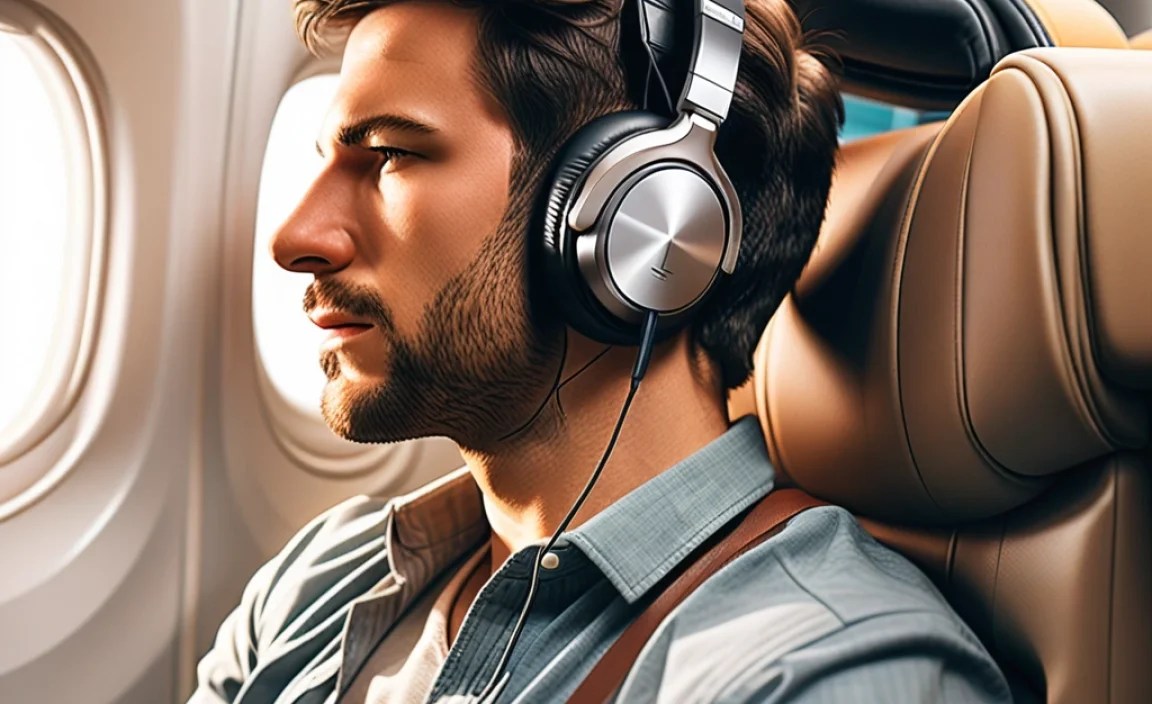
There are two main types of noise cancellation you’ll encounter:
1. Active Noise Cancellation (ANC)
This is the star of the show for airplane travel. ANC headphones use small microphones to detect ambient sounds around you. Then, an electronic chip inside the headphones generates an opposite sound wave (called anti-noise) that effectively cancels out the detected noise. It’s particularly good at tackling consistent, low-frequency sounds like engine hums and ventilation systems. Think of it like noise-canceling waves meeting and neutralizing each other.
2. Passive Noise Isolation
This is simply the physical barrier your headphones create to block out sound. Materials like plush earcups and a snug fit contribute to passive isolation. Over-ear headphones generally offer better passive isolation than in-ear models because they create a better seal around your ears. While effective for higher-frequency sounds like voices, it’s ANC that truly tackles the deep rumble of an airplane.
Key Features to Look For in Airplane Headphones

When you’re shopping for noise-canceling headphones specifically for flights, a few features should be at the top of your list:
- Effective Active Noise Cancellation (ANC): This is non-negotiable! Look for reviews that specifically test ANC on airplanes.
- Comfort for Long Wear: You’ll be wearing these for hours. Plush earcups, a lightweight design, and an adjustable headband are crucial.
- Battery Life: Flights can be long. Aim for headphones with at least 15-20 hours of battery life with ANC on, and ideally, a quick charge feature.
- Wired Option: While most headphones are wireless, having a 3.5mm audio jack and an included cable is a lifesaver. Some in-flight entertainment systems still use older audio ports, and it ensures you can still use them if the battery dies.
- Portability: Do they fold up neatly? Do they come with a sturdy carrying case? This makes them easy to stow in your carry-on.
- Sound Quality: While ANC is key, don’t forget you’ll likely want to listen to music, podcasts, or movies. Look for balanced sound profiles.
- Transparency/Ambient Mode: This feature allows you to hear your surroundings without taking off your headphones – useful for announcements or talking to flight attendants.
Types of Noise Cancelling Headphones for Travel

Your choice will likely fall into one of these categories:
Over-Ear Headphones
These are the most common type for ANC. They fully enclose your ears, offering excellent passive noise isolation and space for larger drivers and batteries, which often means better ANC performance and sound quality. They can be a bit bulky, but their comfort and effectiveness make them a favorite for long flights.
On-Ear Headphones
These rest on your ears rather than around them. They are typically lighter and more compact than over-ear models. However, they might not offer as good a seal, leading to less passive isolation, and can sometimes cause ear discomfort after extended wear.
In-Ear Headphones (Earbuds)
These are the most portable option. True wireless earbuds are incredibly convenient. While ANC technology has improved dramatically in small form factors, they generally don’t offer the same level of noise cancellation or comfort as the best over-ear models for long-haul flights. However, they are fantastic for quick trips or when space is at a premium.
Step-by-Step Guide to Choosing Your Perfect Pair
Ready to find your ideal travel companion? Follow these steps:
Step 1: Determine Your Budget
Noise-canceling headphones range from under $100 to over $400. Decide how much you’re willing to spend. While pricier models often offer superior ANC and features, there are some excellent budget-friendly options that can still significantly improve your flight experience.
Step 2: Prioritize Comfort and Fit
This is paramount for long flights. If possible, try headphones on before you buy. Pay attention to the clamping force of the headband, the padding on the earcups, and the overall weight. If buying online, check return policies. For over-ear models, memory foam earcups are a good sign of comfort.
Step 3: Read Reviews Focused on Airplane Performance
Generic ANC reviews are helpful, but seek out reviews that specifically mention how the headphones perform in an airplane cabin. Look for tests comparing them to engine noise or common flight sounds. Websites that specialize in audio reviews often have detailed comparisons.
Step 4: Check Battery Life and Charging
For any flight over 3 hours, you’ll want at least 15-20 hours of ANC playback. If your flight is longer, or you’re prone to dozing off and forgetting to charge, look for quick charging capabilities. For example, 10-15 minutes of charging might give you several hours of playback.
Step 5: Consider Connectivity Options
Most modern headphones use Bluetooth. Ensure they support a stable connection. However, as mentioned, the ability to connect via a 3.5mm audio cable is a huge plus for in-flight entertainment systems and as a backup if Bluetooth is spotty or the battery dies.
Step 6: Evaluate Portability and Durability
Will they fit easily in your carry-on? Do they fold down nicely? A good carrying case is essential to protect your investment from the rigors of travel. Hardshell cases offer the best protection.
Step 7: Don’t Forget Sound Quality
While ANC is the main focus, you still want to enjoy your audio. Listen to a variety of music genres if you can. A balanced sound profile is generally best for most listeners, avoiding overly bassy or tinny sound.
Comparing Popular Types of Noise Cancelling Headphones
To give you a better idea, here’s a look at how different types generally stack up for air travel:
| Type | Pros for Air Travel | Cons for Air Travel | Best For |
|---|---|---|---|
| Over-Ear (Circumaural) | Superior ANC performance, excellent passive isolation, often most comfortable for long sessions, best sound quality potential. | Can be bulky, may cause ears to feel warm over time. | Long-haul flights, travelers prioritizing maximum quiet and comfort. |
| On-Ear (Supra-aural) | More compact than over-ear, generally lighter. | Less passive isolation, can cause ear discomfort after extended wear, ANC performance can be less effective than over-ear equivalents. | Short to medium flights, travelers preferring a lighter feel. |
| In-Ear (Earbuds/IEMs) | Highly portable, discreet, excellent for sleeping without pressure on ears. | ANC is generally less powerful than over-ear, fit can be tricky for some, potential for discomfort if worn for too long without proper tips. | Short flights, travelers prioritizing minimal baggage, those who dislike ear pressure. |
Tips for Maximizing Your Noise Cancelling Headphones on a Flight
Once you’ve got your headphones, here’s how to get the most out of them:
- Get a Good Seal: For over-ear and on-ear headphones, ensure the earcups create a snug seal around your ears. For earbuds, experiment with different-sized ear tips to find the perfect fit. A good seal is crucial for both passive isolation and effective ANC.
- Turn ANC On at the Right Time: Activate ANC after you’ve boarded and settled into your seat, but before the engines start spooling up. This allows the headphones to calibrate to the ambient noise from the beginning.
- Use the Audio Cable: If you plan to use the airplane’s entertainment system, plug in using the provided audio cable. It saves battery life and ensures you don’t miss anything if your wireless connection drops or the battery runs out.
- Manage Battery Life: Keep an eye on your battery indicator. If you have a very long flight, consider bringing a portable power bank to recharge your headphones.
- Engage Transparency Mode for Announcements: Many modern ANC headphones have a transparency or ambient mode. Use this to hear important announcements from the flight crew without having to remove your headphones.
- Clean Your Headphones Regularly: Earcups can accumulate sweat and grime, especially after a long flight. Clean them periodically according to the manufacturer’s instructions to keep them hygienic and comfortable.
Troubleshooting Common Issues
Even the best headphones can have minor glitches. Here are a few common issues and their fixes:
- ANC Not Working Effectively: Ensure ANC is turned on and that your headphones have sufficient battery. Check that the earcups are creating a good seal. Sometimes, wind noise or very sudden, sharp sounds can bypass ANC better than a steady hum.
- Bluetooth Connectivity Problems: Try turning off Bluetooth on your device and then turning it back on. Restart both your headphones and your device. If the problem persists, try “forgetting” the headphones in your device’s Bluetooth settings and then re-pairing them.
- Uncomfortable Fit: For over-ear headphones, try adjusting the headband. For earbuds, try switching to a different size or material of ear tips.
- Sound Distorted or Weak: Ensure the audio source volume isn’t too low or too high. Check that the audio cable is fully plugged in, if using a wired connection. Sometimes, a firmware update for your headphones can resolve sound issues.
Our Picks for Great Airplane ANC Headphones (Examples)
While specific models change rapidly, here are types of headphones that consistently perform well for air travel, giving you a starting point for your research:
- Sony WH-1000XM series: Consistently lauded for industry-leading ANC, comfort, and great sound.
- Bose QuietComfort series: A long-time favorite for comfort and highly effective noise cancellation.
- Sennheiser Momentum series: Known for excellent audio quality and solid ANC performance.
- Apple AirPods Max: Premium option with excellent ANC and integration for Apple users.
- Bose QuietComfort Earbuds: For those who prefer earbuds, these offer some of the best ANC in the in-ear category.
Remember to always check the latest reviews and compare features against your specific needs and budget.
Frequently Asked Questions About Noise Cancelling Headphones for Air Travel
Q1: Can noise-cancelling headphones really make a difference on a plane?
Absolutely! They are designed to actively reduce the constant drone of airplane engines and cabin noise, which can be very fatiguing. Travelers almost universally report a more relaxed and enjoyable flight experience when using good ANC headphones.
Q2: Are noise-cancelling headphones safe to use during takeoff and landing?
Yes, noise-cancelling headphones are safe to use. While you might be asked to turn off wireless connections (like Bluetooth) during critical phases of flight as per airline regulations, this doesn’t affect the core noise-cancelling function itself. If you are using them wired, there’s no wireless signal to worry about at all. Many airlines now allow Bluetooth devices throughout the flight.
Q3: Do I need a special cable for airplane entertainment systems?
Most decent ANC headphones come with a 3.5mm audio cable. While some newer aircraft have standard headphone jacks, older ones might have a unique dual-pin jack. If this is the case, you’ll need a simple adapter, which is inexpensive and readily available online or at electronics stores. Many ANC headphones will include this, or it’s a common travel gadget accessory.
Q4: How long does the battery on noise-cancelling headphones typically last for flights?
Battery life varies widely by model and usage. However, most high-quality ANC headphones offer between 20 to 30 hours of playback with ANC on. This is usually more than enough for even the longest transcontinental flights. Some models offer quick charging, giving you several hours of playback from just a 10-15 minute charge.
Q5: Can noise-cancelling headphones help with ear pressure or pain during flights?
No, noise-cancelling headphones do not directly address ear pressure issues. Ear pressure is caused by changes in air pressure affecting your middle ear. Techniques like swallowing, yawning, or using earplugs designed for flight can help with pressure. ANC headphones focus on sound rather than air pressure.
Q6: Are noise-cancelling earbuds as effective as over-ear headphones for flights?
Generally, over-ear noise-cancelling headphones offer superior noise cancellation due to their larger size, better seal, and ability to house more powerful ANC technology. However, the latest generation of noise-cancelling earbuds are exceptionally good and can be a great option for those who prioritize portability or find over-ear headphones uncomfortable. For the absolute best in silencing engine noise, over-ear usually takes the lead.
Conclusion
Investing in a good pair of noise-canceling headphones for airplane travel is one of the most impactful upgrades you can make to your flying experience. They transform a potentially stressful, noisy environment into a sanctuary where you can rest, work, or immerse yourself in entertainment. By understanding ANC technology, knowing what features to look for – especially comfort and battery life – and following our guide, you’re well-equipped to choose the perfect pair.
Don’t let the roar of the engines dictate your travel mood any longer. With the right headphones, your journey can be as comfortable and enjoyable as your destination. Happy flying, and may your travels be peaceful and sound-filled!
