
<strong>Quick Summary:</strong> Flying can be loud, but the right noise-cancelling headphones make all the difference. This guide helps beginners choose and use them for a peaceful plane journey, covering key features, fitting tips, and travel essentials for a smoother, quieter experience.</p>
Noise Cancelling Headphones For Plane Travel: Your Essential Guide
Ever found yourself on a plane, surrounded by the drone of engines, crying babies, and chattering passengers, wishing you could just escape into your own world? You’re not alone! Air travel can be a symphony of noise that’s anything but relaxing. That’s where noise-cancelling headphones come in – they’re like a personal quiet zone on demand. For anyone new to the world of travel tech, picking the right pair can feel overwhelming. But don’t worry, this guide is here to put you at ease. We’ll break down exactly what makes a pair of headphones great for flying, how to find the best fit for your ears and your budget, and simple tips to ensure your next flight is a much more peaceful experience. Get ready to transform your travel!
Why Noise Cancelling Headphones Are a Game-Changer for Plane Travel

The constant hum of airplane engines, the announcement system, and the general bustle of a busy cabin can be more than just annoying; they can lead to fatigue and stress. Noise-cancelling headphones work by actively counteracting these ambient sounds, creating a much calmer auditory environment.
Here’s why they’re indispensable for frequent flyers and occasional travelers alike:
- Reduces Fatigue: Constant low-frequency noise from engines can be tiring. Cancelling it out helps you arrive at your destination feeling more rested.
- Improves Sleep: A quieter cabin makes it easier to doze off, whether you’re trying to catch some shut-eye or just want a moment of peace.
- Enhances Entertainment: Enjoy your movies, music, or podcasts with significantly less background distraction, allowing you to hear every detail.
- Minimizes Jet Lag Symptoms: Some studies suggest that reducing sensory overload during travel can potentially help in mitigating the effects of jet lag.
- Offers a Sense of Personal Space: In a crowded cabin, your headphones can create a welcome bubble of tranquility.
Understanding Noise Cancellation Technology
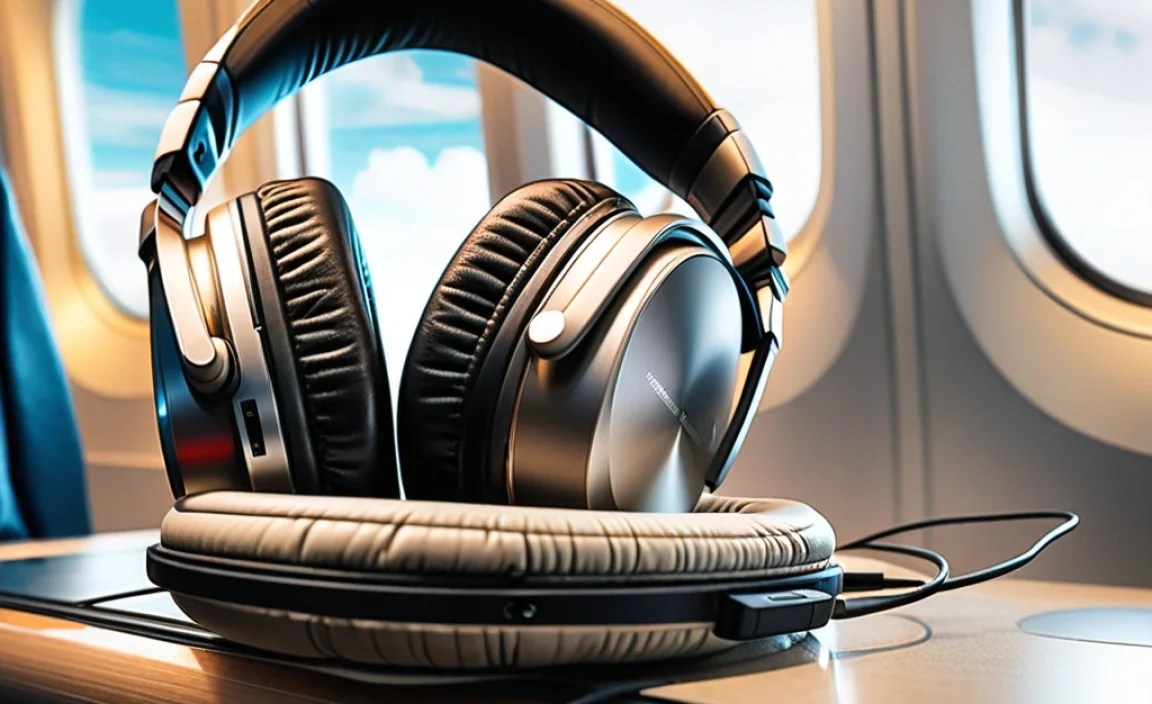
Noise cancellation isn’t magic; it’s science! There are generally two main types you’ll encounter:
1. Passive Noise Isolation
This is the simpler form. Also known as acoustic isolation, it relies on the physical design of the headphones to block out sound. Think of it like cupping your hands over your ears. Over-ear headphones with plush earcups and a snug fit are excellent at passive noise isolation.
2. Active Noise Cancellation (ANC)
This is where the magic really happens. ANC headphones have tiny microphones that pick up external sounds. An internal chip then generates an “anti-noise” sound wave that is the inverse of the incoming sound. When these two waves meet, they cancel each other out, effectively silencing the noise.
For plane travel, ANC is what you’re really looking for, especially for the constant drone of engines. Many headphones combine both passive isolation and active noise cancellation for the best results. You can learn more about how ANC works through resources like the HowStuffWorks article on noise-cancelling headphones, which provides a great overview.
Key Features to Look For in Travel Headphones

When you’re browsing for noise-cancelling headphones for your next flight, keep these features in mind. They’ll make a big difference in your comfort and enjoyment.
Comfort is King
You’ll likely be wearing these for the duration of your flight, so comfort is non-negotiable. Consider:
- Earcup Material: Soft, breathable padding (like memory foam covered in protein leather or velour) is ideal.
- Headband Fit: Look for an adjustable, padded headband that distributes weight evenly without causing pressure points.
- Weight: Lighter headphones are generally more comfortable for long wear.
- Clamping Force: The headphones should grip your head securely without feeling like a vise.
Battery Life
A long-haul flight can easily last 12-18 hours. You don’t want your headphones dying mid-flight. Aim for headphones with at least 20-30 hours of battery life when ANC is active. Many modern models offer even more than this, and most come with a handy audio cable so you can listen even if the battery dies.
Sound Quality
While noise cancellation is the star for travel, you still want your music and movies to sound great. Look for a balanced sound profile that’s not too bass-heavy or too tinny. Many reviews will discuss the sound signature of different headphones.
Portability and Design
You’ll need to pack these. Consider:
- Foldable Design: Many headphones fold up compactly.
- Carrying Case: A sturdy case protects your headphones during transit.
- Build Quality: Durable materials mean they can withstand the rigors of travel.
Connectivity Options
Most modern noise-cancelling headphones use Bluetooth for wireless listening. Ensure they support a stable connection. Some also offer:
- Multipoint Pairing: Connect to two devices simultaneously (e.g., your phone and laptop).
- Wired Option: A 3.5mm audio jack is crucial for in-flight entertainment systems, which often don’t support Bluetooth, or for when the battery runs out.
ANC Effectiveness
Not all ANC is created equal. Higher-end models generally offer more sophisticated ANC that adapts to your environment. Read reviews that specifically test ANC performance on planes or in similar noisy environments.
Types of Noise Cancelling Headphones for Travel

The best type of headphone for you depends on your preferences and travel style. Here’s a breakdown:
Over-Ear (Circumaural) Headphones
These cover your entire ear. They generally offer the best comfort, passive isolation, and ANC performance due to their larger size and ability to create a seal around the ear.
- Pros: Excellent noise isolation, comfortable for long periods, often superior audio quality and ANC.
- Cons: Can be bulky to pack, may get warm in hot climates.
On-Ear (Supra-aural) Headphones
These rest on your ears. They are usually smaller and lighter than over-ear models.
- Pros: More compact, can be cooler to wear.
- Cons: Less passive isolation, can press on the ears causing discomfort over time, ANC is often less effective than over-ear.
In-Ear Monitors (IEMs) / Earbuds
These sit inside your ear canal. Many true wireless earbuds now offer ANC.
- Pros: Extremely portable, discreet, good passive isolation if they fit well.
- Cons: Can cause ear fatigue or discomfort for some, ANC performance can vary greatly, not ideal for sleeping on your side.
For most people, especially beginners prioritizing the best travel experience, over-ear headphones with ANC are the top recommendation.
Top Features to Consider: A Comparison Table
To help you visualize, here’s a comparison of key features across headphone types, focusing on their suitability for plane travel. Please note that specific model performance will vary.
| Feature | Over-Ear Headphones | On-Ear Headphones | In-Ear Earbuds (with ANC) |
|---|---|---|---|
| Noise Isolation (Passive) | Excellent | Good | Good (depending on fit) |
| Active Noise Cancellation (ANC) | Typically Best | Good to Very Good | Varies (often good, but can be less powerful than over-ear) |
| Comfort for Long Flights | Excellent | Fair to Good (can cause pressure) | Varies highly by individual (can cause ear fatigue) |
| Portability | Moderate (many foldable) | Good (more compact than over-ear) | Excellent (smallest and lightest) |
| Battery Life (ANC On) | Typically 20-40+ hours | Typically 15-30+ hours | Typically 5-8 hours per charge, 20-30+ hours with charging case |
| Sound Quality Potential | Highest | High | Varies widely |
| Ideal for Sleeping on Plane | Challenging (especially on side) | Difficult | Challenging (especially on side) |
Putting Your Headphones to the Test: Fit and Function
Once you’ve chosen a pair, getting them to work perfectly for your flight takes just a few simple steps.
Step 1: The Perfect Fit
This is crucial for both comfort and effective noise cancellation. For over-ear headphones:
- Adjust the Headband: Extend or shorten the headband so the earcups sit comfortably over your ears without pressing down too hard on your head.
- Check the Seal: Ensure the earcups create a good seal around your ears. There shouldn’t be any large gaps where air and sound can easily enter.
- Test for Pressure: Wear them for 10-15 minutes around the house. If you feel any discomfort, adjust the fit.
For in-ear earbuds:
- Select the Right Ear Tips: Most earbuds come with different sizes of silicone or foam tips. You need a size that creates a snug seal deep enough in your ear canal to block out ambient noise passively.
- Proper Insertion: Gently insert the earbud into your ear canal. It should feel secure and comfortable.
Step 2: Mastering ANC
Most ANC headphones have an ANC mode you can turn on. Some have different ANC levels or modes (e.g., for travel, office, or ambient sound passthrough). Make sure ANC is enabled for your flight. For Bluetooth headphones, ensure they are paired with your device.
Step 3: Connecting to In-Flight Entertainment
This is where the wired option comes in handy. Airplane entertainment systems usually have a dual-prong 3.5mm headphone jack, while standard headphones have a single-prong jack. You might need an adapter:
- Dual- to Single-Prong Adapter: These are small, inexpensive adapters that convert the airplane’s jack to fit a standard headphone plug. They are essential if your headphones don’t include one.
- Wired Connection: Plug one end of your audio cable into the headphone jack on your seat’s entertainment system and the other into your headphones.
Remember to turn off Bluetooth if you’re using a wired connection to conserve battery life.
Step 4: Battery Management
- Charge Fully Before Travel: Always start with a full charge.
- Carry a Power Bank: For longer trips or if you’re prone to forgetting to charge, a portable power bank is a lifesaver.
- Use the Audio Cable: As mentioned, if your battery is low or dies, you can still use your headphones with the airplane’s entertainment system via the audio cable.
Popular Noise Cancelling Headphones for Plane Travel (Beginner-Friendly Options)
While there are many fantastic options, here are a few well-regarded models that often appear on “best of” lists for travelers. These are known for their balance of features, performance, and user-friendliness.
Please note that prices and availability can change. It’s always a good idea to check current reviews and compare pricing.
| Model Example | Type | Key Strengths for Travel | Typical Battery Life (ANC On) |
|---|---|---|---|
| Sony WH-1000XM Series (e.g., XM4, XM5) | Over-Ear | Industry-leading ANC, excellent sound, comfortable, long battery life, smart features. | ~30 hours |
| Bose QuietComfort Series (e.g., QC45, Ultra) | Over-Ear | Renowned for comfort and effective ANC, easy to use, good for long listening sessions. | ~24 hours |
| Sennheiser Momentum 4 Wireless | Over-Ear | Exceptional battery life, great sound quality, good ANC, comfortable design. | ~60 hours |
| Apple AirPods Pro (2nd Gen) | In-Ear Earbuds | Excellent ANC for earbuds, seamless Apple ecosystem integration, IPX4 water resistance. | ~6 hours per charge (~24+ with case) |
| Anker Soundcore Liberty 4 NC | In-Ear Earbuds | Great value, strong ANC for the price, good battery life, customizable EQ. | ~10 hours per charge (~50+ with case) |
When considering purchases, looking at reviews from reputable tech sites like CNET, Wirecutter (New York Times), or TechRadar can provide in-depth comparisons and real-world testing insights.
Tips for Maximizing Your Noise Cancelling Experience on a Plane
Beyond choosing the right headphones, a few smart habits can elevate your in-flight audio sanctuary.
- Pre-Flight Check: Before heading to the airport, ensure your headphones are fully charged and that you have any necessary adapters or cables. Firmware updates might also be available for newer models.
- When to Turn ANC On: Switch on ANC as soon as you board the plane, even before takeoff. This helps to dampen the initial surge of cabin noise.
- Consider Ambient Sound Mode: If you need to hear announcements or speak to a flight attendant, most headphones have an “ambient” or “transparency” mode that lets external sound in. Learn how to activate it quickly.
- Manage Volume Levels: Even with ANC, it’s important to keep the volume at a safe listening level to protect your hearing. The <a href=”https://www.who.int/news-room/questions-and-answers/item/de
