
Quick Summary: Unlock the full potential of your AKG Studio Bluetooth headphones with this essential guide. Learn to pair, troubleshoot common issues, and optimize your listening experience for professional-quality sound, wirelessly. This beginner-friendly resource makes enjoying your AKG headphones simple and stress-free.
AKG Studio Bluetooth: Your Proven Essential Guide
Welcome to Headphone Horizon! If you’re diving into the world of wireless audio with AKG Studio Bluetooth headphones, you’re in for a treat. AKG has a legendary reputation for sound quality, and their Bluetooth offerings bring that studio-grade experience to the convenience of wireless freedom. But like any tech, understanding how to get the most out of it is key. This guide is designed to be your go-to companion, whether you’re pairing them for the first time or looking to fine-tune your listening sessions. We’ll break down everything you need to know in straightforward terms, making sure you sound incredible and feel confident using your AKG Studio Bluetooth headphones.
Understanding Your AKG Studio Bluetooth Headphones

AKG Studio Bluetooth headphones are designed to deliver accurate, uncolored sound, making them a favorite among musicians, producers, and discerning audio enthusiasts. The “Studio” moniker signifies a commitment to faithful sound reproduction, which means what you hear is close to the original recording. The addition of Bluetooth technology means you can enjoy this level of fidelity without being tethered to your device. This opens up possibilities for more dynamic movement while working, practicing, or simply enjoying your favorite tracks.
Key Features to Look For (Model Dependent)
While specific features can vary slightly between AKG Studio Bluetooth models, here are some common ones you might find and what they mean for your experience:
- High-Resolution Audio Support: Look for support for codecs like aptX HD or LDAC, which allow for higher fidelity wireless audio transmission than standard Bluetooth.
- Bluetooth Version: Newer versions (like Bluetooth 5.0 or later) offer better range, stability, and power efficiency.
- Active Noise Cancellation (ANC): If your model includes ANC, it uses microphones to detect and counteract ambient noise, providing a more immersive listening experience, especially in noisy environments.
- Long Battery Life: Most AKG Bluetooth headphones offer many hours of playback on a single charge, perfect for extended listening or working sessions.
- Built-in Microphone: Essential for making and taking calls wirelessly.
- Companion App: Some models come with an app that allows for EQ adjustments, firmware updates, and customization of other settings.
- Comfortable Earcup Design: Studio headphones are often over-ear for maximum isolation and comfort during long wear.
Getting Started: Pairing Your AKG Studio Bluetooth Headphones
The initial setup is usually the most important step. Here’s how to get your AKG Studio Bluetooth headphones connected to your device:
Step 1: Charge Your Headphones
Before you do anything, ensure your headphones have sufficient battery life. Connect them using the provided USB cable to a power source. Most headphones have an LED indicator that will show charging status (often red while charging, turning blue or off when fully charged).
Step 2: Activate Pairing Mode
This is the crucial step that makes your headphones discoverable. The method varies slightly by model, but generally:
- Turn on your headphones by pressing and holding the power button. You’ll usually hear an audio cue or see an LED light change.
- Enter pairing mode. This often involves pressing and holding the Bluetooth button or a combination of buttons (like power and volume up) for a few seconds.
- Look for an indicator. A flashing blue or alternate flashing blue/red light on the headphones typically signifies they are in pairing mode and ready to connect. You might also hear a voice prompt saying “pairing.”
Pro Tip: Always consult your AKG headphone’s user manual for the exact pairing procedure for your specific model. You can usually find these on the AKG support website.
Step 3: Enable Bluetooth on Your Device
On your smartphone, tablet, computer, or other Bluetooth-enabled device:
- For iOS: Go to Settings > Bluetooth and ensure the toggle is switched ON.
- For Android: Go to Settings > Connected devices (or similar) > Bluetooth, and ensure the toggle is switched ON.
- For Windows: Go to Settings > Devices > Bluetooth & other devices, and ensure Bluetooth is toggled ON.
- For macOS: Go to System Preferences > Bluetooth and ensure Bluetooth is turned ON.
Step 4: Select and Connect
Your device will scan for available Bluetooth devices. In the list of available devices, you should see your AKG headphones appear (e.g., “AKG K371-BT,” “AKG Y600NC BT,” or similar). Click or tap on the name of your headphones to connect. You might be prompted to confirm a pairing code (usually “0000” or “1234” if required, though most modern devices don’t need this).
Step 5: Confirmation
Once successfully paired, your device will indicate that the headphones are connected, and the flashing light on your headphones will typically turn solid blue or stop flashing. You should also hear an audio confirmation from the headphones.
Advanced Pairing & Multipoint Connection
Some AKG Studio Bluetooth headphones support multipoint connection, allowing you to connect to two devices simultaneously. This is incredibly useful if you want to listen to music from your laptop and take calls from your phone without switching connections manually.
How to Use Multipoint (If Supported)
- Pair your headphones with the first device and ensure they are connected.
- Put your headphones back into pairing mode (as described in Step 2 above).
- On your second device, search for and connect to your AKG headphones via Bluetooth.
- Once connected to the second device, the headphones should maintain a connection to both simultaneously.
Note: If you play audio on one device, it might pause playback on the other, or you may need to manually select the audio source from your device’s sound settings.
Optimizing Your Listening Experience
Beyond just pairing, there are several ways to ensure you get the best sound and functionality from your AKG Studio Bluetooth headphones.
Understanding Bluetooth Codecs
Bluetooth audio quality is transmitted using specific codecs. The better the codec, the more audio data can be sent, leading to higher fidelity sound. Your AKG headphones and your source device (phone, computer) must both support the same codec for it to be used.
Here’s a quick look at common codecs:
| Codec | Pros | Cons | Typical Use |
|---|---|---|---|
| SBC (Subband Codec) | Universally compatible. Included in all Bluetooth devices. | Basic audio quality, can be compressed. | Standard for most Bluetooth audio. |
| AAC (Advanced Audio Coding) | Better quality than SBC, especially on Apple devices. | Primarily for Apple devices; support varies on Android. | Default for iPhones and iPads. |
| aptX | Good quality, lower latency than SBC/AAC. | Requires support on both source and headphones. | Common on many Android phones and Windows PCs. |
| aptX HD | Higher fidelity audio, supports 24-bit. | Requires support on both source and headphones; uses more power. | For audiophiles seeking better wireless sound on compatible devices. |
| LDAC | Highest possible Bluetooth audio quality, supports 24-bit at 96kHz. | Requires specific support (e.g., many Android phones, Sony devices); can be power-hungry and less stable in crowded RF environments. | For the absolute best wireless audio quality. |
You can often check which codec is being used in your device’s Bluetooth settings. For instance, on many Android phones, you can find this under the Bluetooth device details after connecting. To ensure you’re getting the best possible sound, try to use the highest-quality codec supported by both your headphones and your device.
Using the Companion App (If Available)
If your AKG Studio Bluetooth headphones come with a companion app (check the AKG website or your app store), download it! These apps often provide valuable features:
- Equalizer (EQ) Settings: Tailor the sound profile to your preferences. Want a bit more bass for your commute? Or clearer mids for podcasts? The EQ is your tool.
- Firmware Updates: Keep your headphones up-to-date with the latest improvements in performance, stability, and features. You can learn more about firmware’s importance from resources like the Computerworld guide to firmware.
- Customization: Adjust button functions, ANC levels, or ambient sound modes.
- Battery Status: Get a precise reading of your headphone’s battery level.
Comfort and Fit for Extended Listening
Studio headphones are often designed for long sessions. Ensure you have the best fit:
- Adjust the headband so the earcups sit comfortably and securely on your ears.
- The clamping force should be snug enough to provide a seal, but not uncomfortable.
- If your earcups are swiveling, they should conform to the shape of your head for optimal comfort and acoustic seal.
Troubleshooting Common AKG Studio Bluetooth Issues
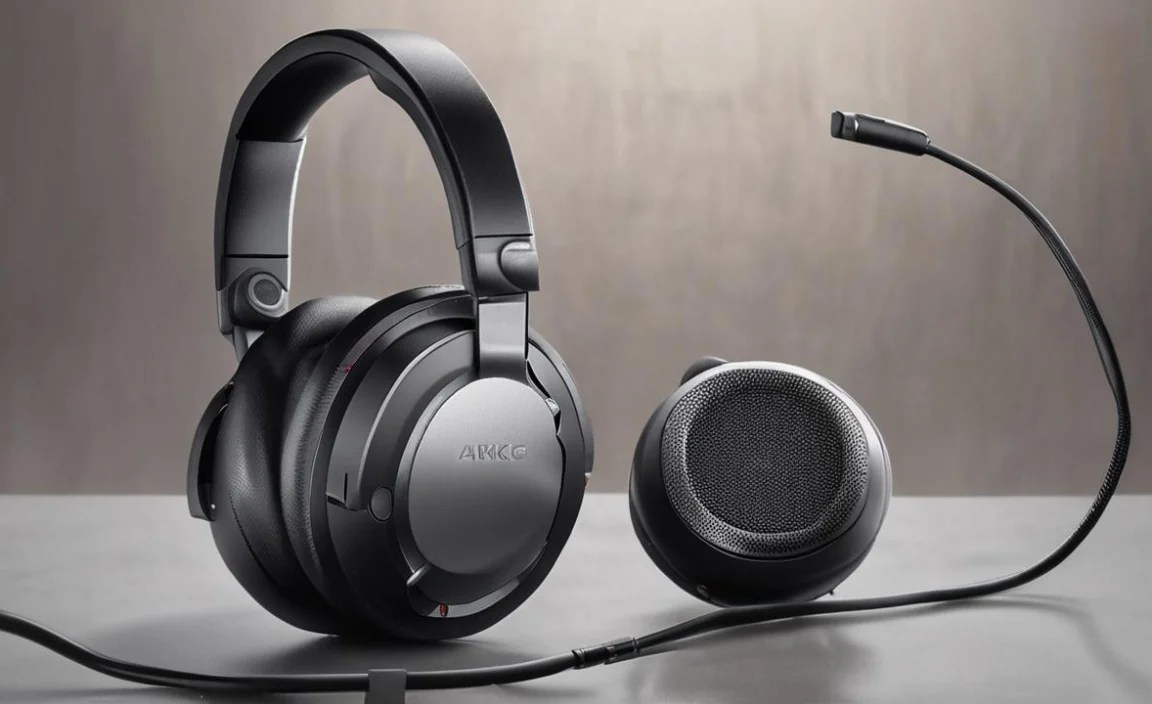
Even the best headphones can encounter hiccups. Here are solutions to common problems:
Issue 1: Headphones Won’t Pair
- Ensure Pairing Mode: Double-check that your headphones are actually in pairing mode (flashing light).
- Forget Device: On your source device, go to its Bluetooth settings, find your AKG headphones, and choose “Forget” or “Unpair.” Then, try pairing again from scratch.
- Restart Devices: Turn off both your headphones and your source device, then turn them back on and try pairing.
- Check Distance: Ensure your headphones and source device are close to each other (within a few feet) during the pairing process.
- Battery Level: Low battery can sometimes interfere with pairing. Charge them fully.
Issue 2: Audio Stuttering or Dropping
- Distance & Obstacles: Bluetooth signals can be affected by distance and physical barriers (walls, bodies of water). Try moving your source device closer.
- Interference: Other wireless devices (Wi-Fi routers, microwaves, other Bluetooth devices) can cause interference. Try moving to a different location or turning off unnecessary wireless devices.
- Update Firmware: If a firmware update is available for your headphones, install it via the companion app if applicable.
- Check Source Device: If you’re using a computer, ensure its Bluetooth drivers are up to date. Most operating systems have a way to check for driver updates.
Issue 3: Sound Only Comes from One Earbud/Side
- Check Balance: On your source device’s audio settings, ensure the left-right balance is centered. Sometimes this setting can be accidentally adjusted. For example, on iOS, go to Settings > Accessibility > Audio/Visual.
- Restart Headphones: Turn the headphones off and on again.
- Re-pair: Forget the device from your source and re-pair.
- Inspect Physical Connections: Although Bluetooth is wireless, ensure none of the physical earcup connections feel loose if your model has a detachable cable option.
Issue 4: Poor Microphone Quality for Calls
Microphone performance can be tricky. Here are some tips:
- Position: Ensure the headphone’s microphone (often located on one of the earcups or a small in-line boom) is closer to your mouth.
- Environment: Reduce background noise. While some headphones have noise-canceling mics, extreme background noise can still affect clarity.
- Clear Pairing: Sometimes, re-pairing can resolve issues with how the microphone profile was established.
- Check App Settings: If there’s a companion app, see if there are any mic-specific settings.
Issue 5: Headphones Not Charging
- Check Cable & Port: Ensure the USB cable is properly seated in both the headphones and the power source. Try a different USB cable and a different power adapter or USB port, as these can fail.
- Clean Contacts: Gently clean any visible charging contacts on the headphones with a dry, soft cloth.
- Allow Time: Some devices take a few minutes before the charging indicator appears. Leave them to charge for at least 30 minutes.
If you’ve tried these steps and are still facing issues, it’s always a good idea to reach out to AKG Customer Support. They have specific troubleshooting guides and warranty information. You can often find support at AKG’s official support page.
AKG Studio Bluetooth: Pros vs. Cons at a Glance
To help you make informed decisions, here’s a summary of the general advantages and disadvantages:
Often comfortable for long listening sessionsMay require specific codecs or app support for full potential
| Pros | Cons |
|---|---|
| Excellent, accurate studio-quality sound | Can be more expensive than consumer-grade headphones |
| Wireless convenience of Bluetooth | Reliance on battery charge; requires charging |
| Durable build quality | Some models might lack advanced features like ANC or multipoint |
| Suitable for both critical listening and everyday use | Sound signature might be too neutral for those preferring heavily bass-boosted consumer headphones |
Frequently Asked Questions (FAQ)
Q1: How do I reset my AKG Studio Bluetooth headphones to factory settings?
A1: The reset procedure varies by model. For many AKG models, it involves pressing and holding a combination of buttons (often power and a volume button, or a dedicated reset button) while the headphones are powered off or in pairing mode. Always refer to your specific user manual for the exact instructions.
Q2: Can I use my AKG Studio Bluetooth headphones while they are charging?
A2: Most AKG Studio Bluetooth headphones can be used while charging, allowing for continuous listening. However, it’s always best to check your user manual, as some devices might behave differently or experience slightly reduced performance when charging and being used simultaneously.
Q3: What is the range of AKG Studio Bluetooth headphones?
A3: The typical Bluetooth range is around 30 feet (10 meters) in an open area with no obstructions. This can be reduced by walls, furniture, or interference from other electronic devices.
Q4: How often should I update the firmware on my headphones?
A4: You should update the firmware whenever AKG releases an update. Updates often bring performance improvements, bug fixes, and sometimes new features. Check the companion app or AKG’s support website periodically.
Q5: My AKG headphones are only connecting to my laptop, not my phone. What should I do?
A5: This could be an issue with multipoint pairing. Ensure multipoint is enabled on your headphones (if supported). Then, try disconnecting from the laptop, pairing with the phone, and then reconnecting to the laptop. If multipoint isn’t supported, you’ll need to manually disconnect from one device before connecting to the other.
Q6: What’s the difference between the AKG K371-BT and other studio headphones?
A6: The K371-BT is a specific model renowned for its flat, accurate frequency response, making it ideal for studio work. The “-BT” suffix indicates Bluetooth connectivity. Other AKG studio headphones might have wired-only connections, different driver sizes, or variations in comfort and build materials, but they generally aim for a similar level of sonic accuracy.
Conclusion
Your AKG Studio Bluetooth headphones are more than just a listening device; they are a gateway to experiencing audio with clarity and detail. By understanding how to pair them, optimize their settings, and troubleshoot common issues, you can ensure a consistently high-quality wireless audio experience.
